


- NATIONAL GEOSPATIAL-INTELLIGENCE AGENCY
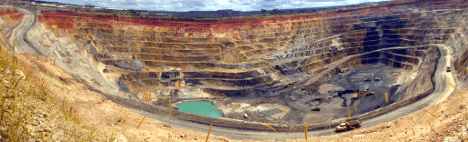
Democratic Republic of Congo: Expansion of Chinese-Owned Cobalt and Copper Mines in the Lualaba Province
Chinese companies control 72% of the cobalt and copper mines in the Democratic Republic of Congo (DRC), a country that produces over 70% of the world's cobalt and approximately 10% of its copper, according to Canadian estimates and foreign relations research councils. [1, 2, 3]
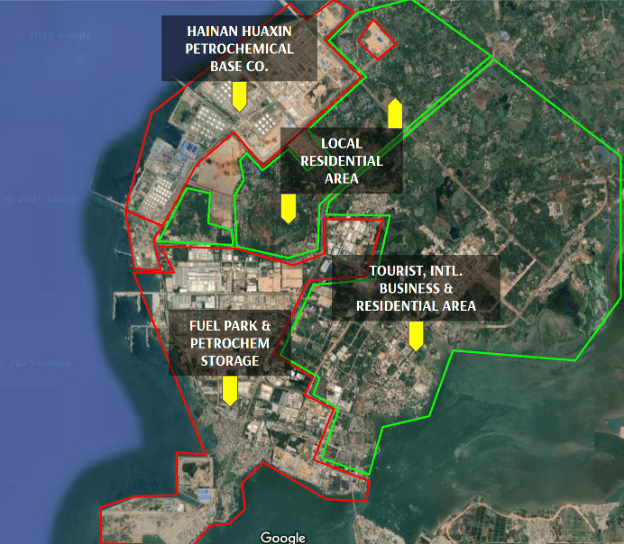
Environmental and Human Security Risks of China's Petrochemical Industry
China's rapid expansion in the petrochemical industry is likely to present significant environmental and human security challenges over the next decade. This study investigates the risks associated with China's petrochemical industry and highlights policies targeting risk management and prevention. Using synthetic aperture radar (SAR) imagery from NGA's Unclassified Data Lake, we look at a case study on the Yangpu Economic Development Zone (EDZ) in Hainan, China's largest island.
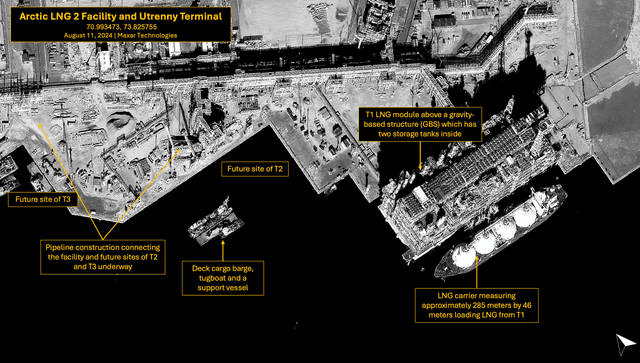
Russia's Arctic LNG Infrastructure: Development and Operational Analysis
The Arctic plays a pivotal role in Russia's liquified natural gas (LNG) ambitions, leveraging its vast natural gas reserves and strategic geographic advantages. In 2022, LNG accounted for approximately 52% of Russia's energy portfolio, and despite global sanctions, production is projected to grow by 11% annually through 2035. With gas exports dropping by 55% since 2021, Russia has shifted focus to LNG via the Northern Sea Route that connects the Arctic Ocean to the Pacific and Atlantic Oceans.
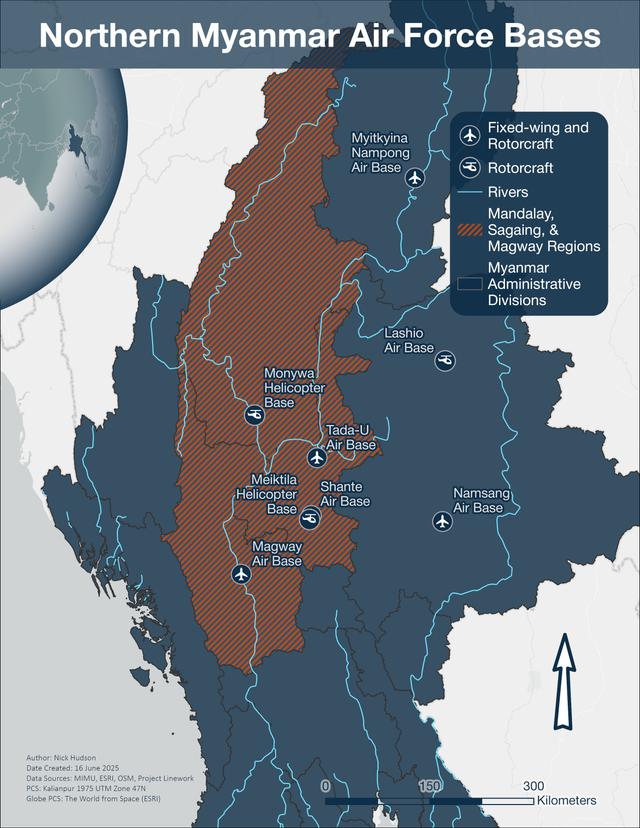
Wings of Violence: Locating the Source and Method of Aerial Attacks on Civilians and Civil Infrastructure in North-Central Myanmar
Myanmar has been embroiled in violence since the military staged a coup d'état overthrowing the government in 2021. The country's air force has waged deliberate campaigns targeting rebel groups and civilians alike throughout the country, striking hospitals, schools, and religious buildings. In the years preceding civil war, the Myanmar Air Force (MAF) improved its aerial strike capabilities by upgrading infrastructure and procuring additional offensive aircraft, according to regional media.[1]
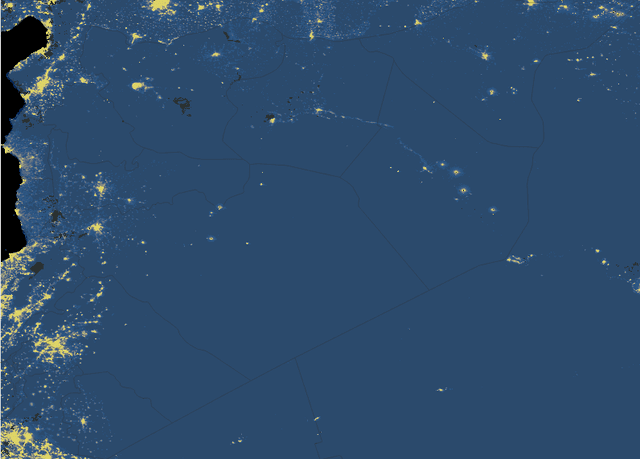
Syria: Assessing Foreign Involvement in the Electrical Grid
This study analyzes the impact of the Syrian Civil War and the fall of the Assad government on Syria's energy infrastructure and foreign investment in the energy sector. Using satellite imagery and open-source intelligence, this report finds with moderate confidence that Iran's role in the energy sector has decreased; that alternate regional powers have explored investment opportunities with limited progress; and that electricity availability in major cities has seen no observable improvement.
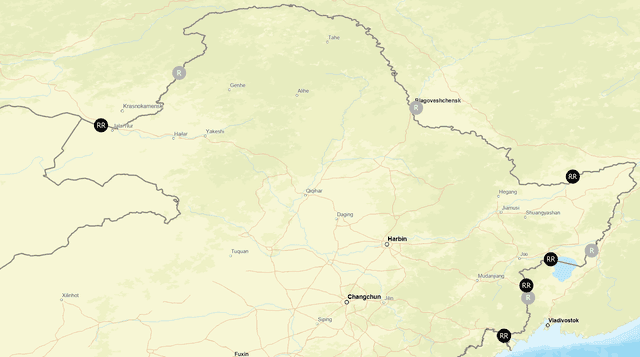
Russia-China Land Infrastructure: Changes to Cross-Border Road and Rail Infrastructure Between 2020 and 2024
Latest: In accordance with planned infrastructure construction and improvement, both China and Russia increased land transportation capabilities across all border crossings, creating a net positive change in road and rail capacity.
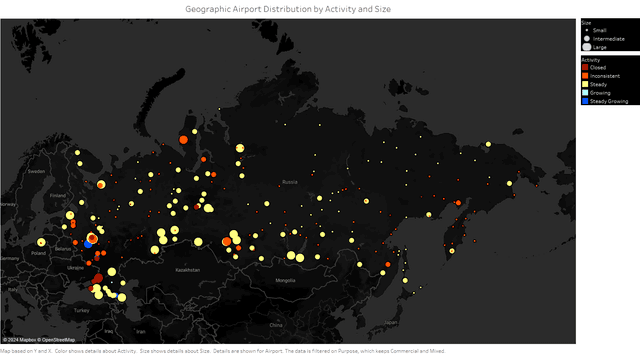
Russia's Civil Aviation Industry: Impact of COVID-19 and Ukraine Conflict-Related Sanctions Following February 24th, 2022
This product demonstrates increased activity in Russia's civil aviation industry since 2017, despite the effects of the COVID-19 pandemic and ongoing international sanctions implemented following Russia's 2022 escalation of armed conflict in Ukraine. The author's analysis provide imagery-driven insight into the impact of those sanctions and the global pandemic by assessing the development patterns of Russian airports from 2017 to present day (2024).
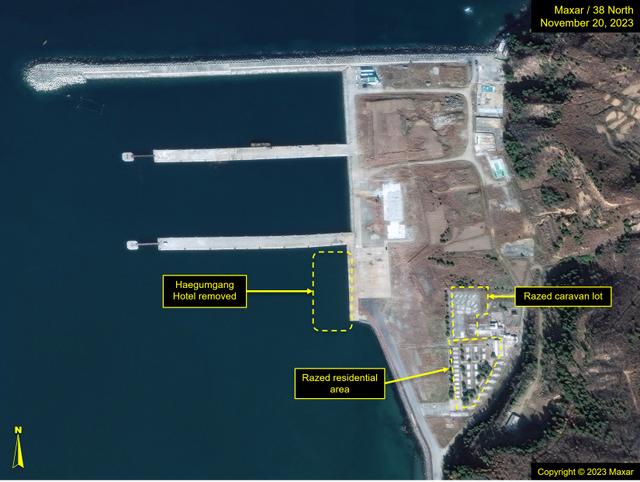
Mt. Kumgang Tourist Area: A Slow Shedding of South Korean Influence
The Mt. Kumgang Tourist Region was a popular South Korean tourist destination until a security incident led to its closure in 2008. Despite optimism after the 2018 Panmunjom Summit that long-stalled inter-Korean economic projects would resume, no progress was made before the summit process fell apart. In late 2019, Kim Jong Un visited Mt. Kumgang, denouncing South Korean claims on the resort and instructing it be rebuilt according to North Korean standards and tastes.
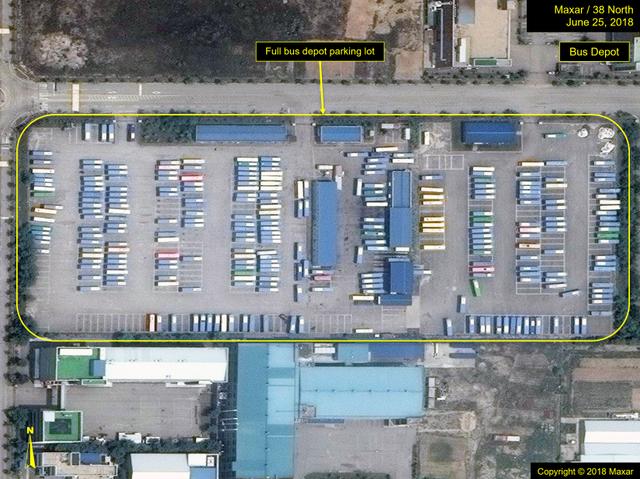
Kaesong Industrial Complex: A Tortured History and Uncertain Future
The Kaesong Industrial Complex (KIC), a joint venture between North Korea and South Korea that hosted South Korean manufacturers inside North Korea and employed North Korea labor, shut down in 2016 amid deteriorating relations. Recent commercial imagery analysis shows a moderate uptick in activity—especially since 2023.
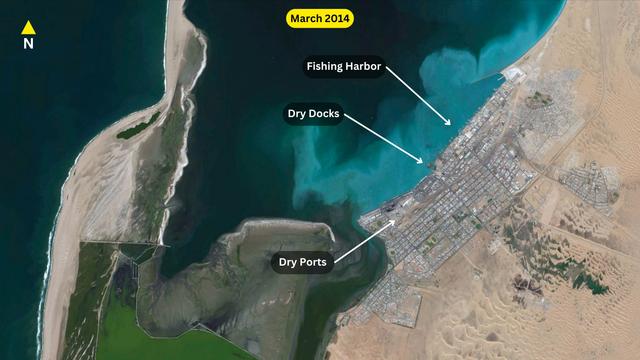
Potential Growth of Chinese Infrastructure in Namibia Under New President
Chinese development in Namibia will likely continue to grow under the projected Netumbo Nandi-Ndaitwah administration.