


- NATIONAL GEOSPATIAL-INTELLIGENCE AGENCY
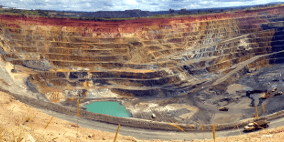
Democratic Republic of Congo: Expansion of Chinese-Owned Cobalt and Copper Mines in the Lualaba Province
Chinese companies control 72% of the cobalt and copper mines in the Democratic Republic of Congo (DRC), a country that produces over 70% of the world's cobalt and approximately 10% of its copper, according to Canadian estimates and foreign relations research councils. [1, 2, 3]
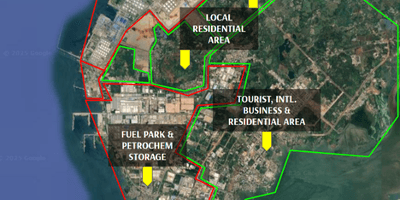
Environmental and Human Security Risks of China's Petrochemical Industry
China's rapid expansion in the petrochemical industry is likely to present significant environmental and human security challenges over the next decade. This study investigates the risks associated with China's petrochemical industry and highlights policies targeting risk management and prevention. Using synthetic aperture radar (SAR) imagery from NGA's Unclassified Data Lake, we look at a case study on the Yangpu Economic Development Zone (EDZ) in Hainan, China's largest island.
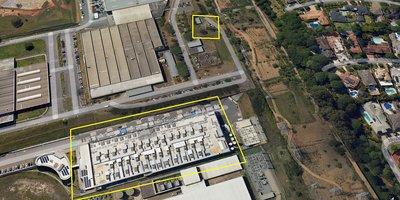
China's Growing 5G Presence in South America Poses Potential Security Threats to the Region
In 2017, a Chinese national security law mandated citizens and business entities comply with requests for information by Chinese intelligence agencies. With this law, the presence of Chinese telecommunications companies in South America poses potential security threats.
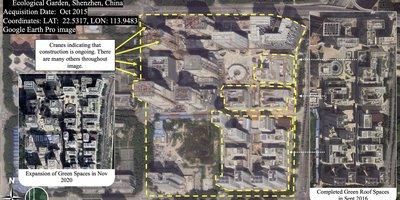
Made in China 2025 and the Shenzhen High-Tech Industrial Park
The policy goals of the Made in China 2025 (MIC25) plan have increased development in Shenzhen High-Tech Industrial Park's dominant industries. From 2015 to 2022, imagery analysis showed increased activity and construction, much of which promoted MIC25's core industries.
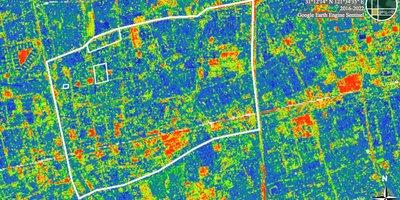
Made in China 2025 and Shanghai's Zhangjiang High-Tech Industrial Park
Zhangjiang High-Tech Industrial Park predates the 2015 inauguration of Made in China 2025 (MIC25). However, development in the park reaffirms MIC25 goals. Activity in the park reflects the policy priorities of MIC25: talent recruitment, foreign investment, and green development.
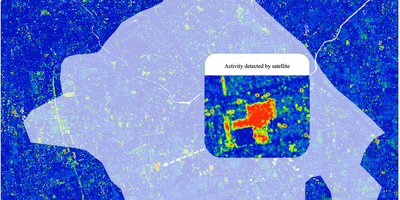
Made in China 2025 and the Beijing Economic-Technological Development Zone
The broad policy goals of the Made in China 2025 (MIC25) plan have a real-world activity impact on the urban layout of the Beijing Economic-Technological Development Area, most notably in residential and environmental activity. Further, industrial clusters and companies in the zone appear to be guided by the MIC25's ten core industries.