


- NATIONAL GEOSPATIAL-INTELLIGENCE AGENCY
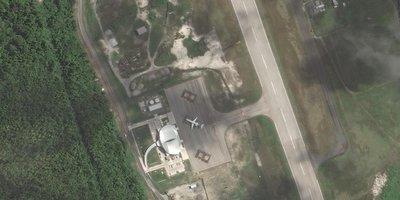
Analyzing Strategic Value of Chinese-Built Infrastructure Projects in Papua New Guinea
We assess that China is engaging and financially investing in development projects in Papua New Guinea to establish a stronger commercial presence and to potentially attain dual-use options in the South Pacific to counter Western influence in the region. This report covers two infrastructure projects in Papua New Guinea with Chinese activity: 1) the Momote Airport renovations and 2) the Ihu Special Economic Zone (SEZ) development.
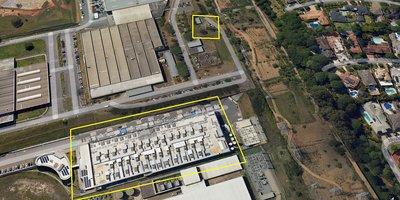
China's Growing 5G Presence in South America Poses Potential Security Threats to the Region
In 2017, a Chinese national security law mandated citizens and business entities comply with requests for information by Chinese intelligence agencies. With this law, the presence of Chinese telecommunications companies in South America poses potential security threats.
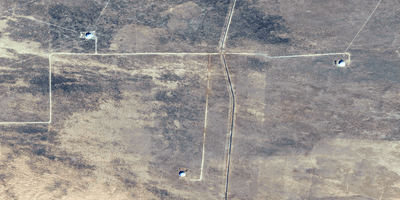
A Geospatial Strategy to Locate Future Chinese ICBM Silo Fields
The People's Liberation Army Rocket Force (PLARF) has garnered significant attention with respect to the construction of over three hundred missile silos dispersed across three silo fields. This report seeks to investigate the geospatial characteristics of each site and use that data to inform a search strategy. China watchers and analysts should have a systematic method for defining search strategies, and this report serves as a foundational first step in that effort.
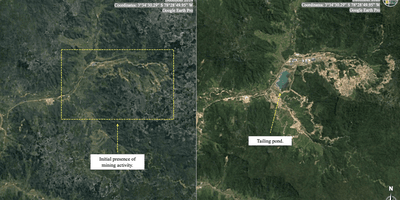
Exploring China's Footprint in the Andes Mountains: Copper Mining in Ecuador
Ecuador's desire to become a global exporter of copper coincides with increased Chinese demand for and investment in copper mining. Both copper mines in Ecuador are owned by the same Chinese company. The inauguration of mine construction and activity has led to negative environmental damage and forced relocations of indigenous communities at both mines.
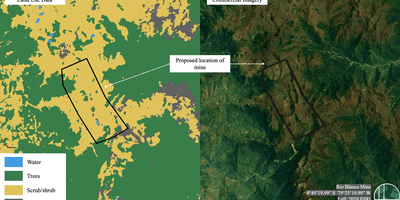
Exploring China's Footprint in the Andes Mountains: Copper Mining in Peru
Expansion of copper mining is driving economic growth in Peru, which coincides with increased Chinese demand and investment in copper mining. Chinese involvement in Peru's mining sector varies by project and is often obfuscated through intermediary company involvement in mine acquisition or construction.
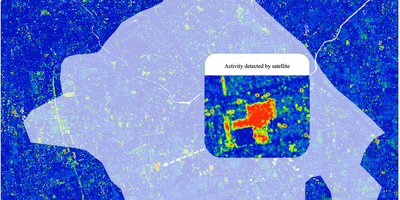
Made in China 2025 and the Beijing Economic-Technological Development Zone
The broad policy goals of the Made in China 2025 (MIC25) plan have a real-world activity impact on the urban layout of the Beijing Economic-Technological Development Area, most notably in residential and environmental activity. Further, industrial clusters and companies in the zone appear to be guided by the MIC25's ten core industries.
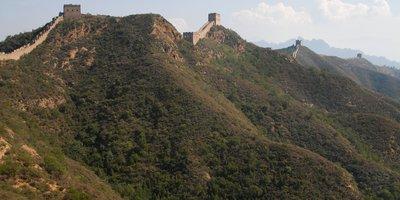
Part 2: Evaluating China's Tree-Planting Activity
In September 2020, against the backdrop of the coronavirus pandemic and with the global economy still reeling, China pledged that it would achieve carbon neutrality by 2060. In this two-part series, researchers from the Columbia School of International and Public Affairs explore China's progress towards that goal along two vectors: "brown" and "green." Part 2 ("green") examines how tree cover has changed in two provinces as China conducts major tree-planting efforts.

Chinese Maritime Expansion and Potential Dual-Use Implications on Critical Maritime Chokepoints
Though Chinese "Belt-and-Road Initiative" (BRI) investments and related economic activities abroad have been a touchpoint for international studies, this report poses a hypothetical "what if" scenario and seeks to address one facet of the potential implications if Chinese facilities abroad are used for dual-use military/civilian purposes.
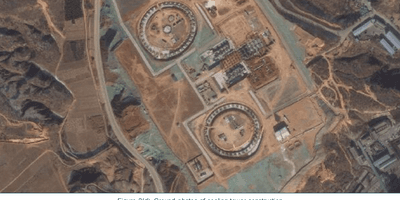
Part I: Analyzing China's Continued Expansion of Coal-Fired Power Capacity
In September 2020, against the backdrop of the coronavirus pandemic and with the global economy still reeling, China pledged that it would achieve carbon neutrality by 2060. In this two-part series, researchers from the Columbia School of International and Public Affairs explore China's progress towards that goal along two vectors: "brown" and "green". Part I ("brown") identifies 5 coal-fired power plants, approved in March 2020, and tracks their construction and continued development.

Part 1: Investigating the Growth of Detention Facilities in Xinjiang Using Nighttime Lighting
A growing body of research has systematically documented Chinese efforts to imprison, detain, and re-educate ethnic Uyghur and minority groups throughout its western Xinjiang province. In this three-part investigation, RAND researchers explore new data on nighttime lighting in Xinjiang to offer new, empirical insights into China's efforts to reeducate, detain, and imprison its Uyghur and ethnic minority populations across Xinjiang.