Overview
North Korea's northeastern provinces, especially Ryanggang Province, play an important role in the country's hydropower development plans. The Paektusan power station project was designed to provide uninterrupted electrical power to this area, where the recently opened showcase city of Samjiyon is situated, to fuel its success.
Older large dams in this region failed to meet the local electricity demands, largely due to poor construction and materials, and an inability to withstand the fluctuation of extreme weather conditions. The Sodusu Dam and Power Station, in particular, was unable to maintain a sufficient water reservoir for optimal output, however, some unusual design features raise questions about its function.
Activity
GEOINT analysis shows concerted efforts to complete the Paektusan Hero Youth Power stations to provide power to Samjiyon City while older, underperforming dams in the northeastern provinces may be being repurposed.
Background
The series of three Paektusan Hero Youth Power stations and Sodusu Hydroelectric Power Station Dam are located along the Sodusu River, which delineates the boundary between the Ryanggang and North Hamgyong provinces in northeastern North Korea. The Paektusan series, in particular, was built to provide electricity to the burgeoning Samjiyon County, and perhaps the adjacent Hyesan County, the sacred land of Mt. Paektu (Paektusan), where the juche revolution started. They are representative of the types of hydroelectric power station dams found in North Korea's eastern provinces. Hydroelectric power stations with similar layouts can be found in South Hamgyong Province and include the grander Kumjingang series (Kumjingang Hungbong Dam, Kumjingang Kuchang Youth Power Station Dam, the Kumjingang Power Station Dam and a fourth, yet-to-be-named dam and power station), and the less complex series of the Kumyagang Army-People Power Station No.1 Dam and Kumyagang Power Station No.2 Dam.
Other large dams can be found in these provinces, but most have been ineffective in delivering their promised output of electrical power to the region, mainly due to poor engineering practices, subpar materials and the harsh climate, which ranges from extreme cold in winter to severe drought in the summer. The one possible exception may be the newly constructed and highly touted Orangchon Power Station, which has yet to be brought online.
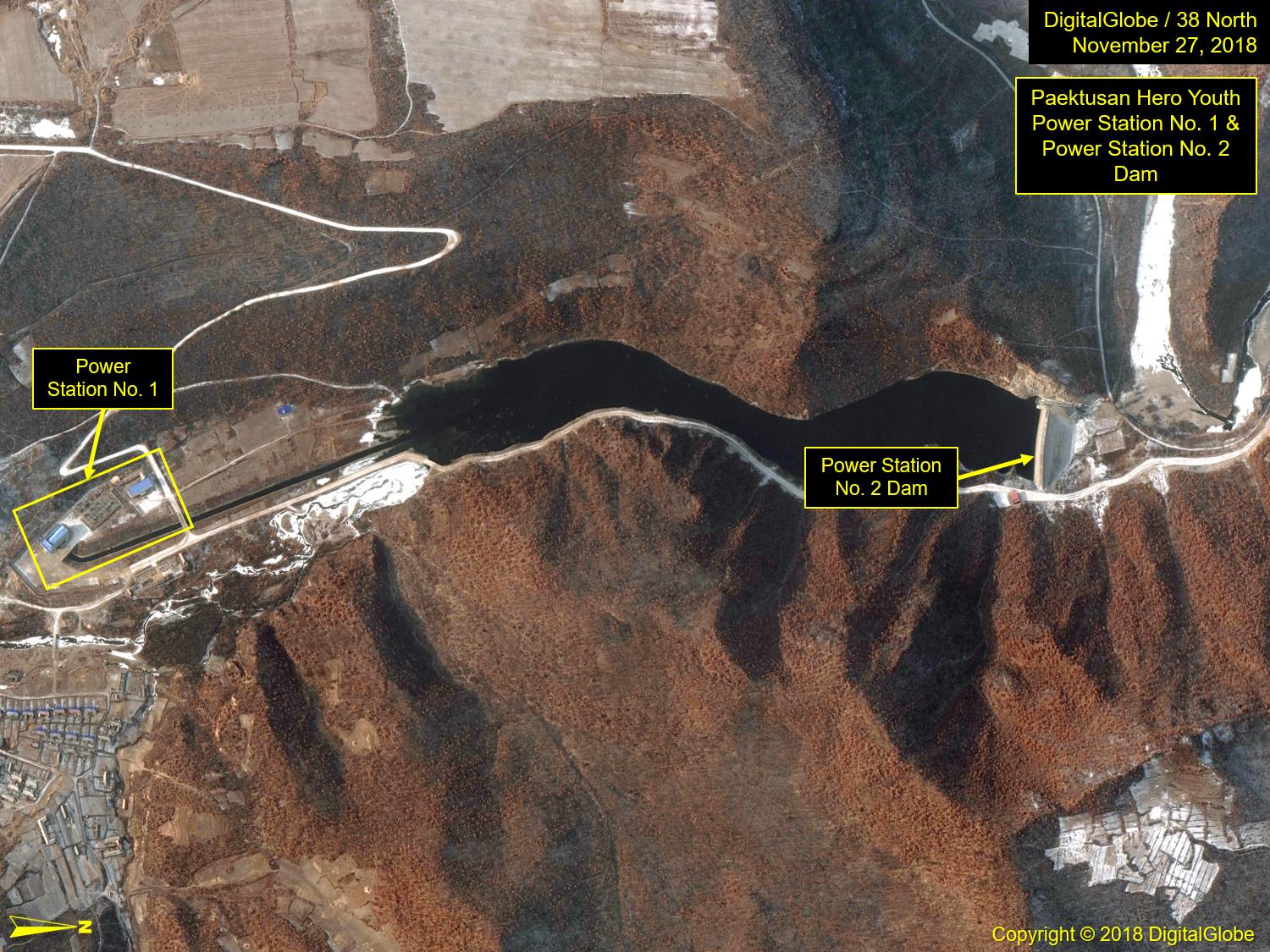
Sodusu Power Station Dam, which lies 10 km north of the Paektusan series, falls into the latter category of large dams. While the Sodusu reservoir water levels were normal at the time of its construction through 2016, a marked dropped was observed in early 2017 that has continued through the present. The drop was likely caused by the lengthy period of drought experienced throughout the region, and by cracks within the dam itself, a casualty due to subpar materials used in its construction.
Figure 1. Overview of Sodusu Power Station Dam.
Paektusan Hero Youth Power Station Project
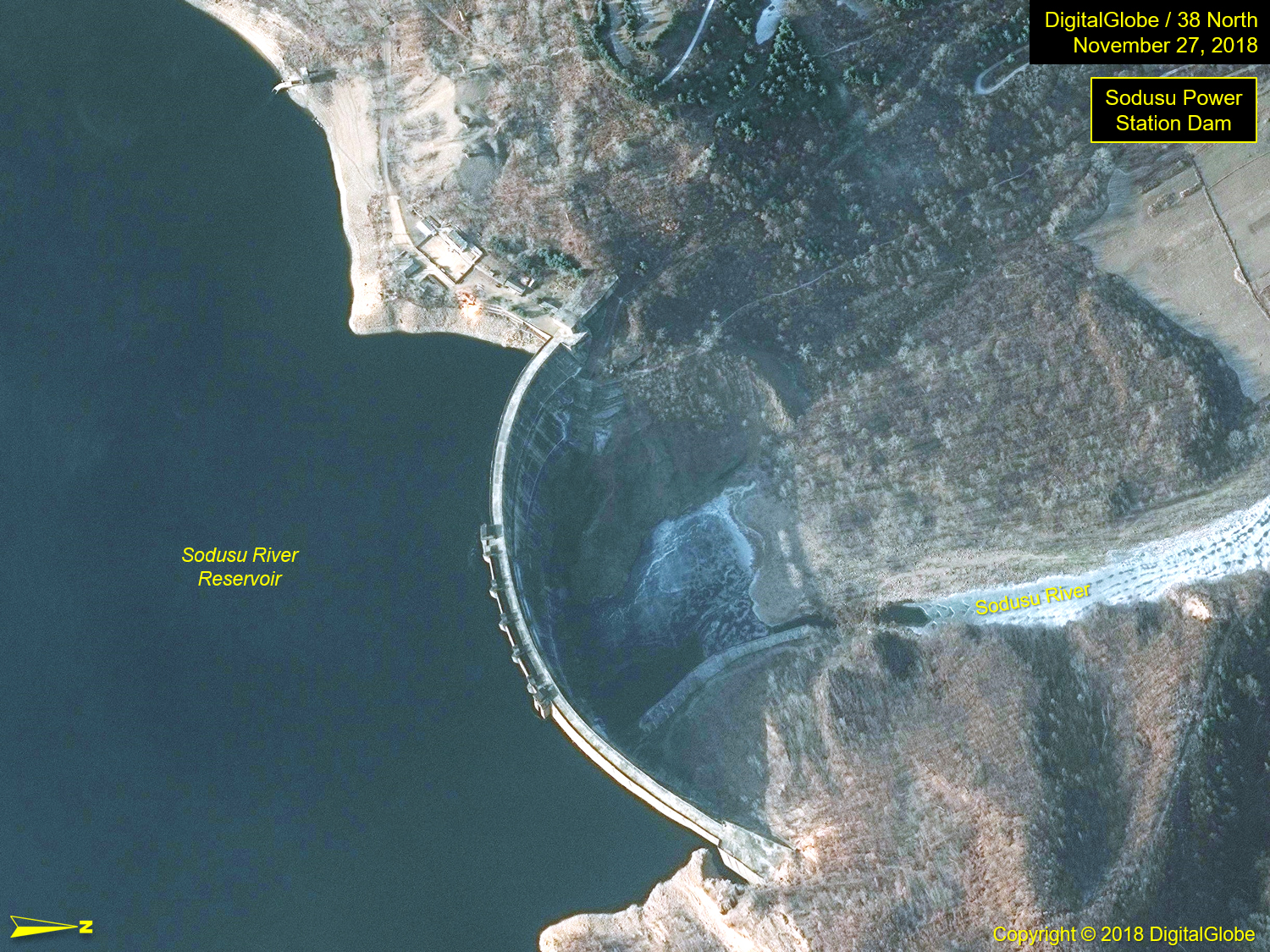
Construction on the Paektusan Hero Youth series of power stations reportedly began in 2009, but was first observed on commercial satellite imagery in June of 2010, when the dams of both reservoir and excavation for Power Station No. 1 were in their early stages of construction. By March 30, 2013, construction on the first dam was far enough along to begin holding back water, and thus the reservoir started to fill. The larger reservoir, which directly supports Power Station No. 1, was given the name Paektu Hero Youth Lake by Kim Jong Un several years later during a ceremonial speech in 2016 commemorating the opening of Paektusan Hero Youth Power Station No. 3 and the completion of the series of three power stations. In his remarks, he claimed that the three power stations were completed within a year's time of each other and three months ahead of schedule, although imagery suggests otherwise. Construction on Power Station No. 2 was well underway in March 2013, and early signs of construction on Power Station No. 3 were observed in October 2013.
This series of power stations is unique in its designed layout in that, except for the third power station, a man-made reservoir proceeds the location of each. In other words, Paektu Hero Youth Lake feeds water to the generator hall of Power Station No. 1, located approximately 3 km to the northeast via water tunnels. At Power Station No. 1, a surge tank (a signature for power stations fed by water tunnels) is located on the hillside above the generator hall, and an electrical substation is located adjacent to it. From the generator hall, an outflow channel flows north into the second man-made reservoir, which in turn feeds into Power Station No. 2, again via a water tunnel.
Figure 2. Overview of Paektusan Hero Youth Power Station No. 1 Dam.
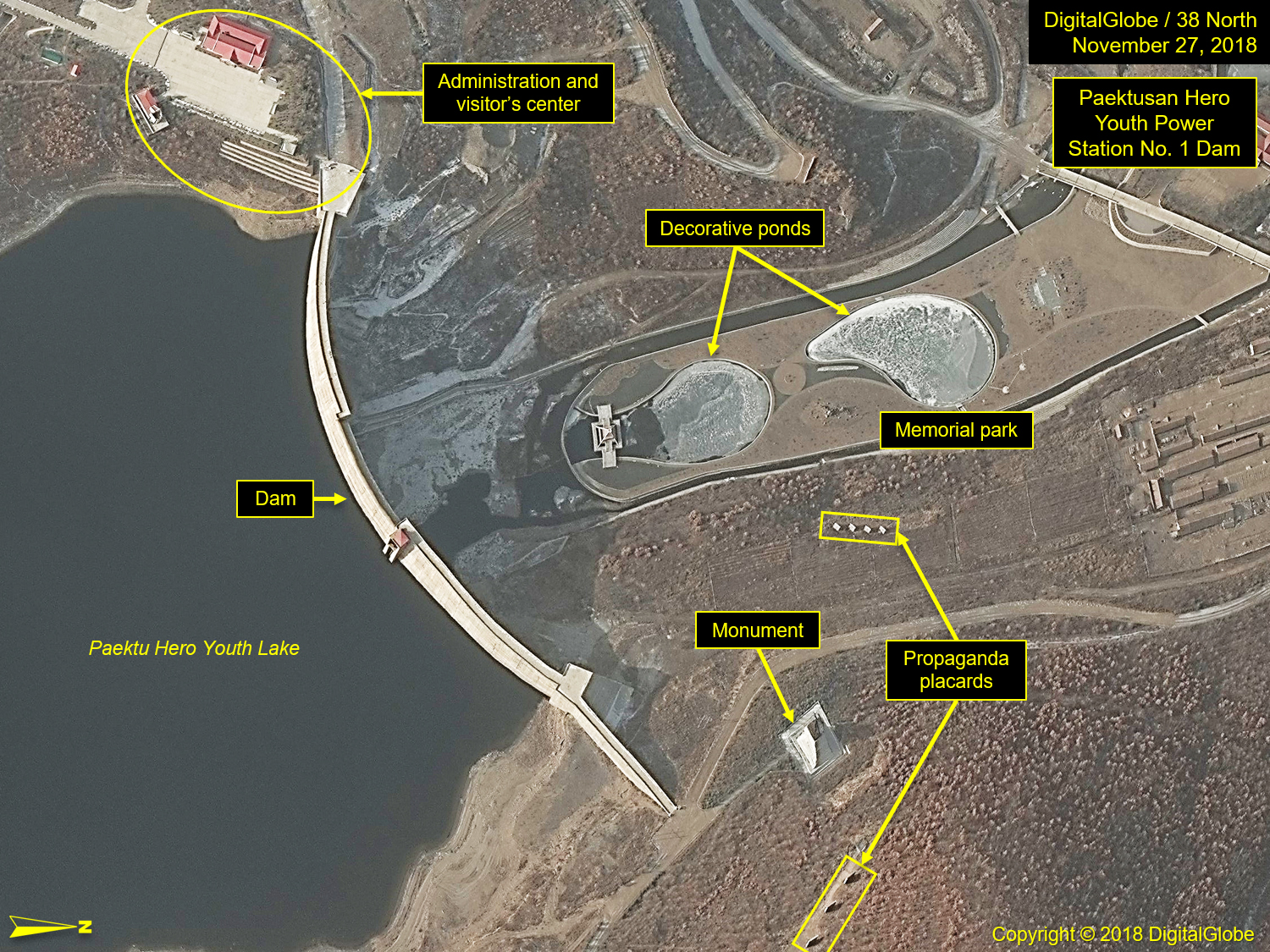
Figure 3. Overview of Paektusan Hero Youth Power Station No. 1.
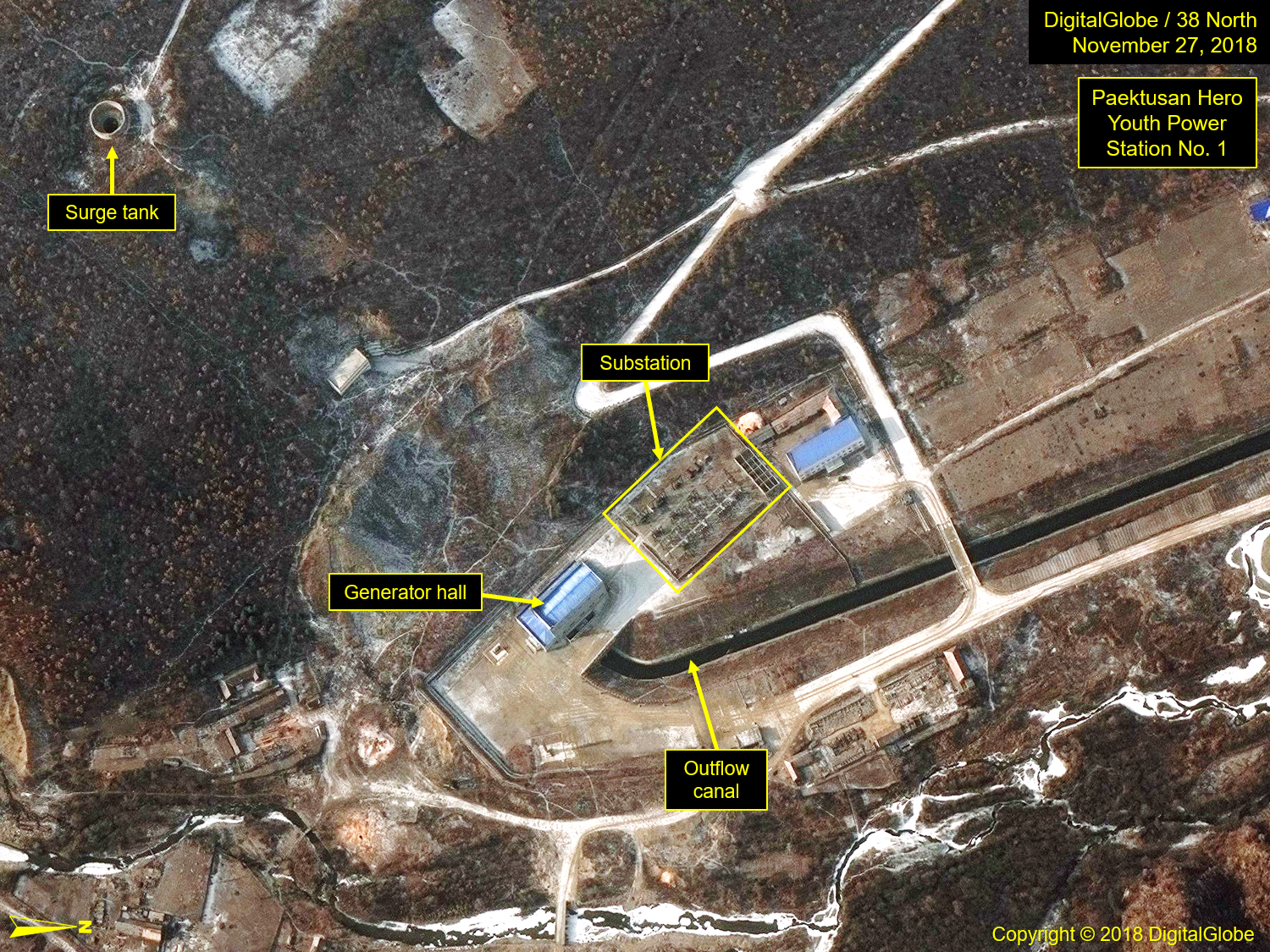
Figure 4. Overview of Paektusan Hero Youth Power Station No. 1 and No. 2 Dam.
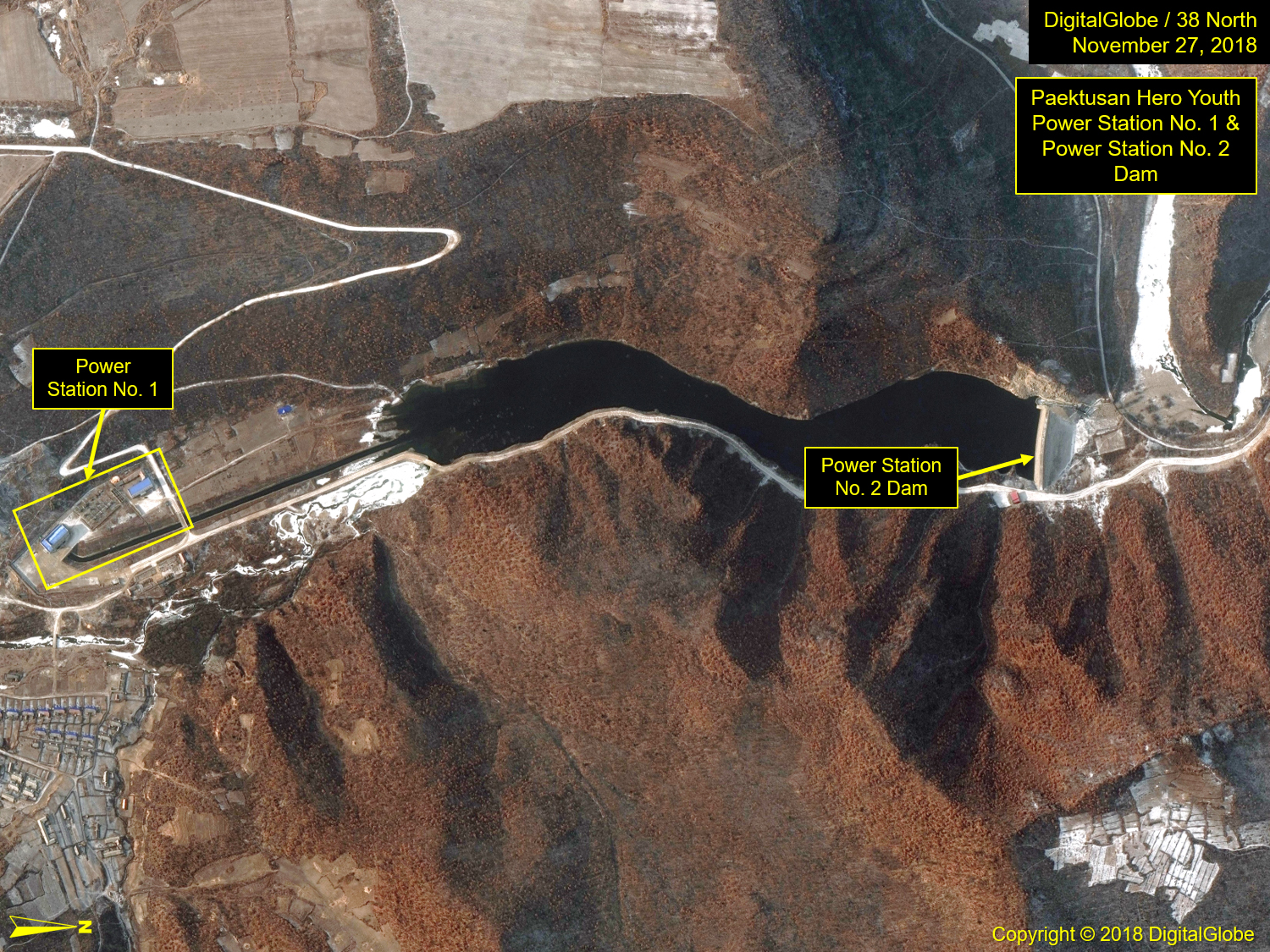
Figure 5. Overview of Paektusan Hero Youth Power Station No. 2 Dam.
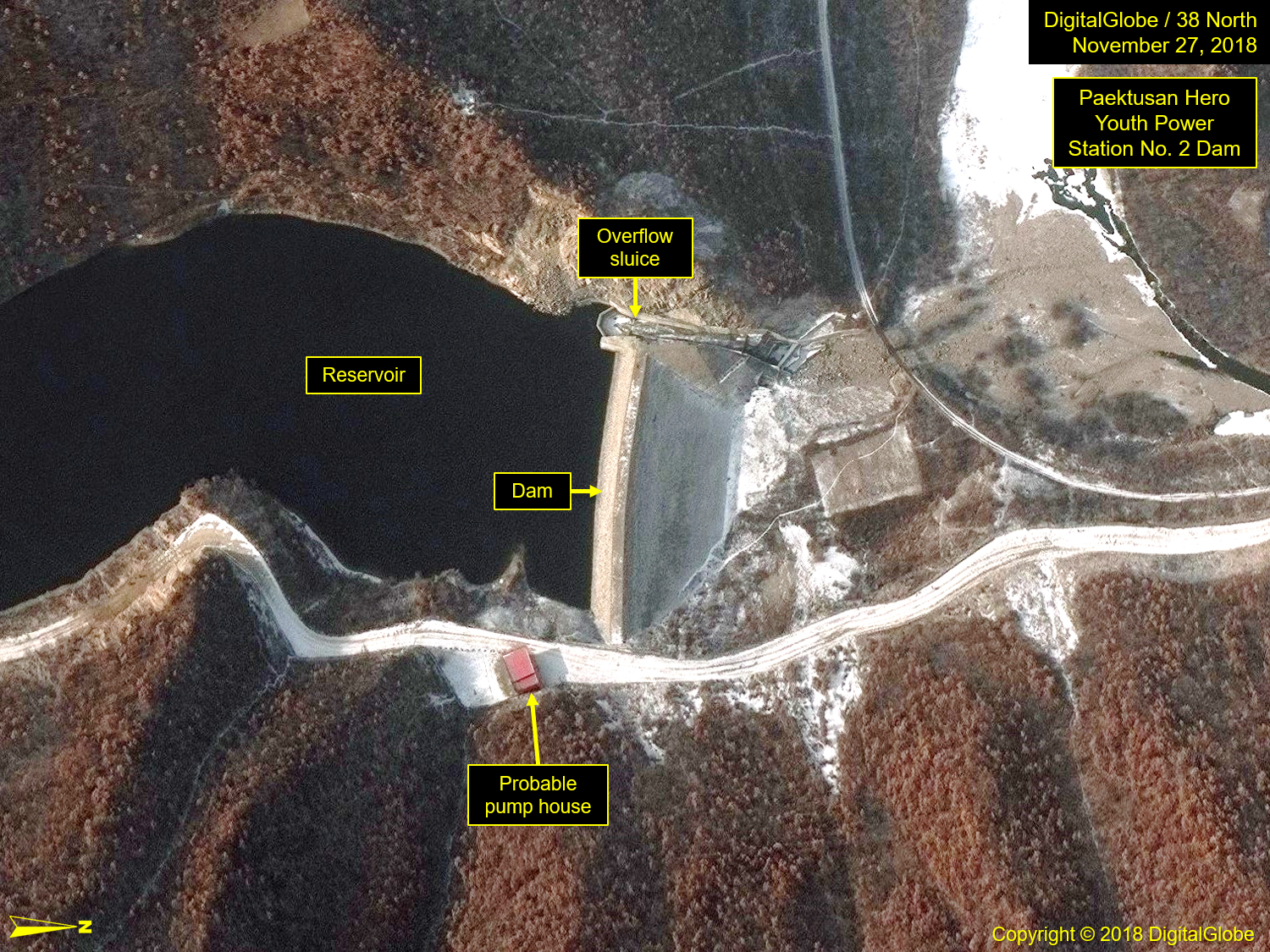
Power Station No. 2 is located on the Sodusu River 2.2 km to the northeast. There too, a large surge tank is located on the hillside above the generator hall. While the water outflow from Power Station No. 2 flows into the Sodusu River, the two power stations themselves are fed from waters which bypass the river's natural course, only returning the water to the river at Power Station No. 2. Going further northeast along the river from Power Station No. 2 is Power Station No. 3, which employs a more traditional design, whereby a dam has been constructed across the Sodusu River, holding back water from the river to feed directly into the generator hall; albeit there is a separate outflow channel from the power station, which joins the Sodusu River further downstream.
Figure 6. Overview of Paektusan Hero Youth Power Station No. 2.
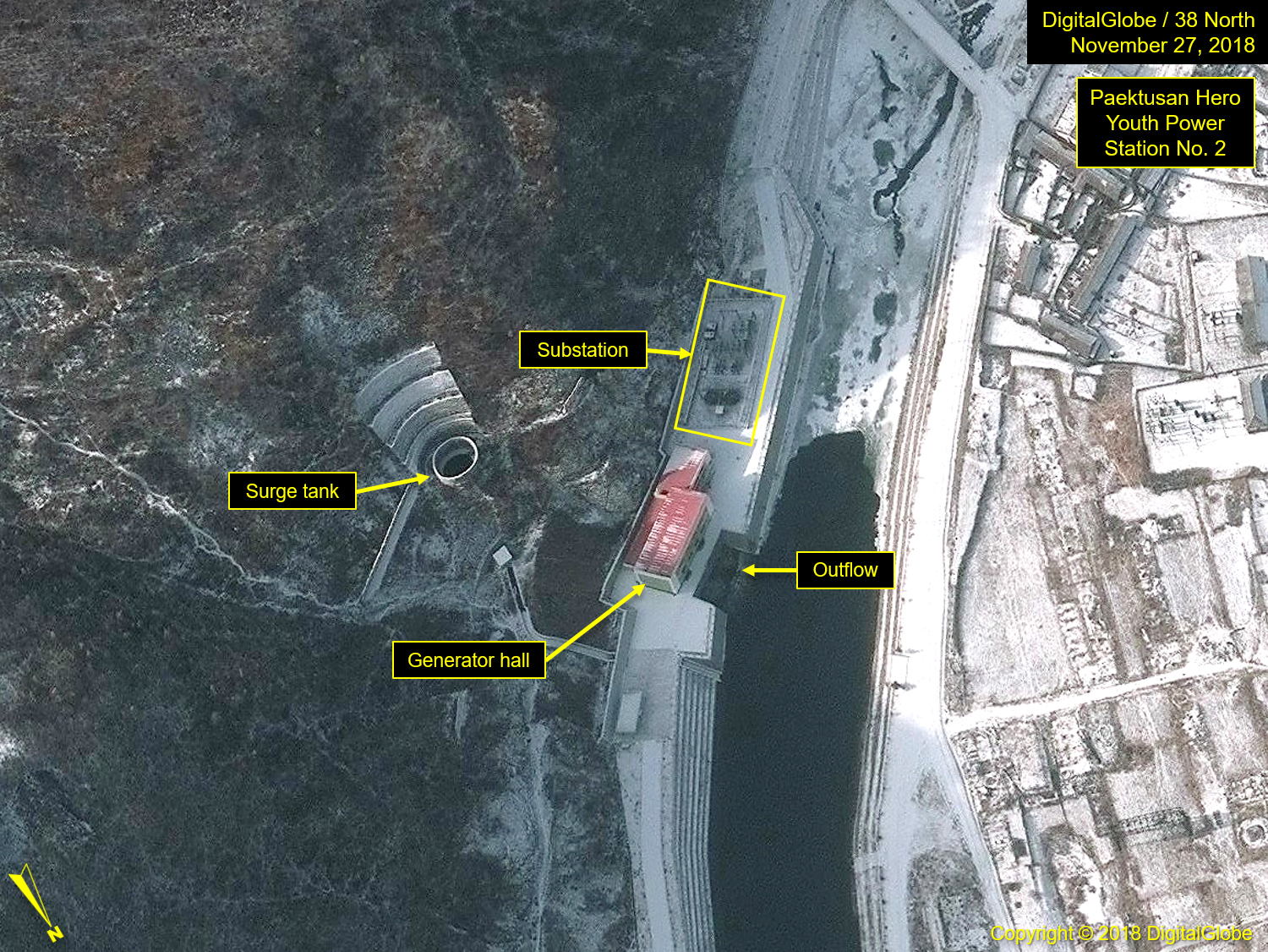
Figure 7. Paektusan Hero Youth Power Station No. 3 Dam.
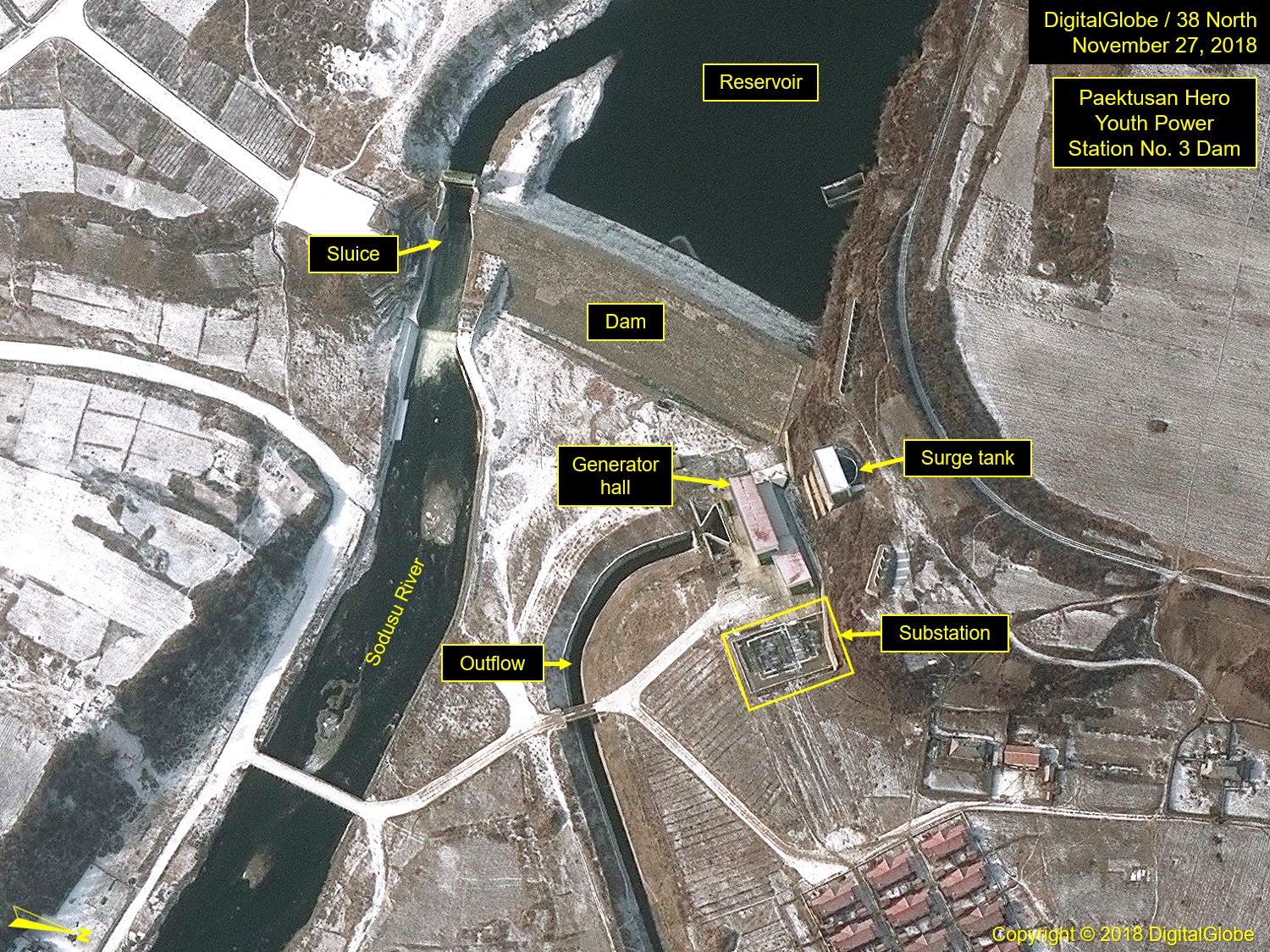
Sodusu Dam and Power Station
As mentioned earlier, the Sodusu Dam and Power Station falls into the category of being a large dam, built before 2010, although the exact time frame cannot be determined from the available, archived, commercial satellite imagery. It was built during a period when rapid construction and subpar materials were used, which is a probable contributing factor to the drop in the reservoir's water level. But aside from that, there are some unusual characteristics to the dam and its adjacent facilities.
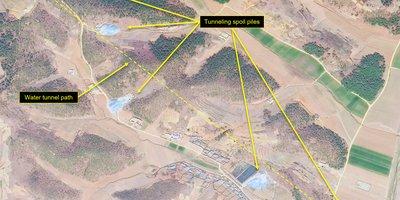
On the west side of the dam, there are several support buildings, but also spoil piles, which suggests the presence of an underground facility. (These features are similar to those found at Taechon Power Plant No. 2, located on the Taeryong River, as described in the second report of this series, albeit not as extensive.) Given there is no obvious above surface generator hall, the conclusion supports the presence of an underground generator facility such as those seen at Taechon and at the Jangjagang Power Station located on the Janga (Changja) River. However, unique to this site is a line of four, irregularly spaced, probable concrete towers, located in the area of the spoil piles. Each appears to have square or cut-parabolic dishes on them. Further up the hill to the west is what appears to be a parallel series of ground vents similar to what one might expect to see on top of a bunker, however, no bunker entrance is discernable, and therefore, this facility and the towers remain a bit of an enigma. There is also a probable administration or support building at the top of the hill with a memorial monument located nearby.
Figure 8. Overview of Sodusu Power Station.
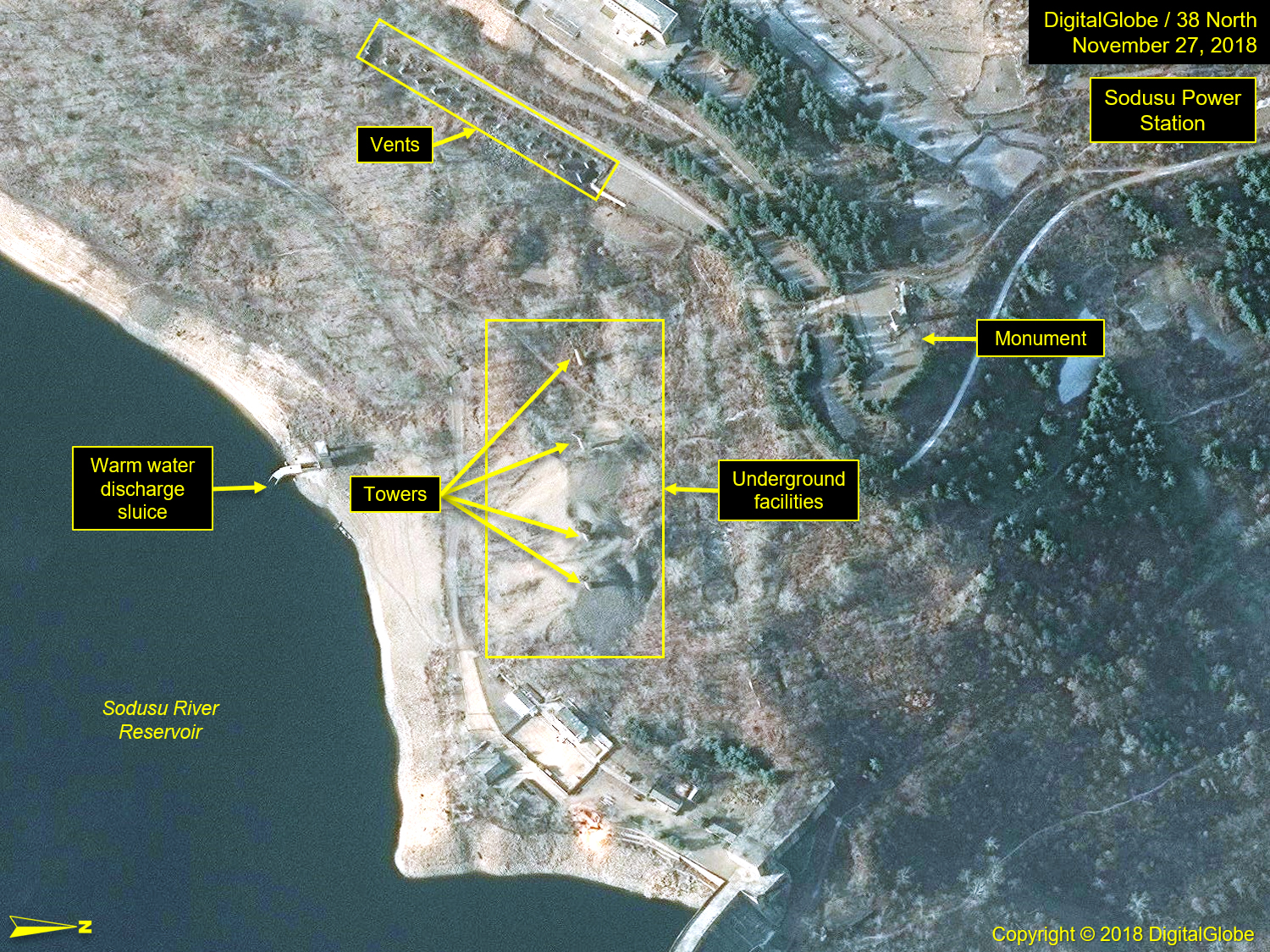
South of the probable underground facility, there is a tower pump station located near the edge of the reservoir. Similar tower pump stations can be observed at other reservoirs, where their function is to draw water from the reservoir and feed it into water tunnels or penstocks. In this case, however, water is being discharged from the tower into the reservoir, an opposite action of what would be expected; underground power stations usually discharge water below the dam, as it is the downward flow of water that powers the generator turbines. Further, the discharged flow is directed into the reservoir through an open trough-like mechanism, which was not visible when the reservoir level was high, but which is visible when the water level is down. In addition, the discharge fluid is very warm. On at least four occasions when the reservoir was completely frozen over, a very large melt area was observed around the discharge trough; March 30, 2013, December 30, 2017, February 6, 2018, and March 4, 2019, which adds to the enigmatic nature of these facilities.
Conclusion
The series of three Paektusan Hero Youth Power Stations were constructed to support the burgeoning northeast region of North Korea. Completed in mid-2016, they incorporate the country's newest and proven design and building techniques, meant to satisfy the area's needs. Their success in delivering the necessary electrical power to the City of Samjiyon will likely have an impact on that city's success.
On the other hand, the Sodusu Hydroelectric Power Station and Dam, located to the north on the same river, has a less understood role in terms of its contribution to the region, as its associated enigmatic function requires further study.
References
- Hamish MacDonald."Paektusan Hero Youth Power Station No. 3, Complete and Operational."NK News. May 2, 2016.https://www.nknews.org/2016/05/paektusan-hero-youth-power-station-operational-kcna/.
- "Kim Jong Un Provides Field Guidance to Paektusan Hero Youth Power Station No. 3."Korean Friendship Association USA. April 25, 2016.https://www.kfausa.org/kim-jong-un-provides-field-guidance-paektusan-hero-youth-power-station-no-3/.
May 02, 2016
Paektusan Hero Youth Power Station series completed construction
Mar 30, 2013
Advanced construction at Power Station No. 1
Advanced construction (holding back water to fill reservoir) at Paektusan Hero Youth Power Station No. 1Mar 30, 2013
Construction underway at Paektusan Hero Youth Power Station No. 2
Feb 15, 2013
Early construction for Paektusan Hero Youth Power Station No. 3
Jun 01, 2010
Early construction of Paektusan Hero Youth Power Station No. 1
Early construction of dams of both reservoir and excavation for Power Station No. 1 first observed on commercial satellite
Look Ahead
Kim Jong Un appears to have taken a more aggressive, hands-on approach in addressing the country's electrical energy needs than his father. The newer hydroelectric power stations, most small-to-medium in size, appear to be more successful in design and output than previous efforts. Their success is a critical component to achieving Kim's broader goal of presenting North Korea, not as an underdeveloped country, but as one that rivals first-world capabilities in weaponry and world-class amenities despite the oppressive sanctions regime imposed on it. As such, we should expect to see additional hydroelectric projects, such as the Orangchon Power Station, the Huichon series of power stations and the Paektusan Hero Youth Power Stations, appearing across the country.
Things to Watch
- The increase in the construction of small-to-medium-sized hydropower plants and the addition of any new, large dam projects.
- The addition of new hydroelectric power stations to existing, multi-tiered projects such as those seen on the Huichon/Chongchon River, the Jangja River, the Orangchon project, and the Kumjingang series.
- The repurposing of older, failed large-dam power station reservoirs, with the addition of waterway tunnels to move water to more favorably-placed, hydroelectric power stations.
About The Authors

Nonresident Fellow, Stimson Center

Senior Fellow, Stimson Center & Director, 38 North

Research Associate, Stimson Center & Assistant Producer, 38 North

Methodologies Reviewed by NGA
Publication of this article does not constitute an endorsement of the contents, conclusions, or opinions of the author(s). The published article’s contents, conclusions, and opinions are solely that of the author(s) and are in no way attributable or an endorsement by the National Geospatial-Intelligence Agency, the Department of Defense, the United States Intelligence Community, or the United States Government. For additional information, please see the Tearline Comprehensive Disclaimer at https://www.tearline.mil/disclaimers.