Overview
North Korea's tourism industry took a major hit in 2020 when the pandemic forced the country to close its borders. Once high-profile construction projects, such as the Wonsan-Kalma Beach Resort, were effectively halted as priorities shifted toward domestically oriented projects. Despite a slow reopening to trade in 2022, activity at the North's key tourist sites remains largely unchanged.
It may still be a while before foreign visitors are allowed back into the country, especially at pre-pandemic levels. Stepped-up attempts to finish major tourist projects could provide some indication of when that is expected. However, at this time, the resorts that were open before 2020 appear to still be in operation, but those that were under construction are no closer to opening.
Activity
GEOINT analysis shows minor activity at most of North Korea's major tourist projects. In some cases, buildings have been razed and resources diverted to other projects and areas.
Background
Developing the tourism industry has been a high priority under Kim Jong Un, at least up until 2020 when the COVID-19 pandemic caused global disruptions in transnational movement and North Korea closed its borders.
Over the past decade, North Korea has attempted to build “world-class” vacation properties intended to attract tourists—both foreign and domestic—as a source of much needed hard currency. Among many initiatives conceived, the country has invested heavily in developing at least four large-scale tourist facilities: the Masikryong Ski Resort, the Wonsan-Kalma Beach Resort, the mountain resort of Samjiyon, and the Mt. Kumgang tourist area. Each of these areas has developed at a different pace and some remain unfinished or unused for political and/or technical reasons.
As North Korea begins to loosen its pandemic restrictions, assessing the current status of these major tourism projects may provide some indication of its near-term expectations for resuming tourism as well.
Masikryong Ski Resort
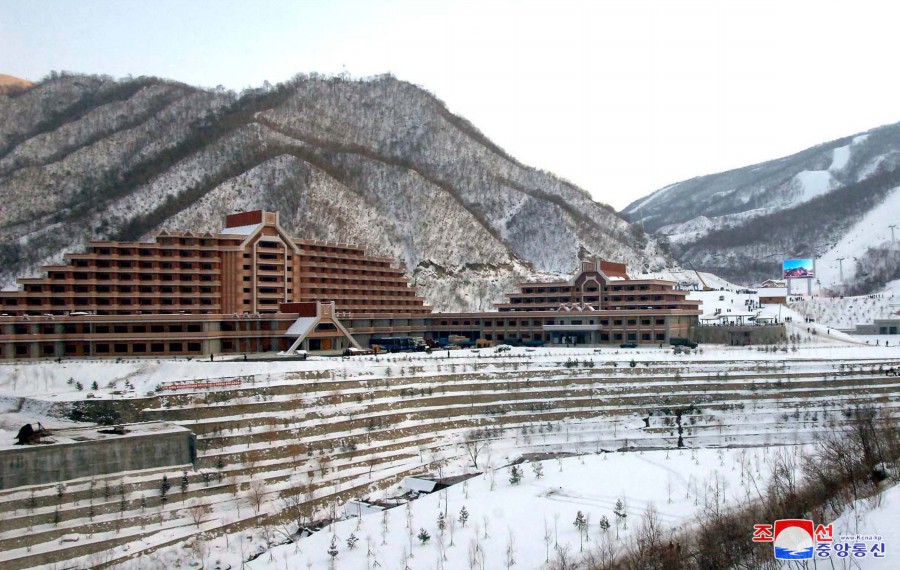
In December 2013, the Masikryong Ski Resort opened at the base of Taewha Peak in Kangwon Province, as part of Kim Jong Un’s efforts to bring ski tourism to North Korea. The project began construction and opened within the same year—coining the term “Masikryong speed”—and was designed to be a potential location for international events, including but not limited to the 2018 Winter Olympics in Pyeongchang, South Korea.
Masikryong was part of larger plans for a Wonsan Special Tourist Zone, a large-scale tourist zone first announced in June 2014, spanning over 400 square kilometers along the North’s southeastern coast. This designation included several different types of tourist attractions year-round and was intended to be the country’s top destination for both foreign and domestic tourists.
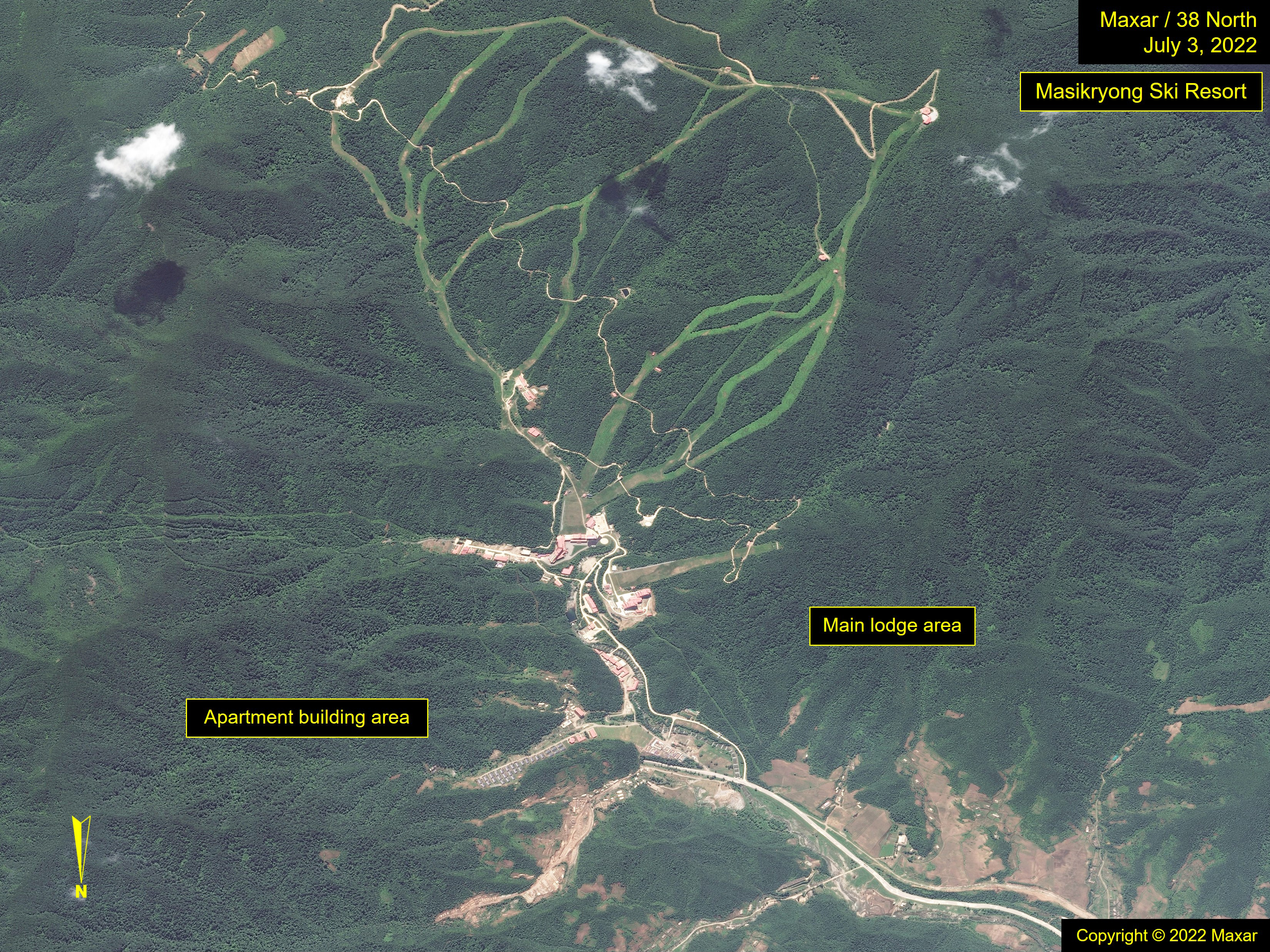
Although the dream of co-hosting Olympic events was never realized, Masikryong remains a winter destination for the North Korean elite. Since its opening, the Masikryong Ski Resort has seen little change. Border closures and COVID-imposed travel restrictions limited activity and visitors for much of the past few years. However, despite the more limited operations, snowmaking efforts have been observed in November and December for the past two years, suggesting that at least some business was ongoing.
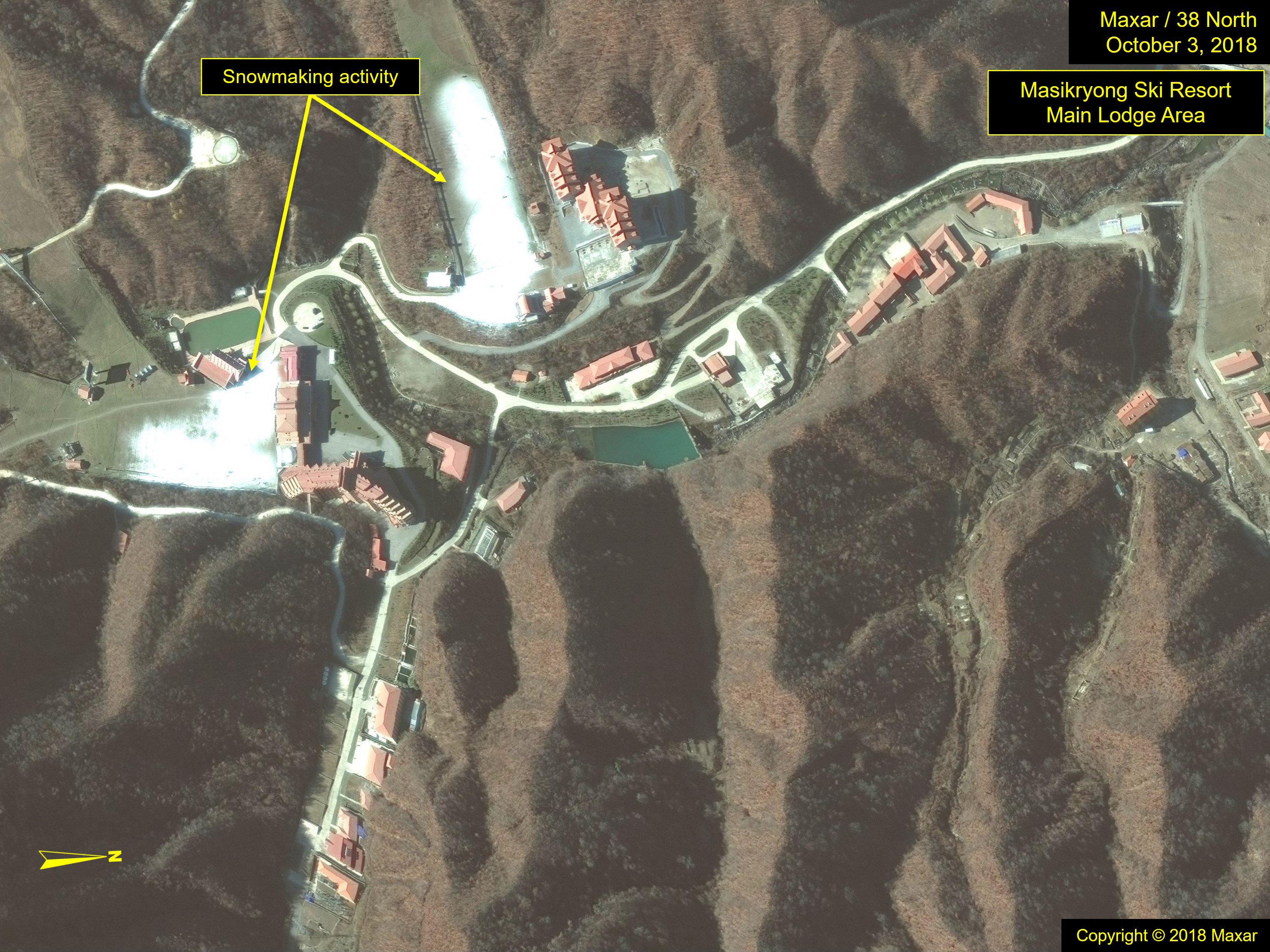
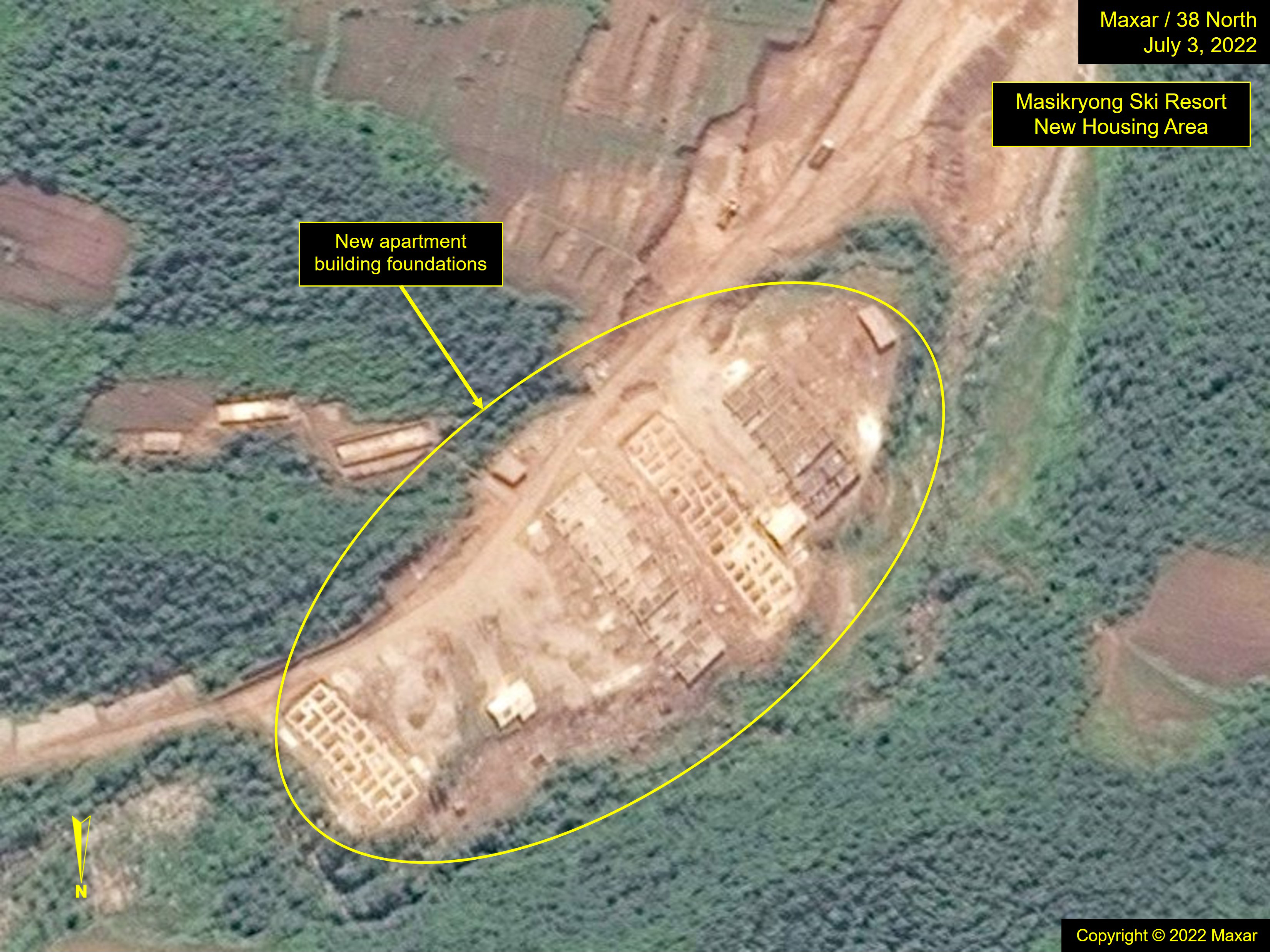
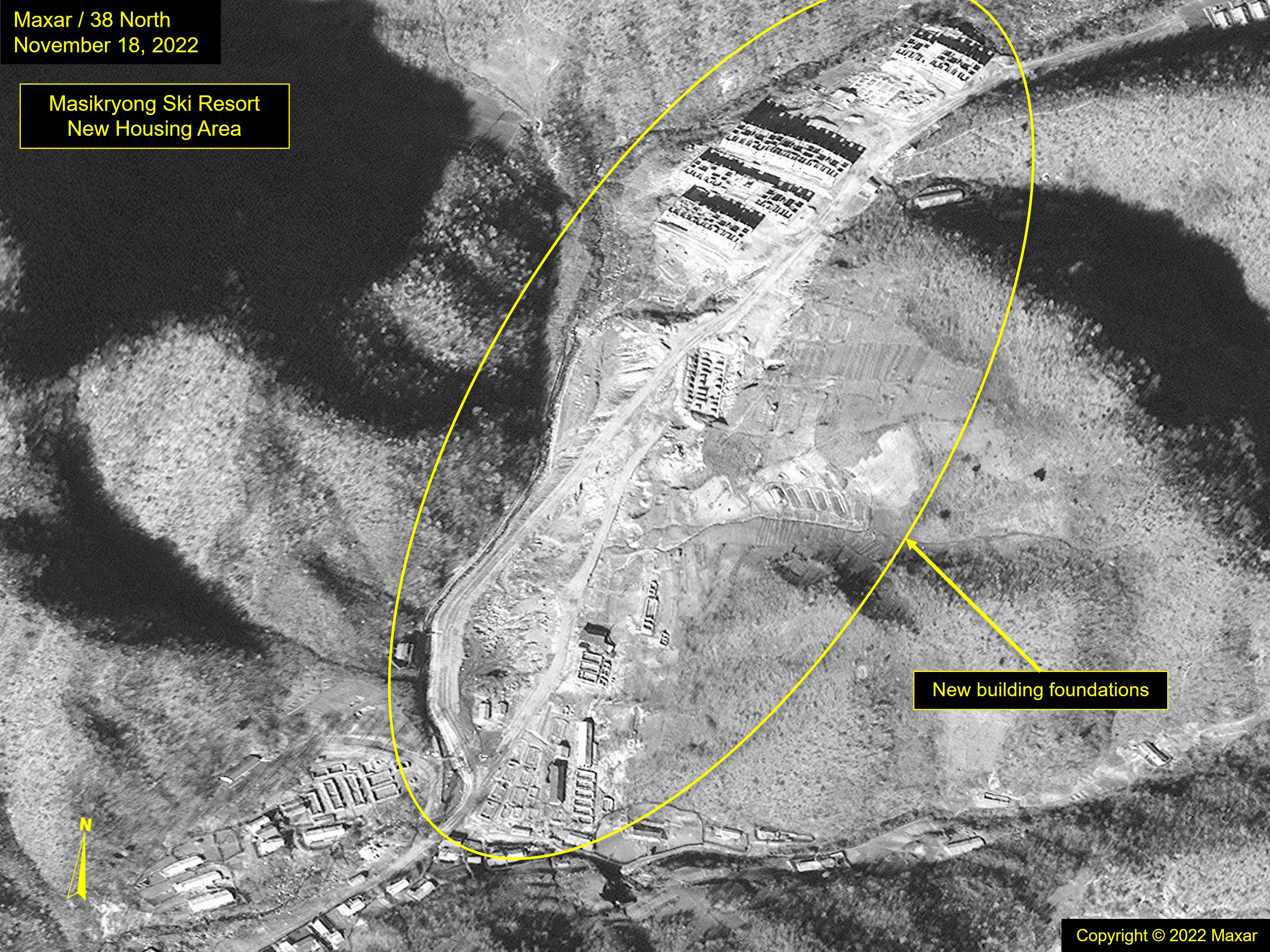
Figure 3. New apartment construction visible from July to November 2022.
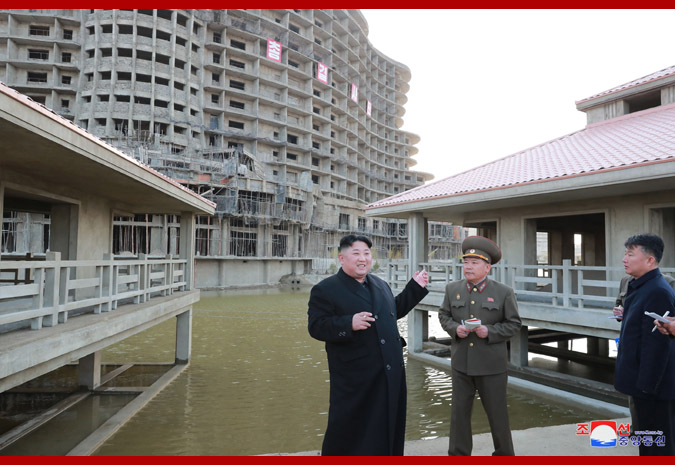
The Wonsan-Kalma Beach Resort, a 5 km stretch of beachfront within the Wonsan-Kalma Coastal Tourist area, began in 2014. A new airport opened in 2015, but construction on the rest of the site was not observed until 2018. At that time, Kim Jong Un’s called for, in his New Year Address, renewed efforts on economic development projects, including completing “the construction of the Wonsan-Kalma coastal tourist area in the shortest period of time.” Soon thereafter, a workers’ village appeared near the airport and construction quickly ensued. The resort was set to open in April 2020, but has since been delayed several times due to criticisms by Kim about the design and quality of various facilities.
While most of the buildings and venues were completed in record time, there have been several reports of lacking finishing materials due to international sanctions. It should be noted that no interior views of any of the facilities on site have ever been shown in North Korean media.
Construction halted in early 2020, coinciding with border closures and the outbreak of the COVID-19 pandemic. Since then, the resort has been largely missing from statements about broader economic plans and priorities.
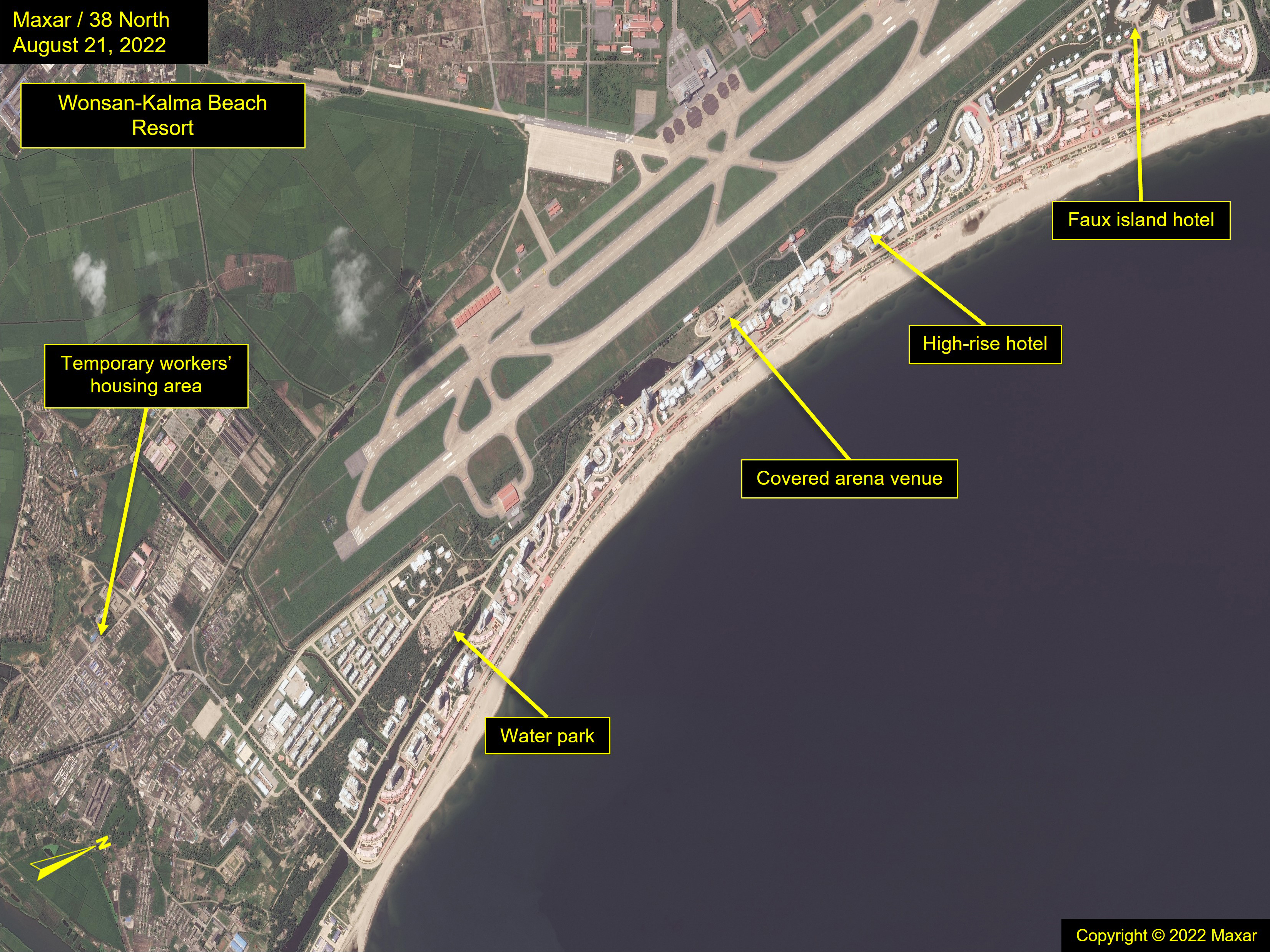

Imagery from May 2022, however, showed a new series of levees had been built, dividing the lower portion of a river in Wonsan—likely to prevent flooding—and a new soccer pitch on the northern end of the resort complex.
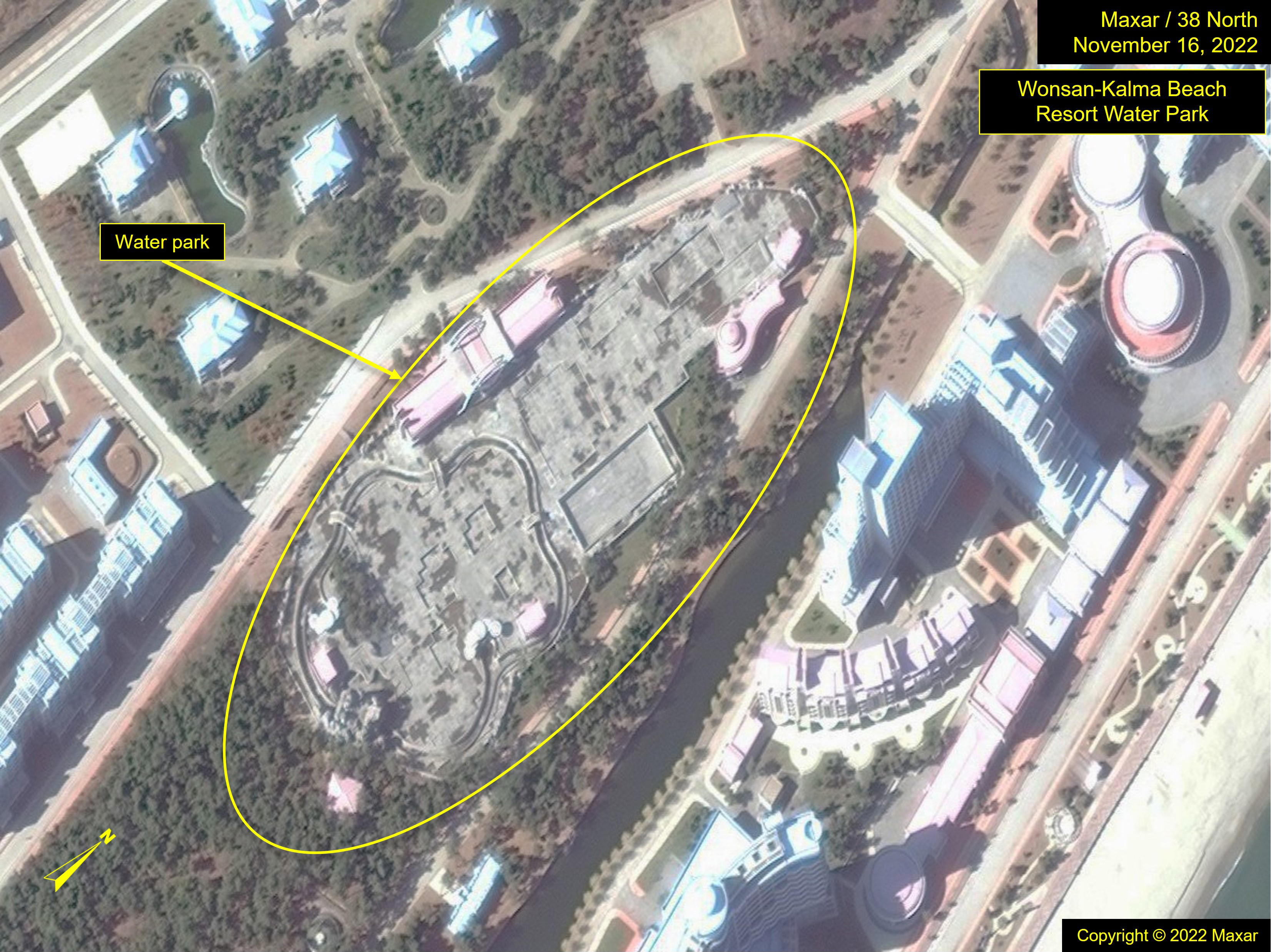
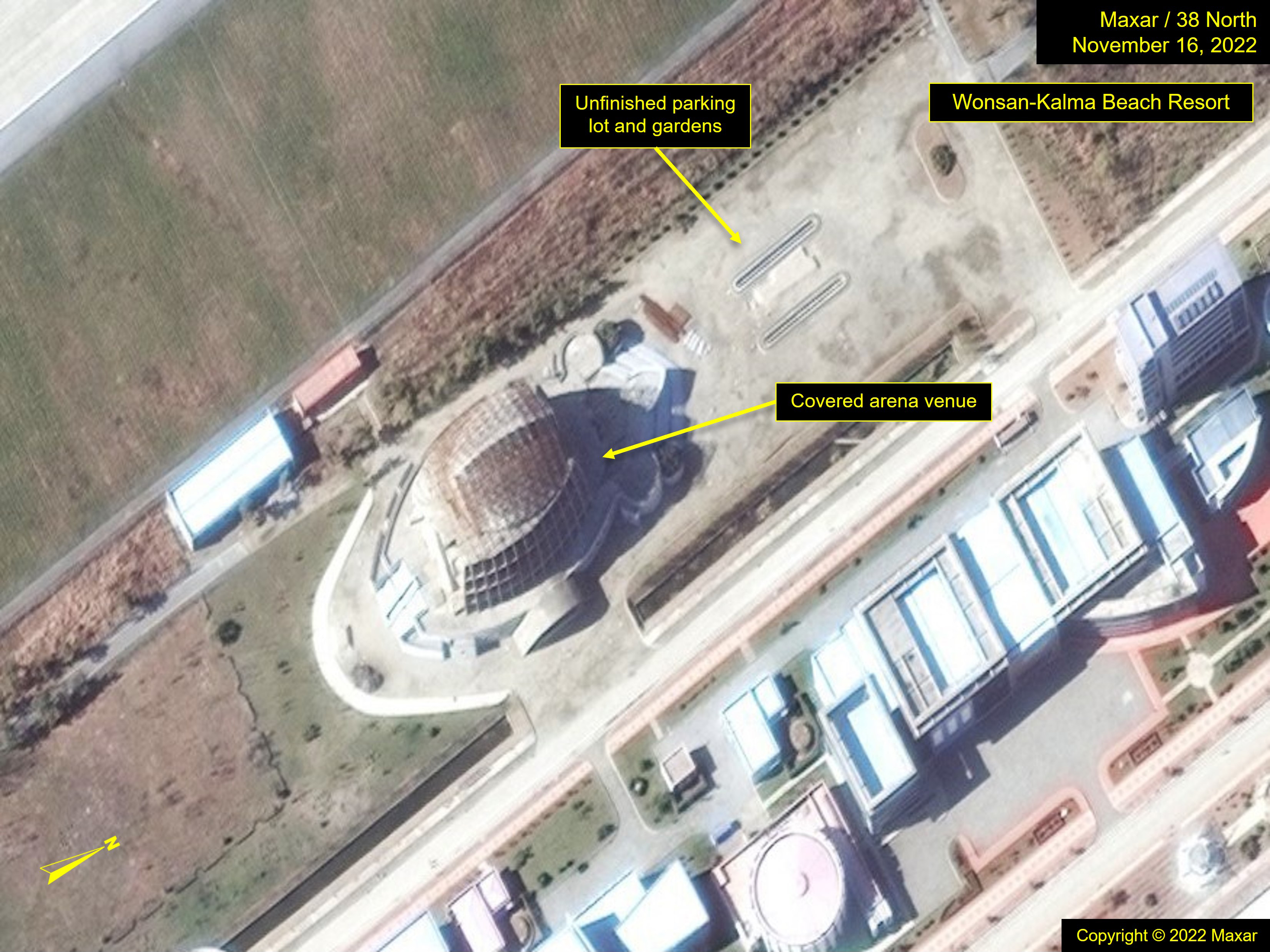
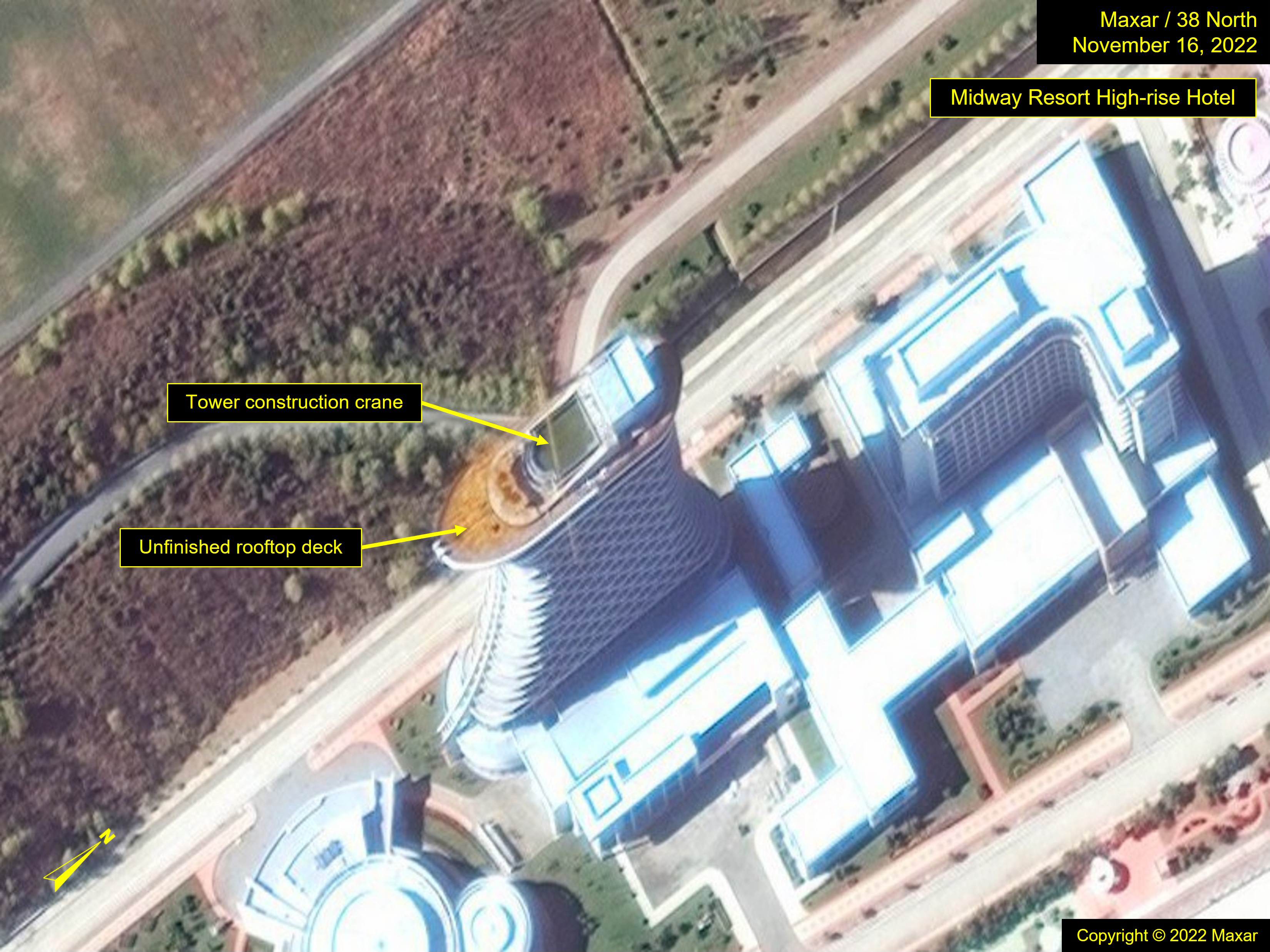
Two key venues—the water park and a domed stadium—and a few additional minor construction projects, such as the top floor of two of the more impressive hotels and the complete removal of the workers’ villages, remain unfinished.
Samjiyon
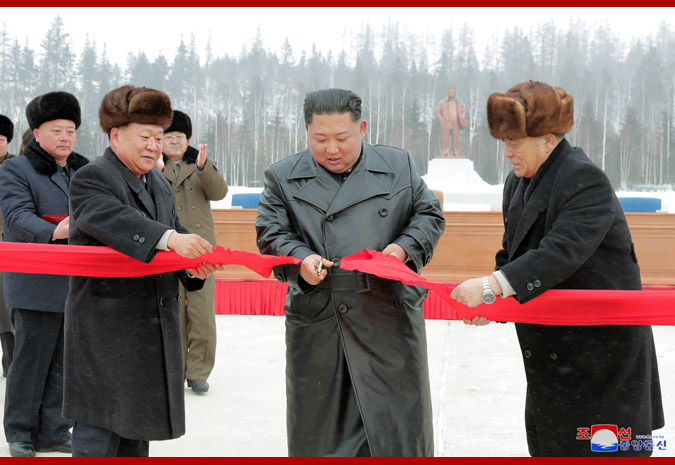
Samjiyon is unique from the tourism-focused areas. It is located in the northern part of the country and nestled below Mt. Paektu, the mythical birthplace of the Korean people. Kim Jong Un first visited Samjiyon and made vague mentions of projects in the area in 2013, but the resort town was only officially opened in December 2019, when Kim touted the area as a “socialist utopia” complete with housing, commercial establishments, and eventually a ski resort. Now, with construction complete, the area has been designated as part of the Mubong International Tourism Special Zone.
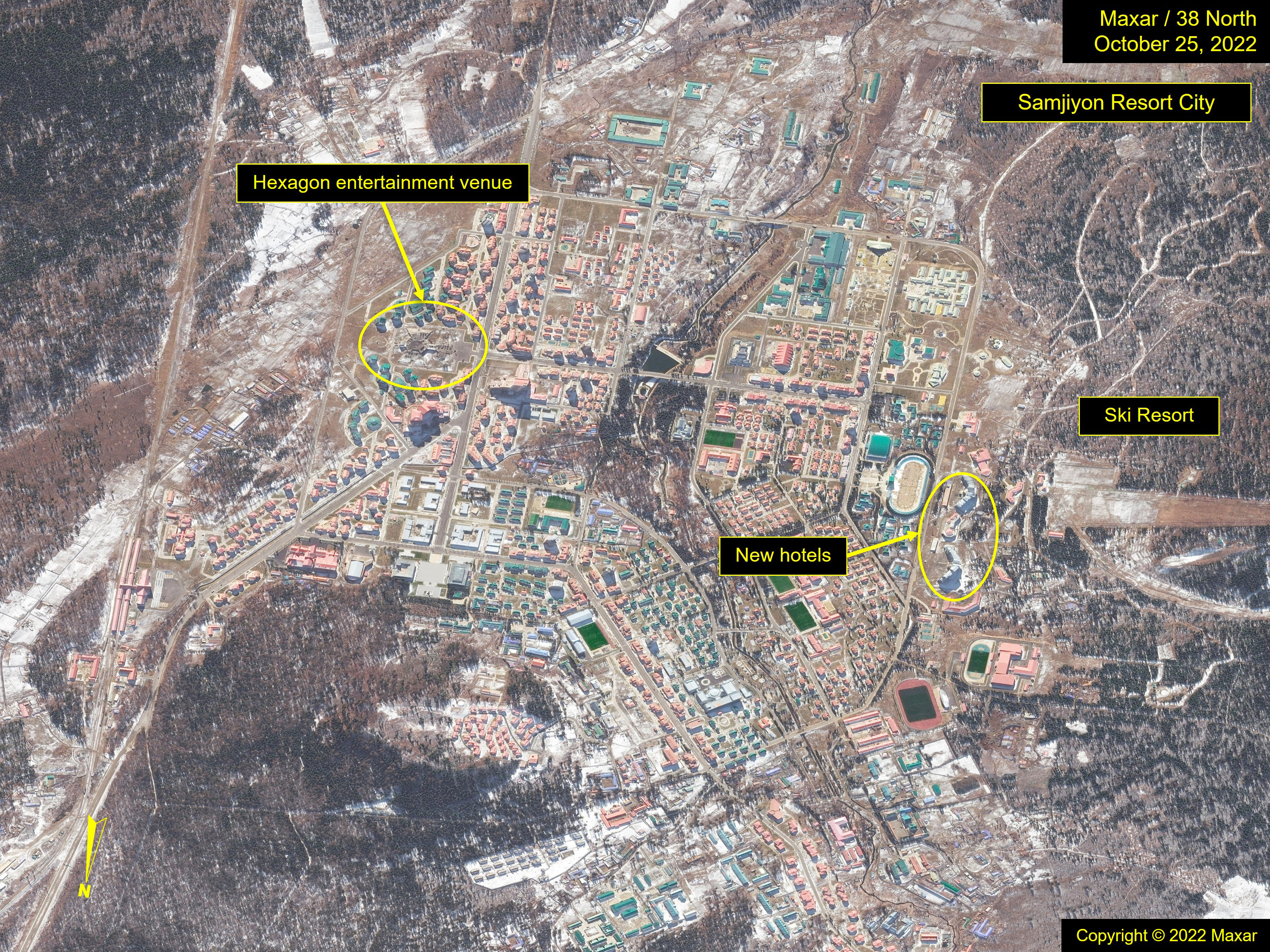
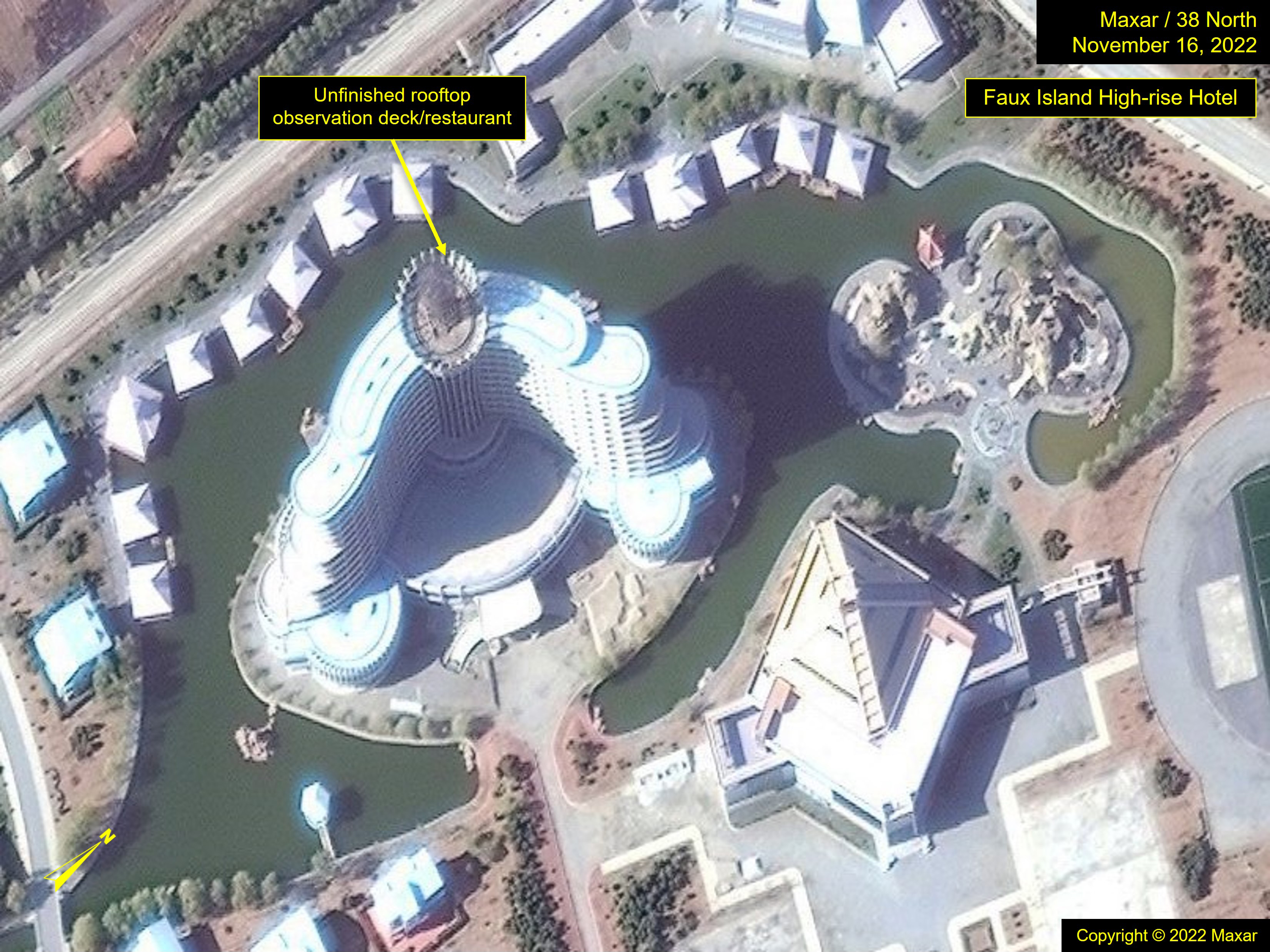
The expansion of the ski resort portion of the city began in 2020, with the addition of two large hotels at the base of the main slope. Compared to the speed of construction of other resort buildings, these have been slow to progress toward completion—no Masikryong speed here—possibly due to the impact of COVID. To date, their exteriors remain incomplete.
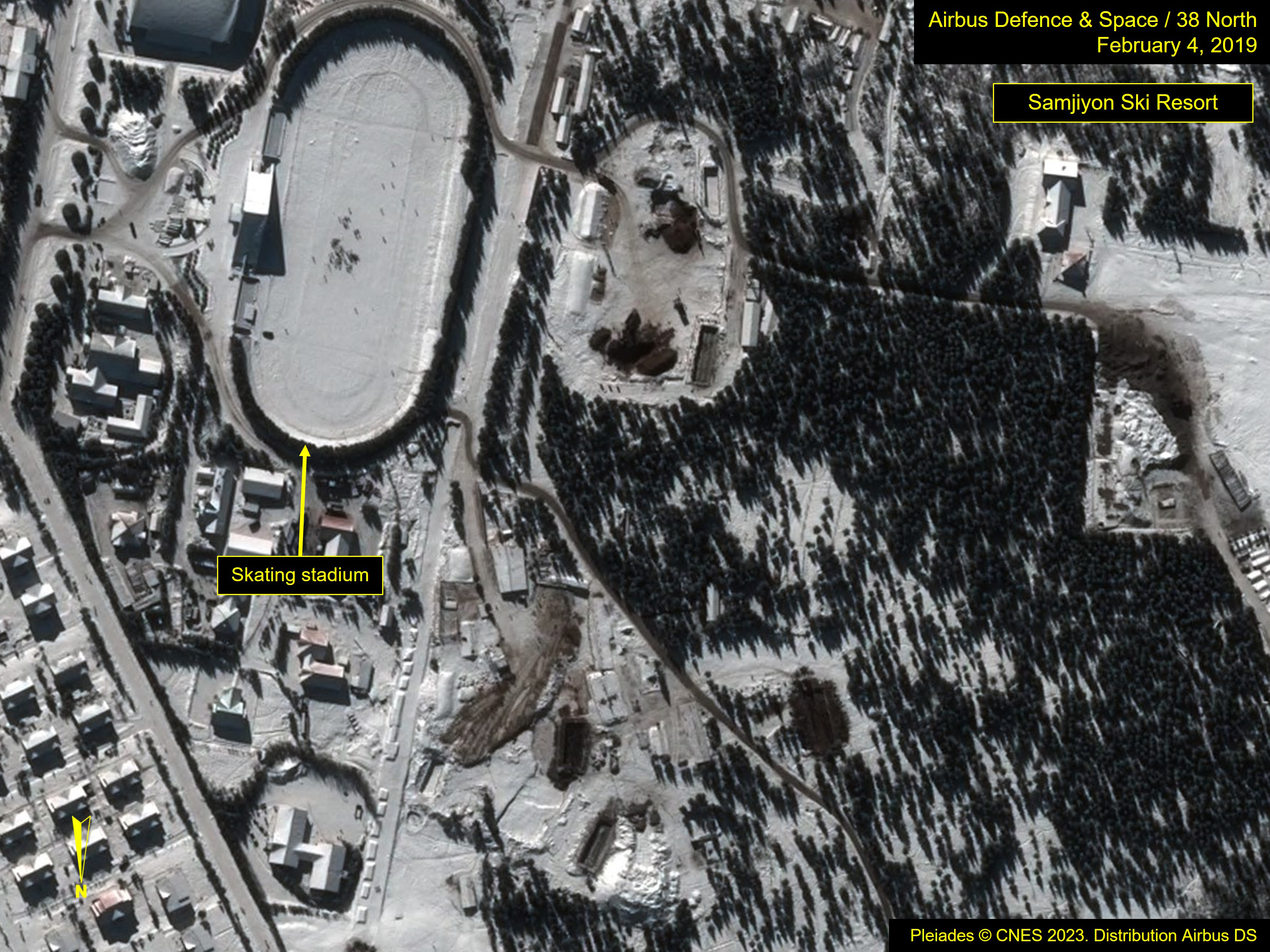
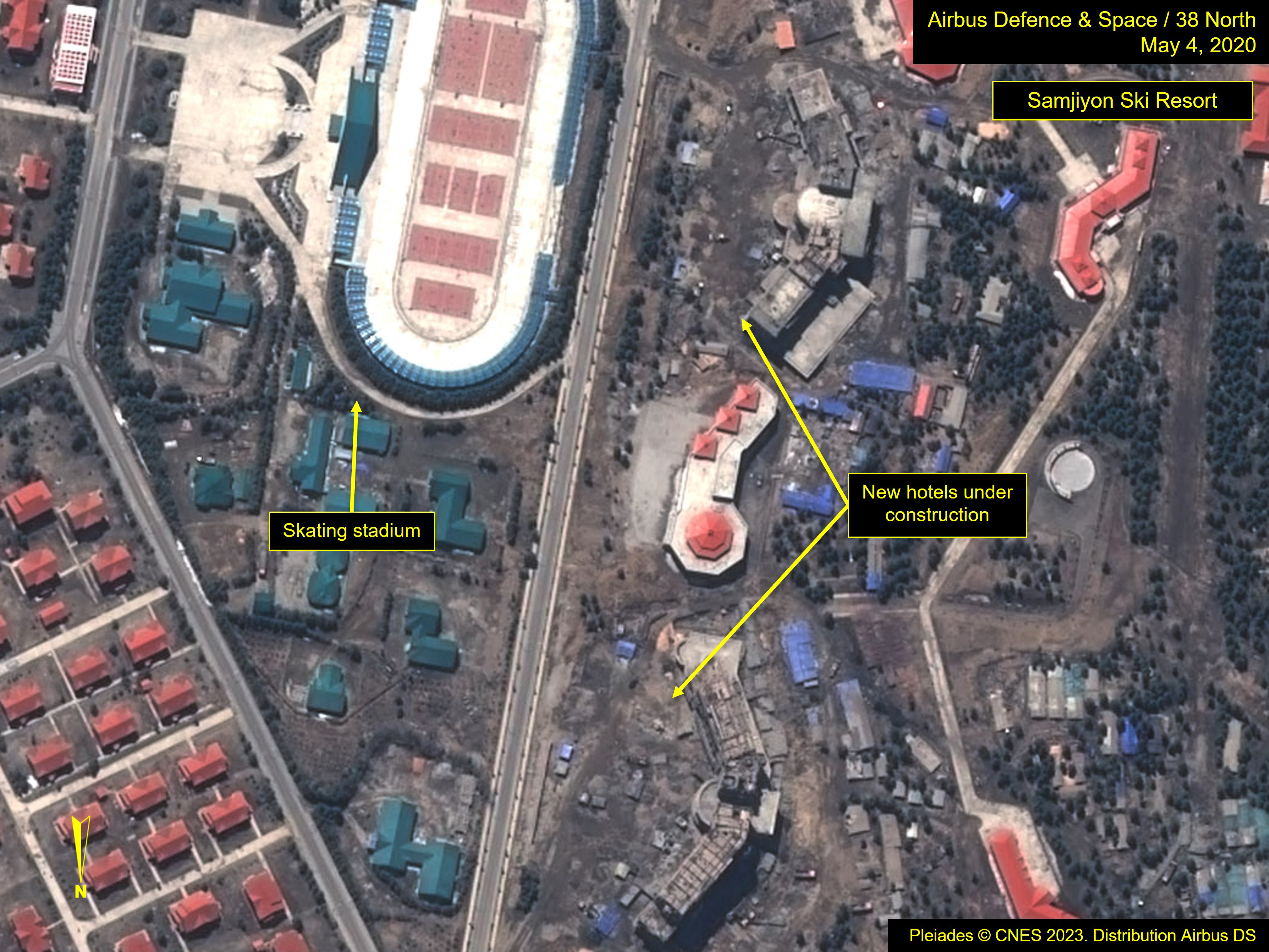
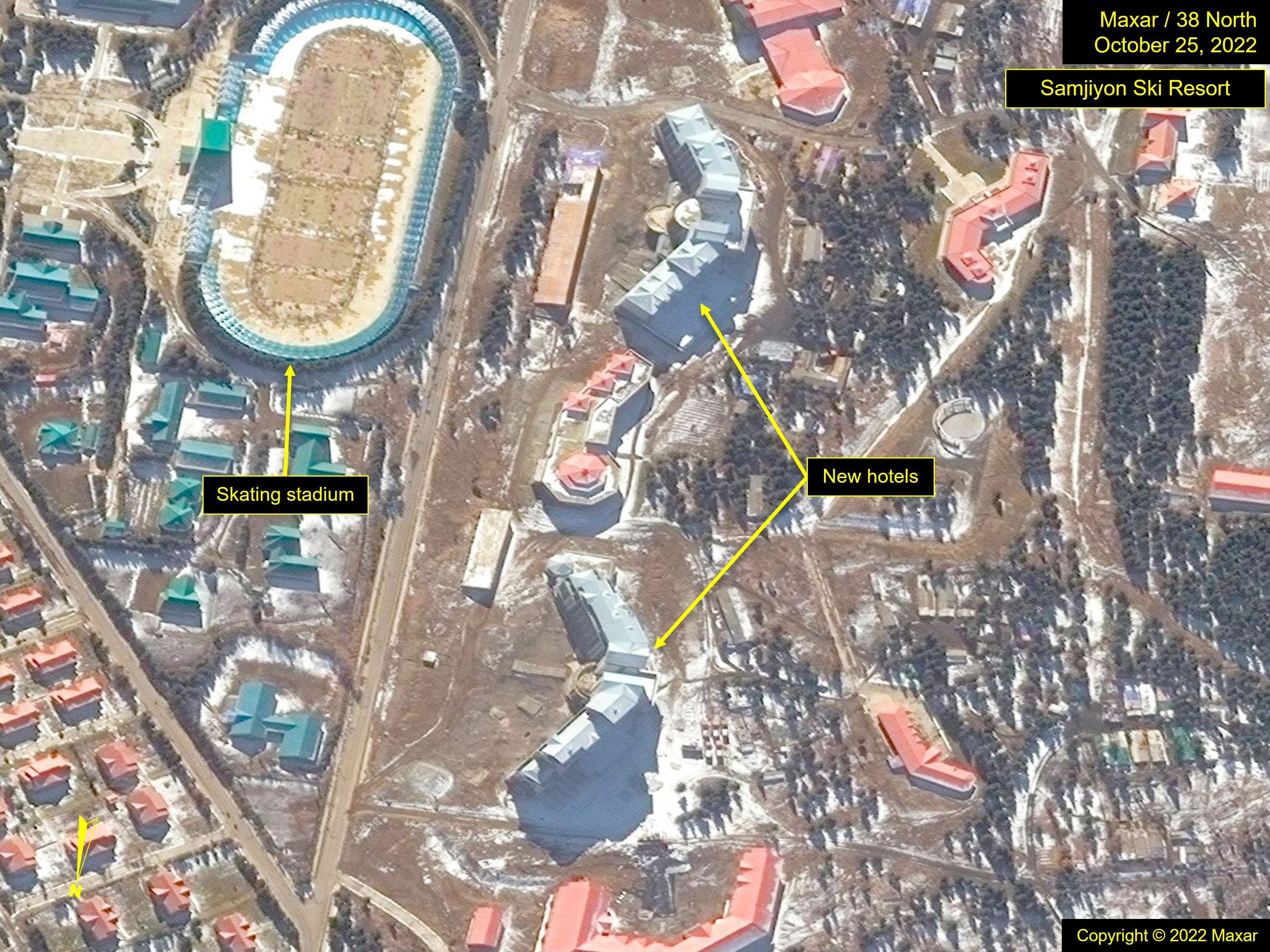
Construction of an additional resort complex atop the main ski trail, began around April 2022, where finishing work continues.
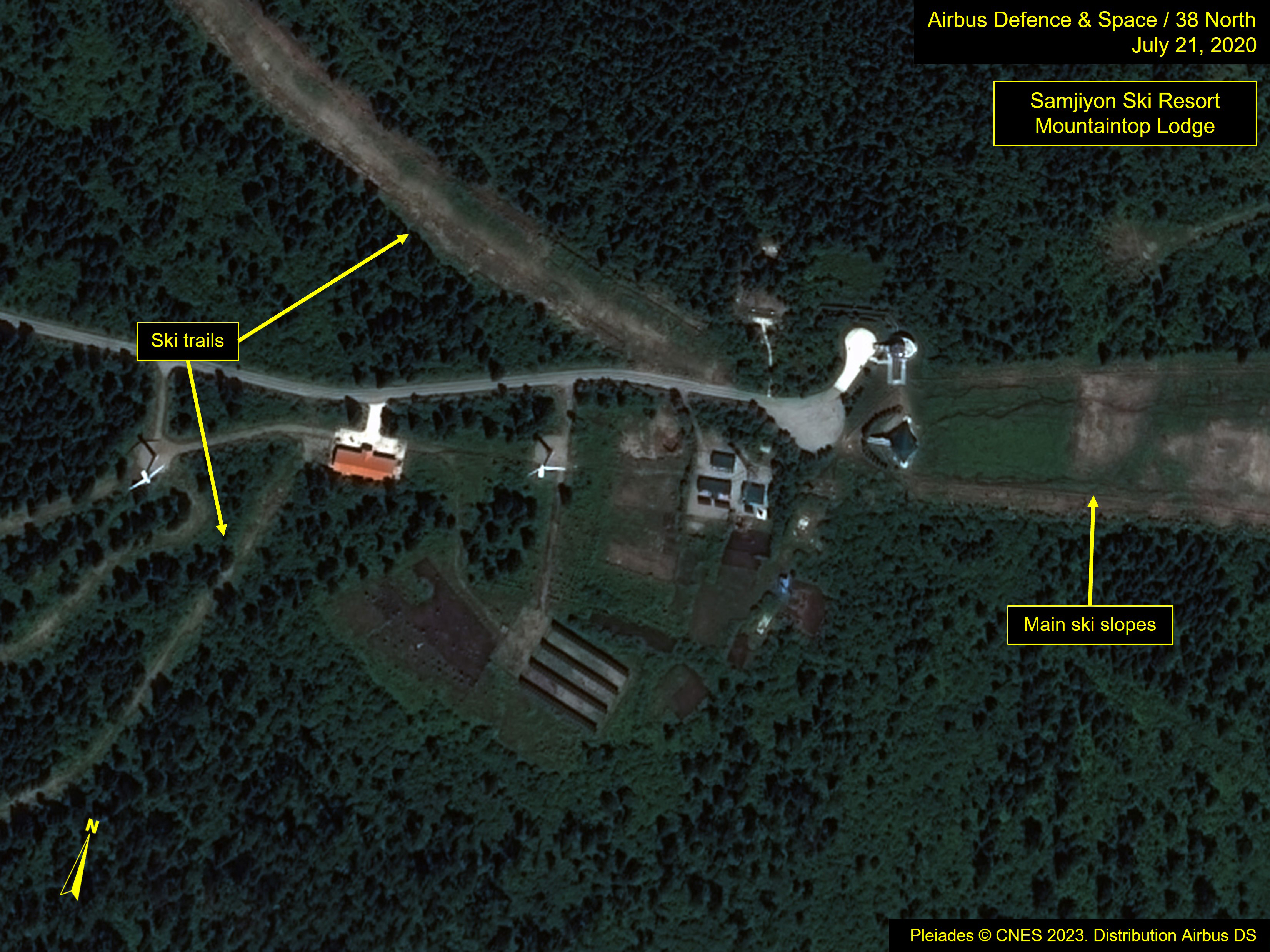
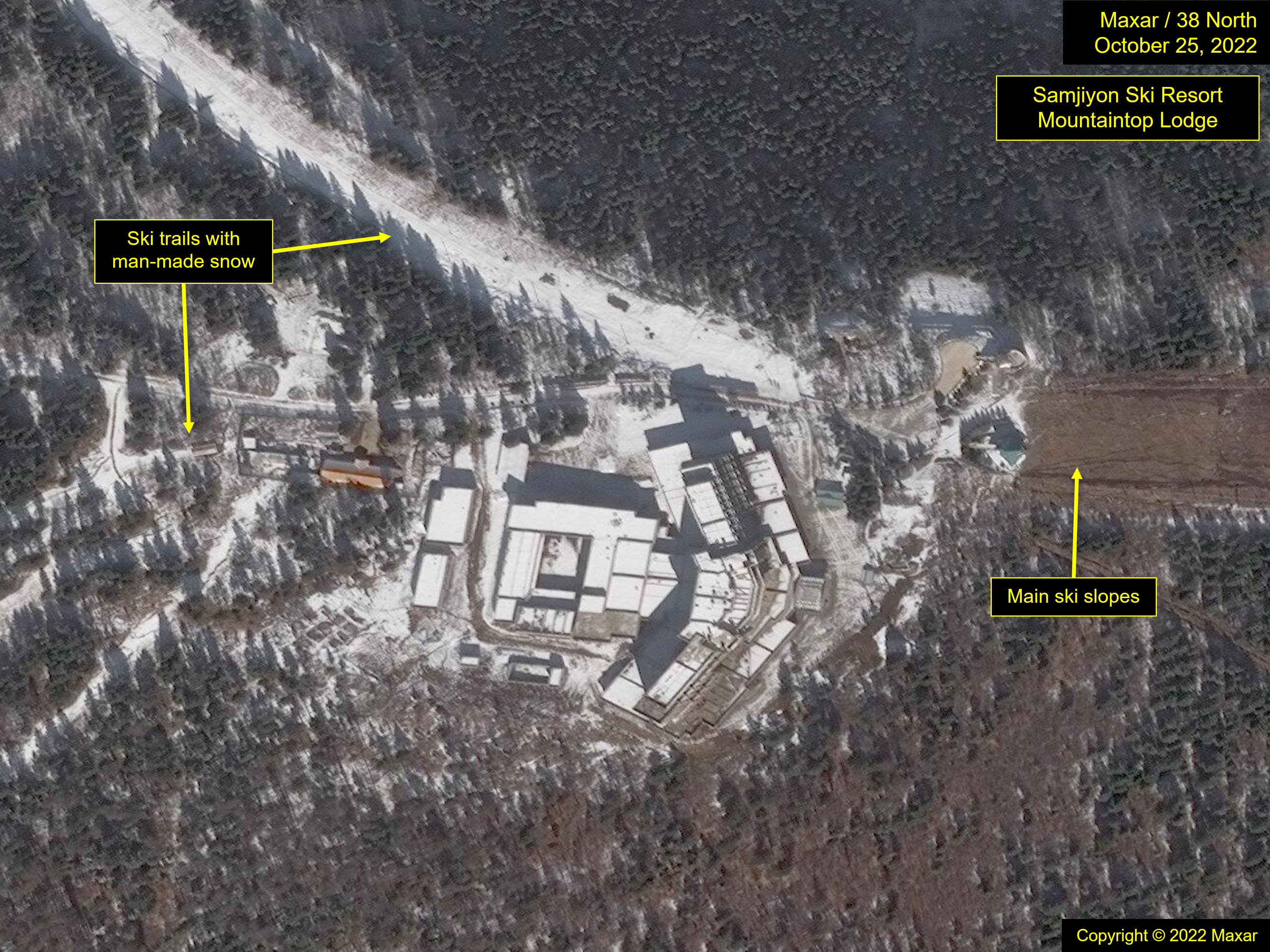
These structures, however, do not speak of the readiness of the resort to accept visitors, as the town has been open for business since 2020.
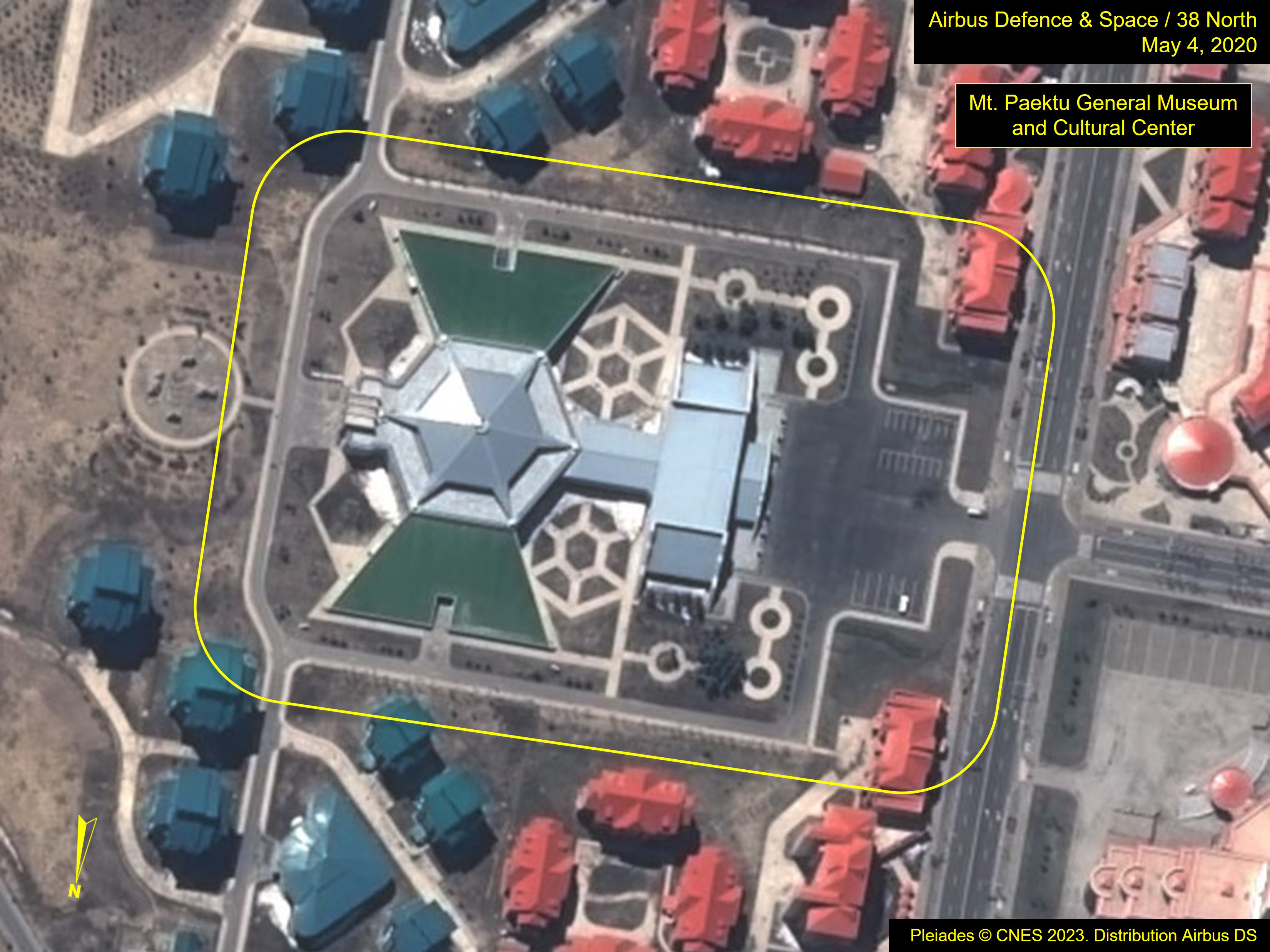
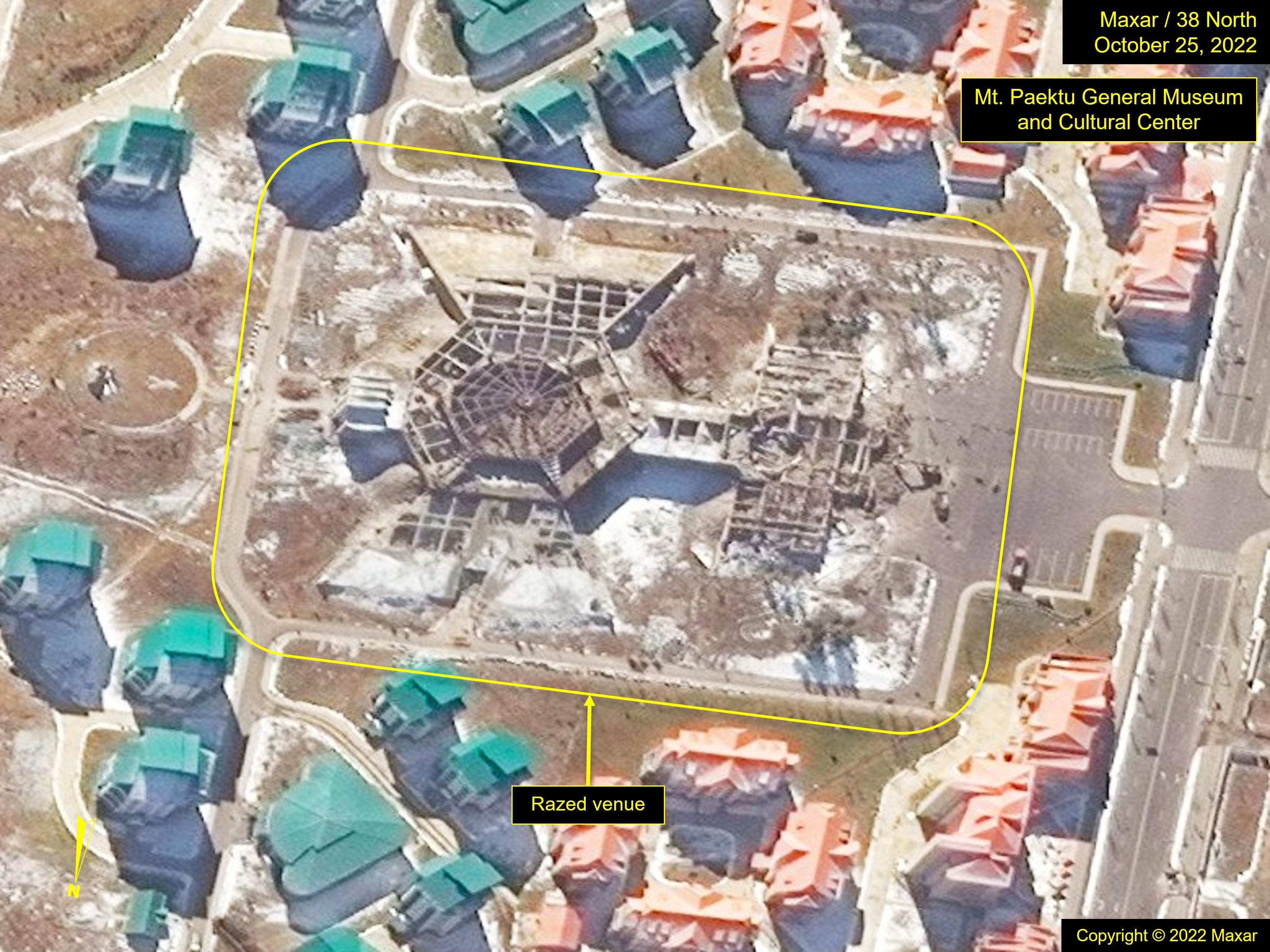
Oddly, one of the central marquee structures in the resort—the hexagon-shaped, Mt. Paektu General Museum and Cultural Center—which was built in 2017 is already being razed. The reasons for this are unclear but could include poor workmanship, quality of materials, and/or engineering design, all of which are common problems in North Korean construction.
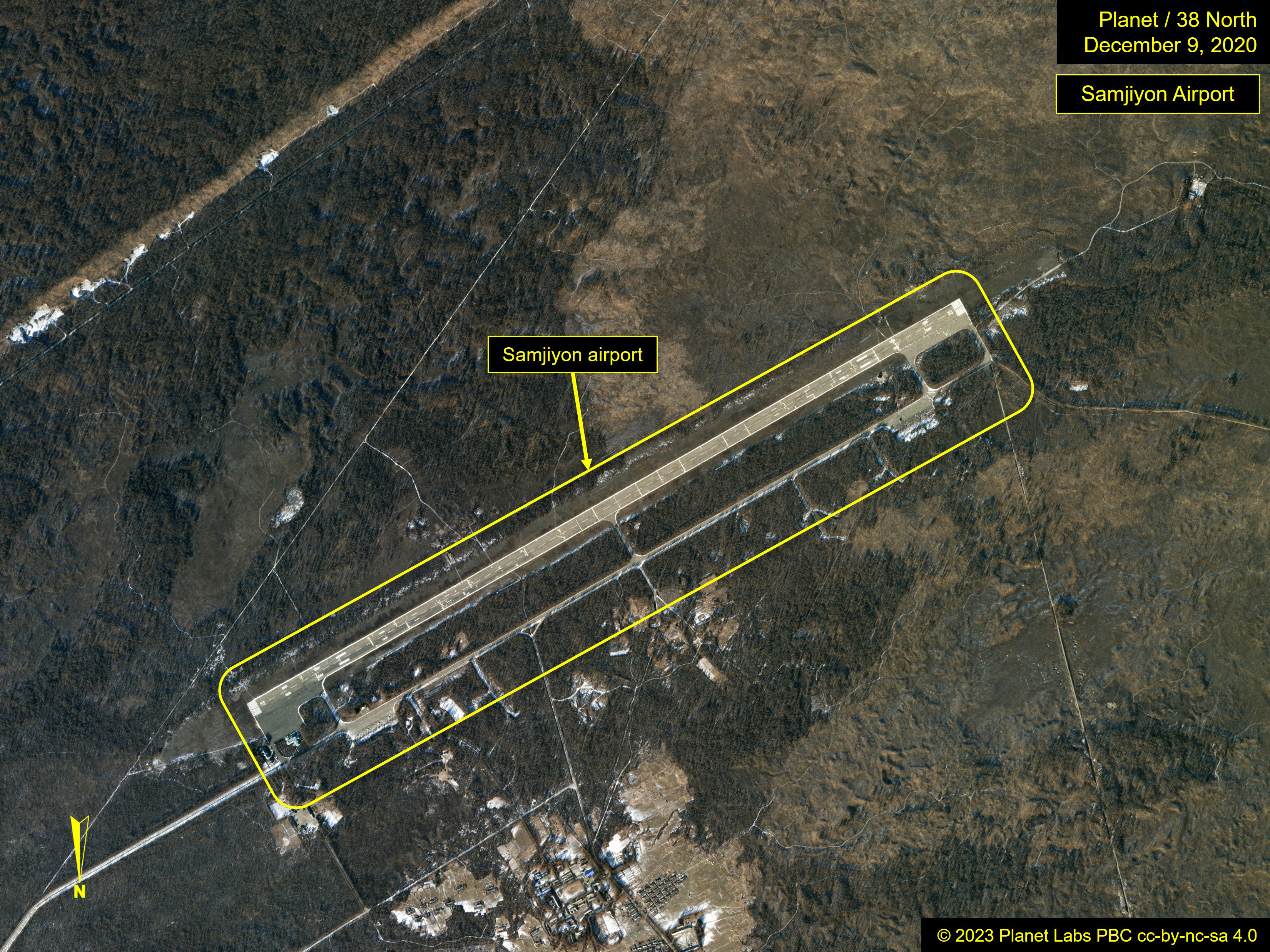
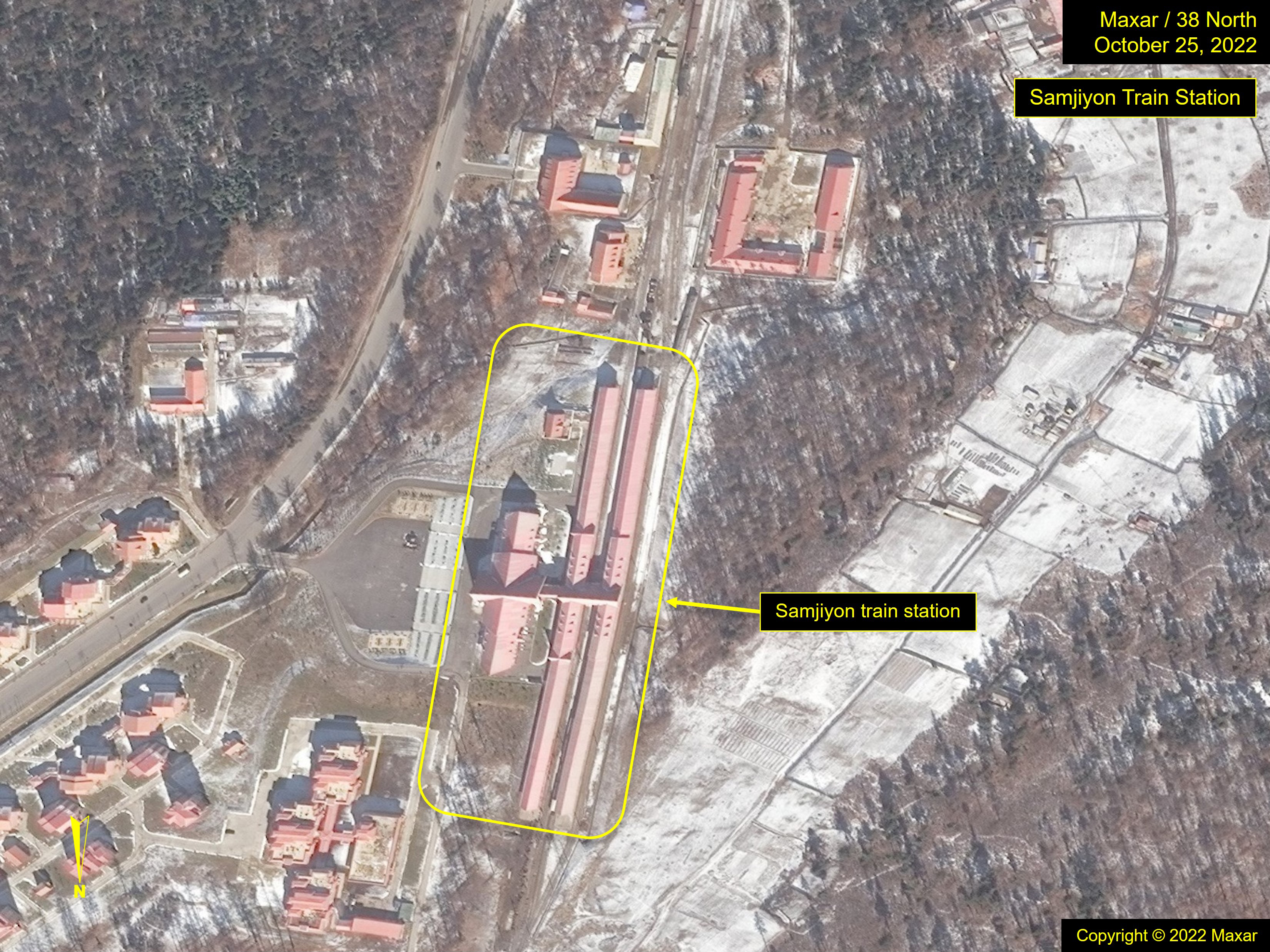
Original plans for the resort town called for the expansion and upgrading of the train station and upgrades to the airport servicing the resort as well. The train station has long been completed, but while the 3,326-meter-long runway at the airport can easily accept commercial air traffic, a passenger terminal is yet to be added.
Mt. Kumgang Tourist Area
The Mt. Kumgang Tourist Area has its own unique history. South Koreans were first allowed to visit Mt. Kumgang in 1998 and by 2008, more than 1.9 million had made the trip. The actual Mt. Kumgang tourist resort—one of the first large-scale tourism projects in North Korea and developed as a joint North-South venture—officially opened in 2002 and received around 400,000 visitors per year.
In 2008, the resort was closed due to an incident in which a South Korean tourist was shot by a North Korean guard. The South Korean government banned its citizens from visiting the resort until the North agreed to a joint investigation of the incident and provided safety guarantees for future visitors. North Korea rejected these terms and the resort remained closed.

In the following years, many of the buildings under construction at the time were not completed; others remained dormant and fell into disrepair. In an unexpected move, in 2019, Kim Jong Un declared that the South Korean-constructed buildings within the district would be demolished, complaining that they were “shabby” and “backward” in design and that the area would be renewed with North Korean designed and constructed facilities. In a 2020 statement, a North Korean official stated that the plan for the Mt. Kumgang area was to develop it into a “modern and comprehensive international tourist and cultural area.“
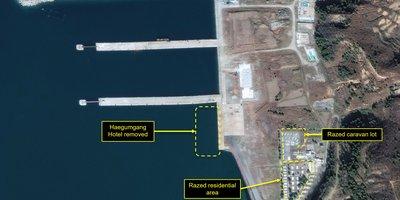
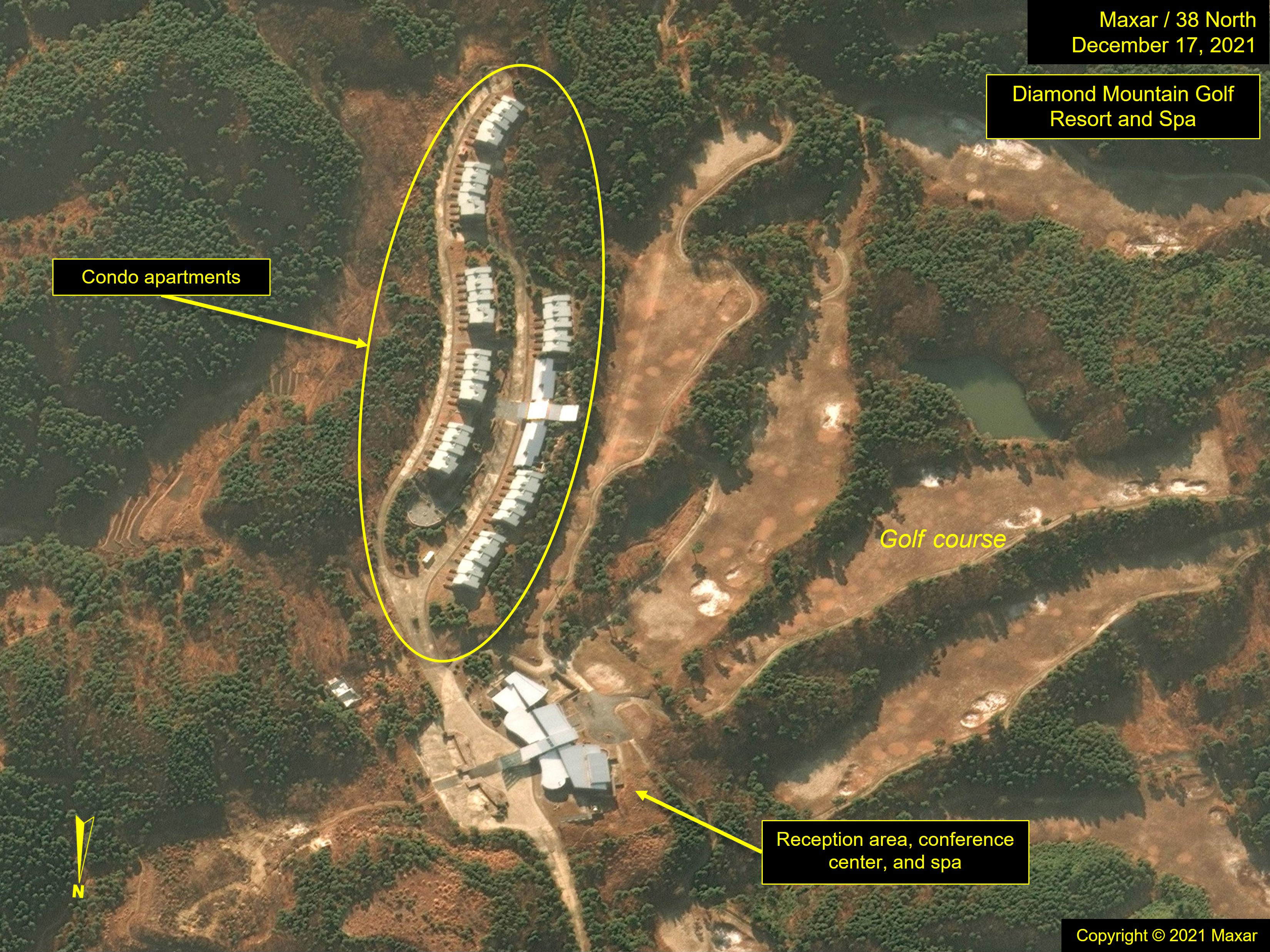
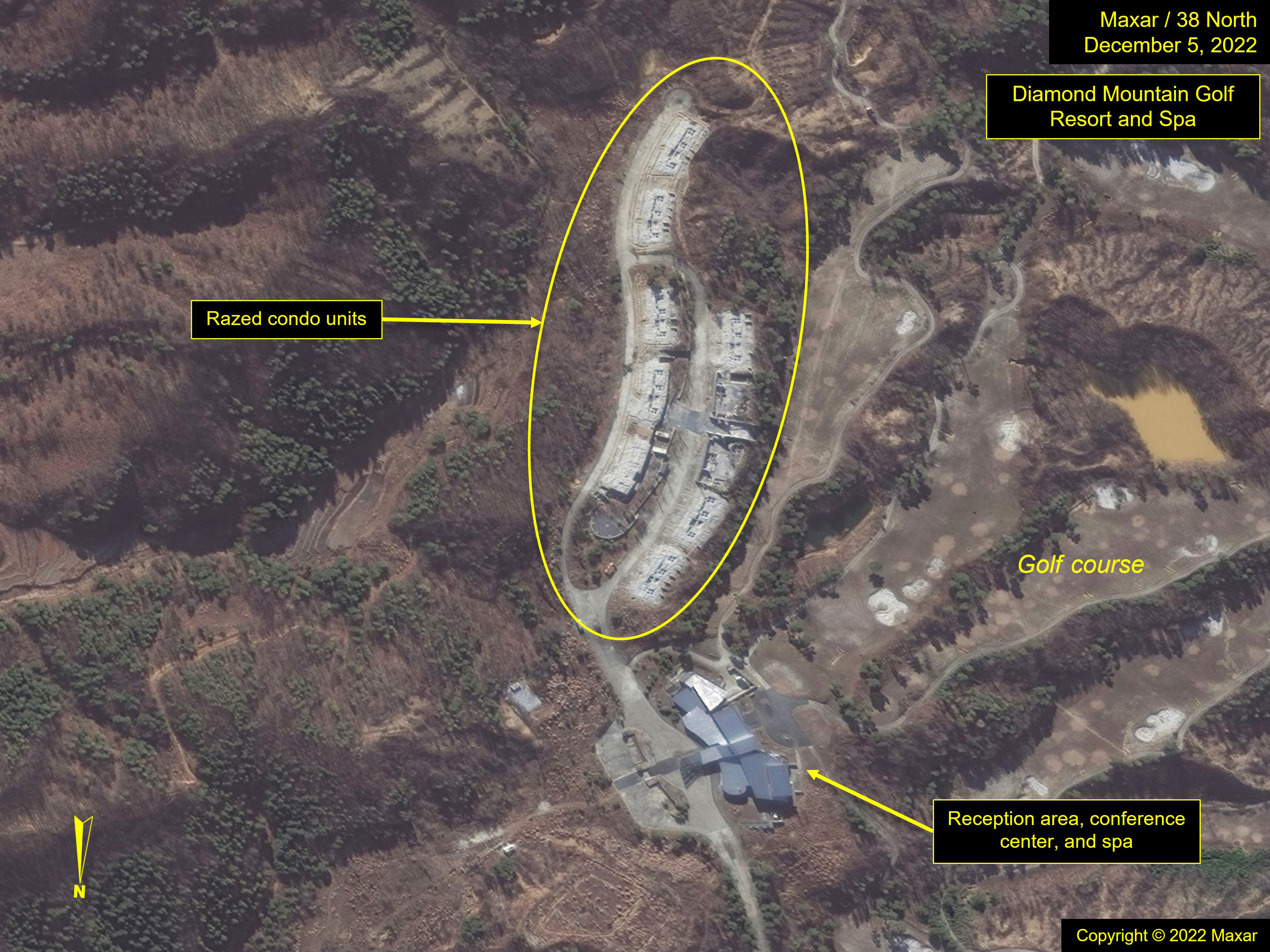
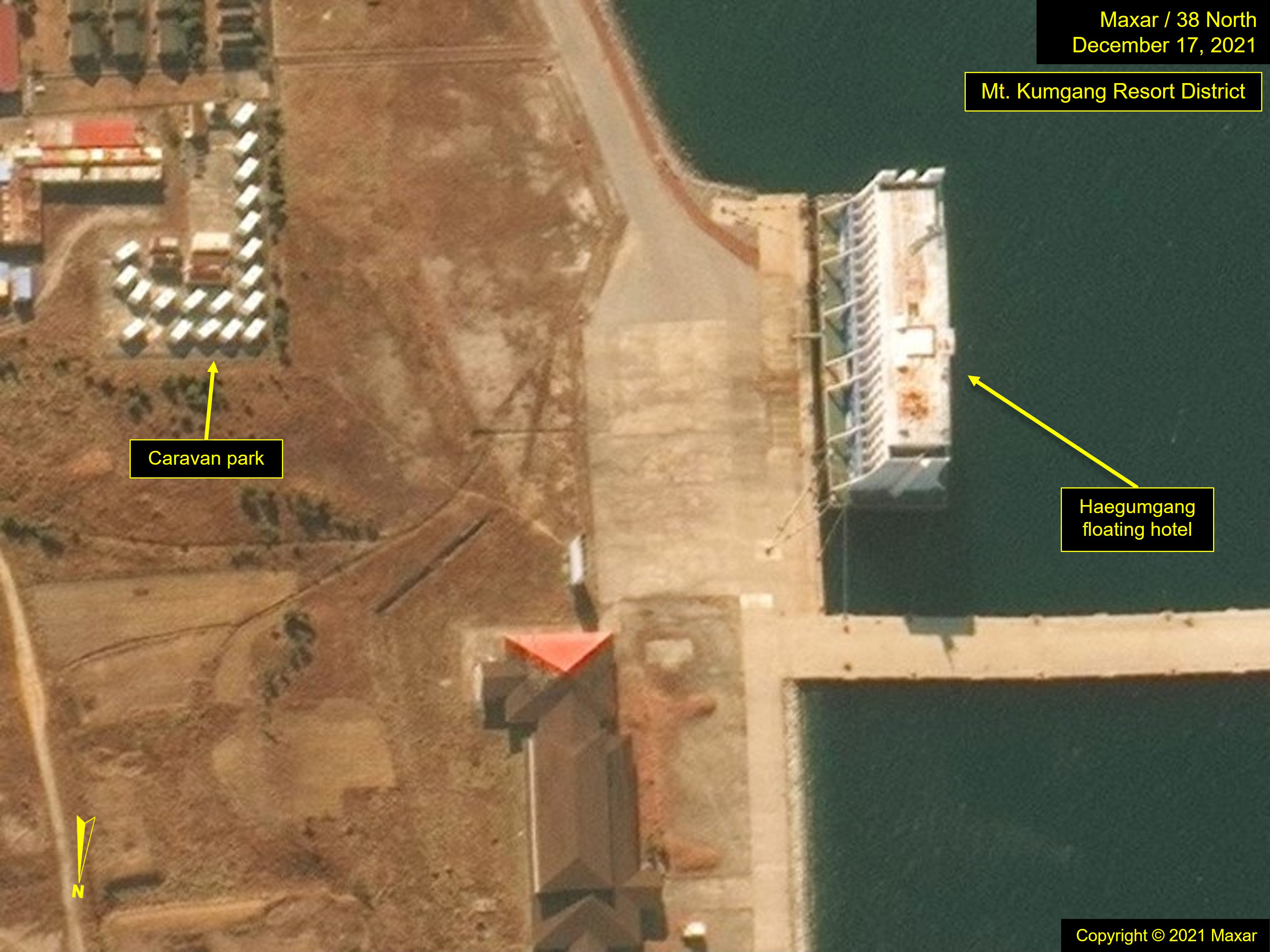
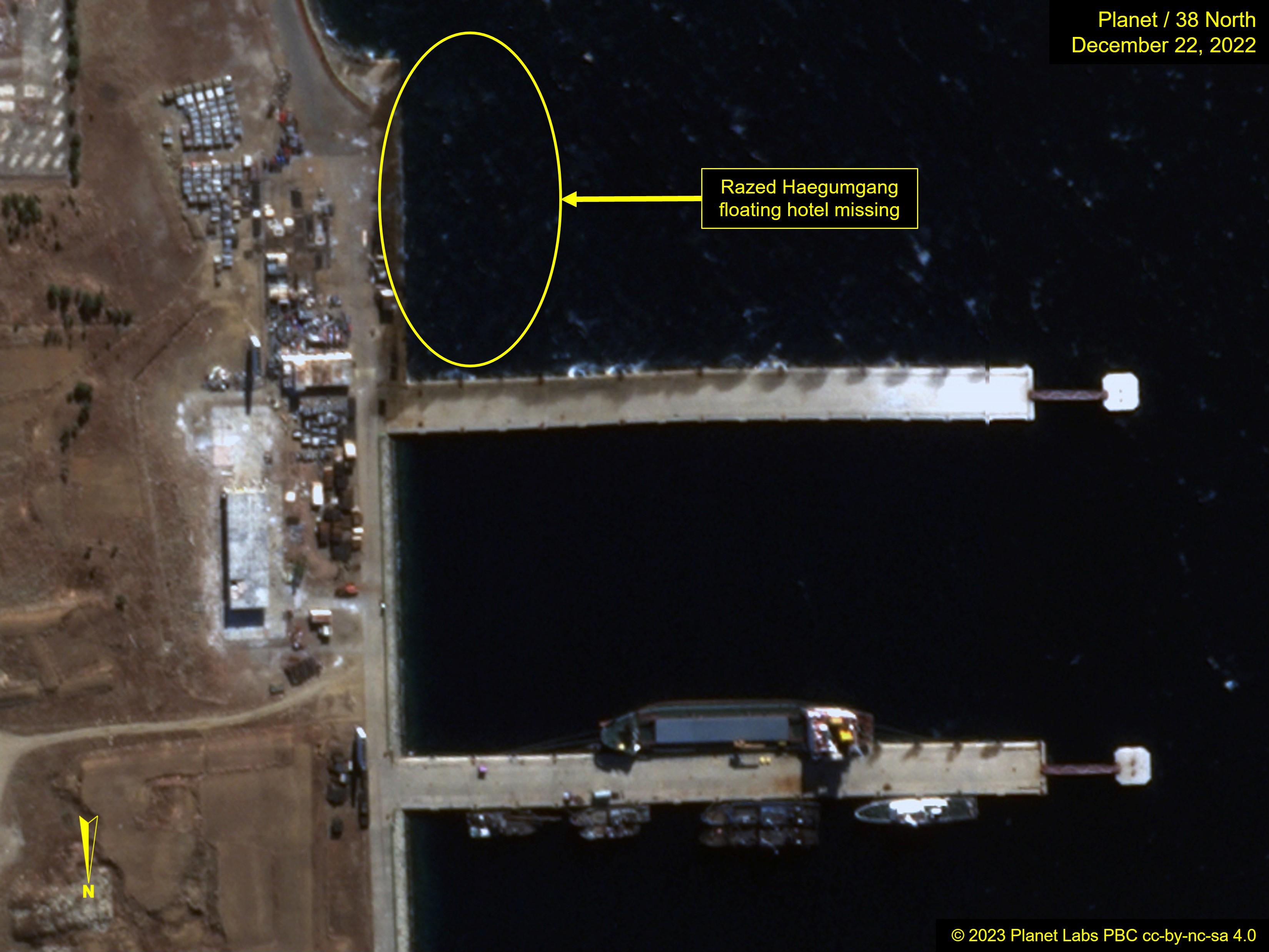
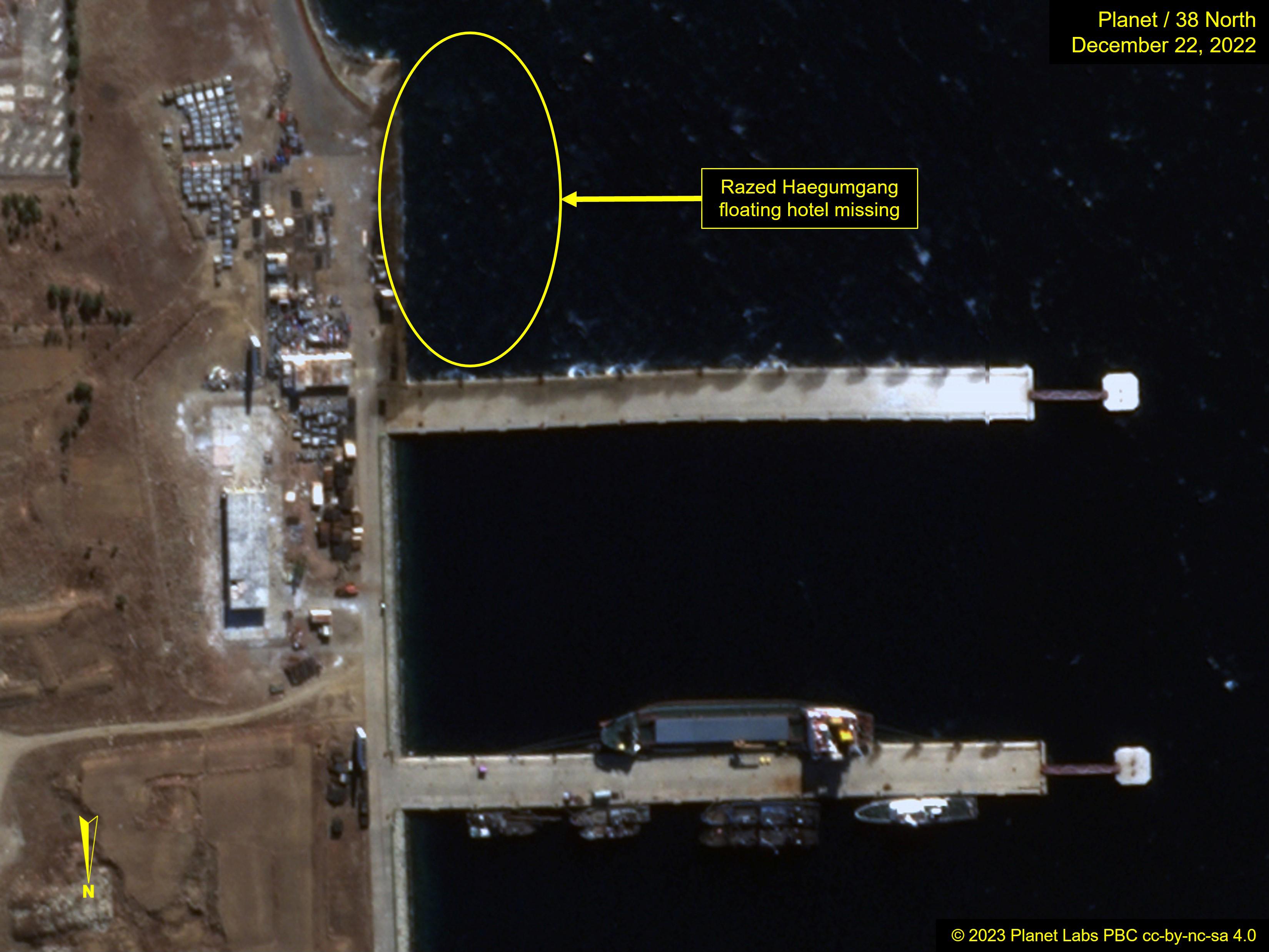
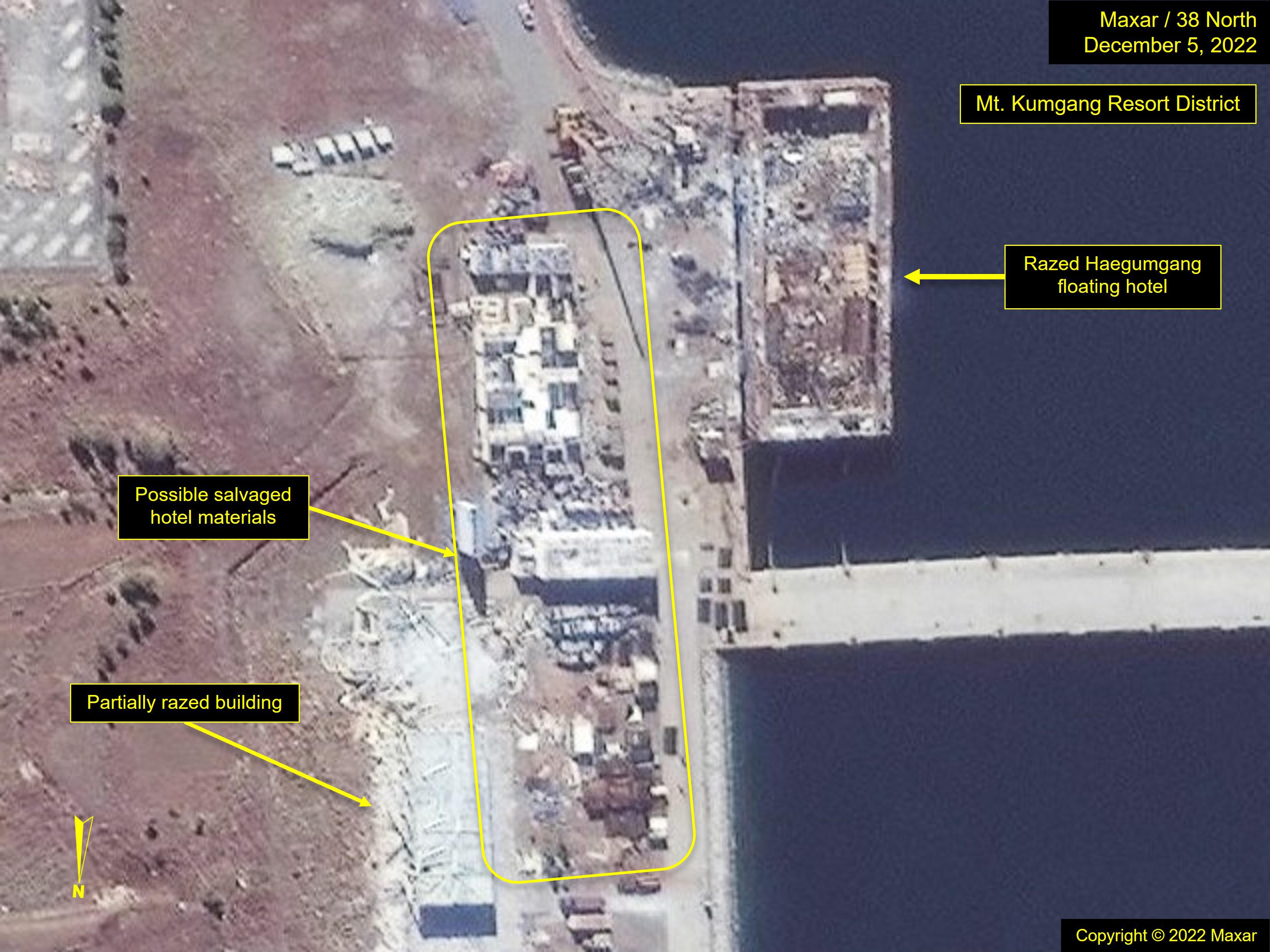
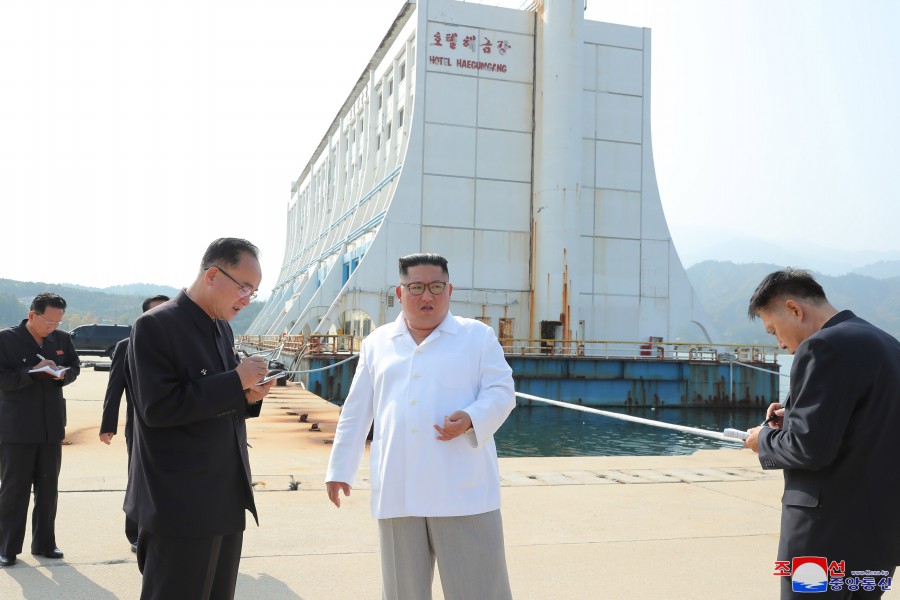
Imagery from April 2022 showed the destruction of the famous Haegumgang floating hotel and the 10 apartment buildings located at the Diamond Mountain Golf Resort and Spa. The clubhouse and spa building at the golf resort, however, appear untouched. The golf course has deteriorated significantly but remains intact.
At the floating hotel, materials taken from demolition efforts have been placed in a rather orderly fashion on the quay adjacent to the hotel’s floating base.
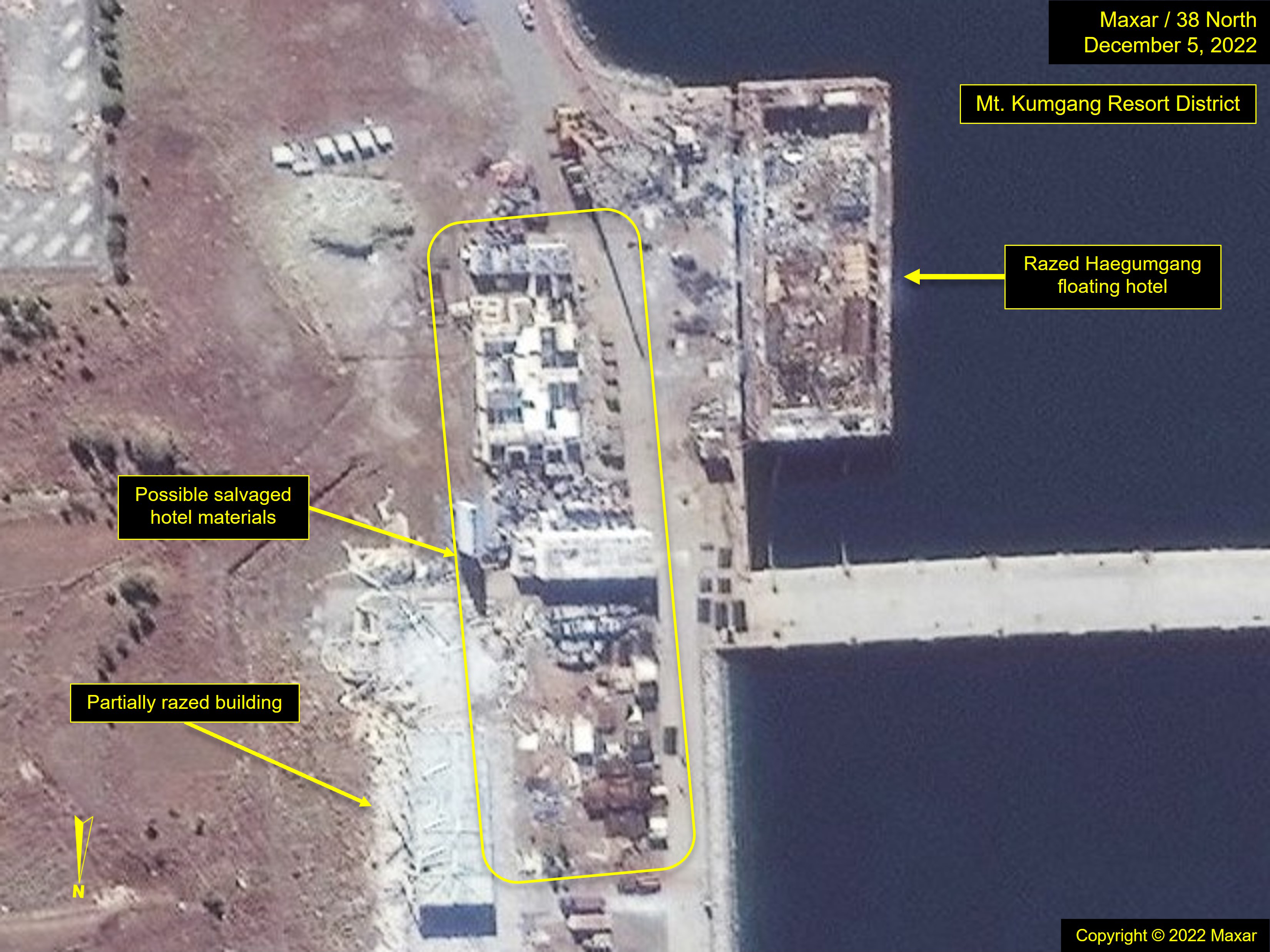
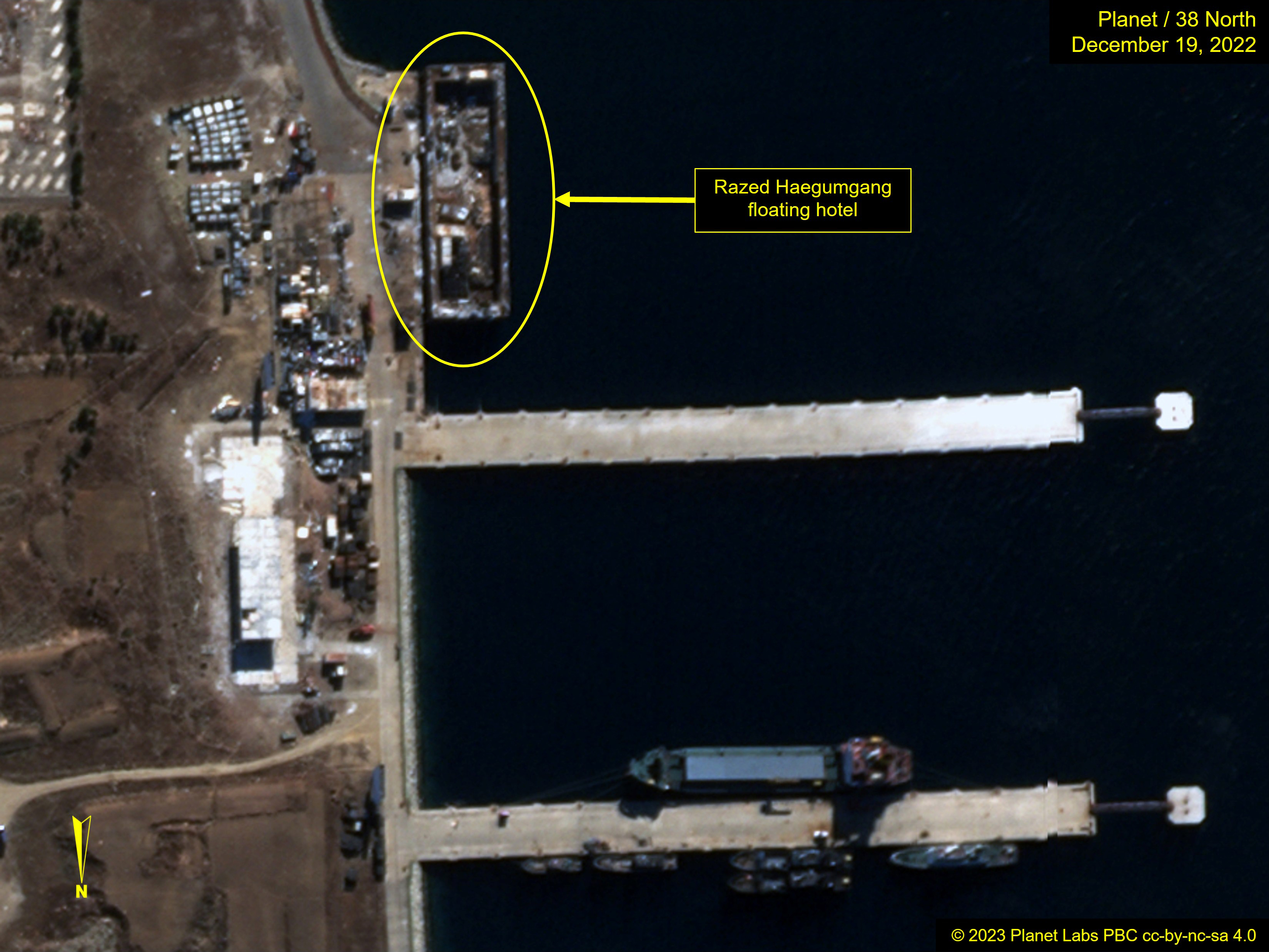
The floating base remained docked at the quay until December 2022, when it was moved out of the bay. It is unclear whether the North Koreans plan to reuse the barge to host a new hotel, but it is likely that the stored materials are intended to be repurposed, perhaps for other construction projects, as reports have circulated that finishing materials and furnishing are hard to come by, given the international sanctions in place.
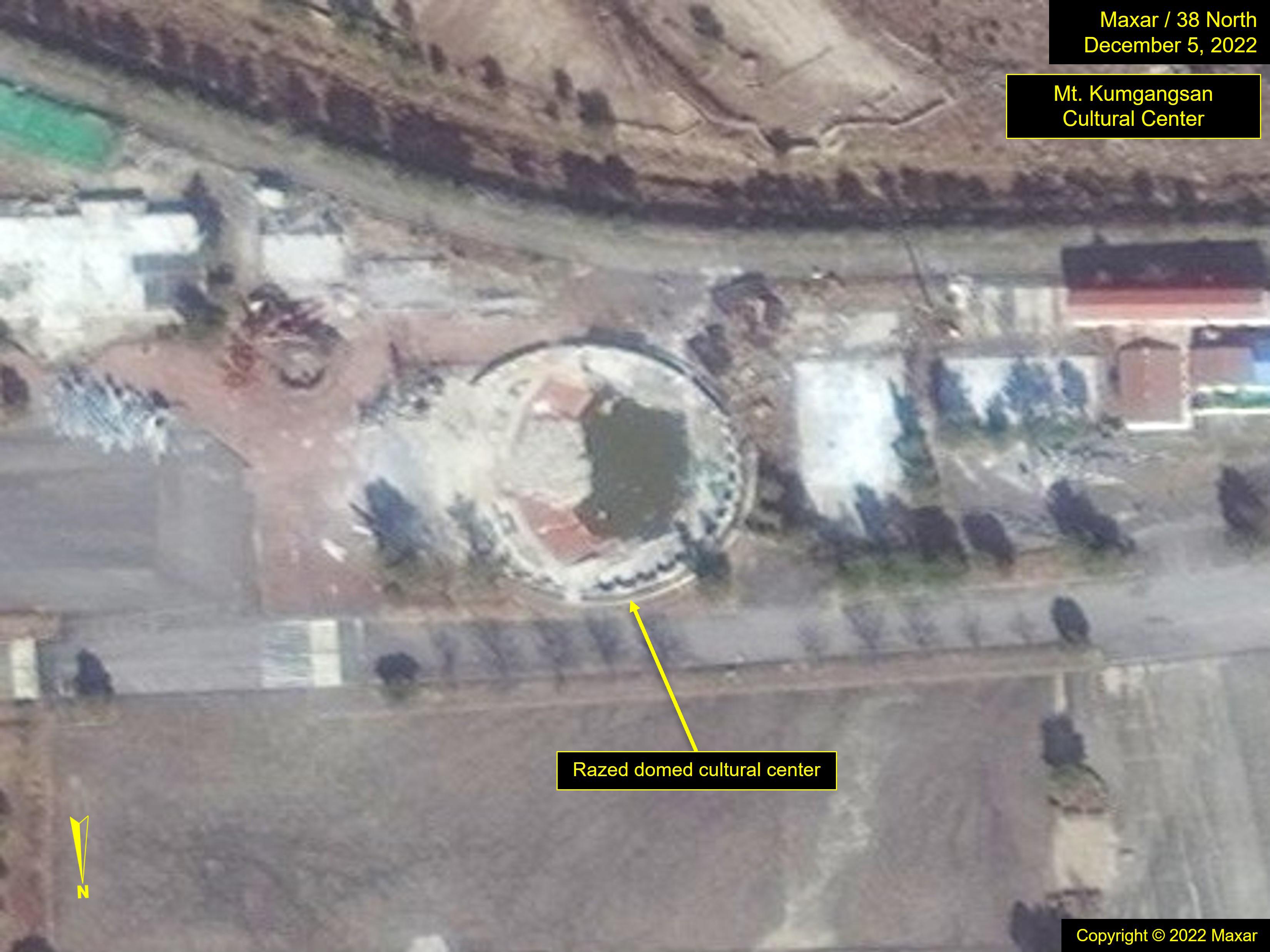
Little further activity was observed at this resort until early September 2022, when the marquee Kumgangsan Culture Center (domed) was razed and materials were removed from nearby hotels in the downtown area of the resort.
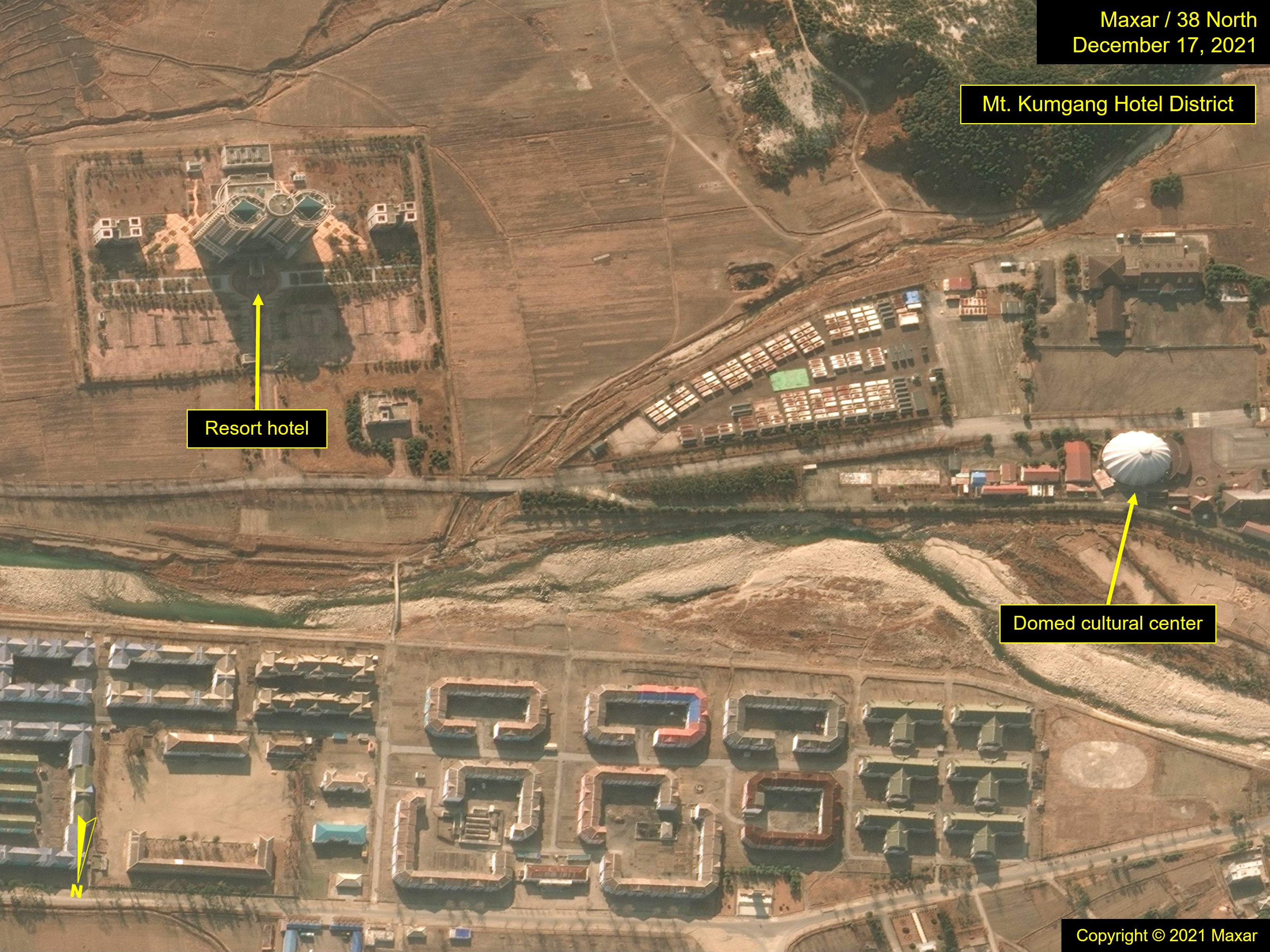
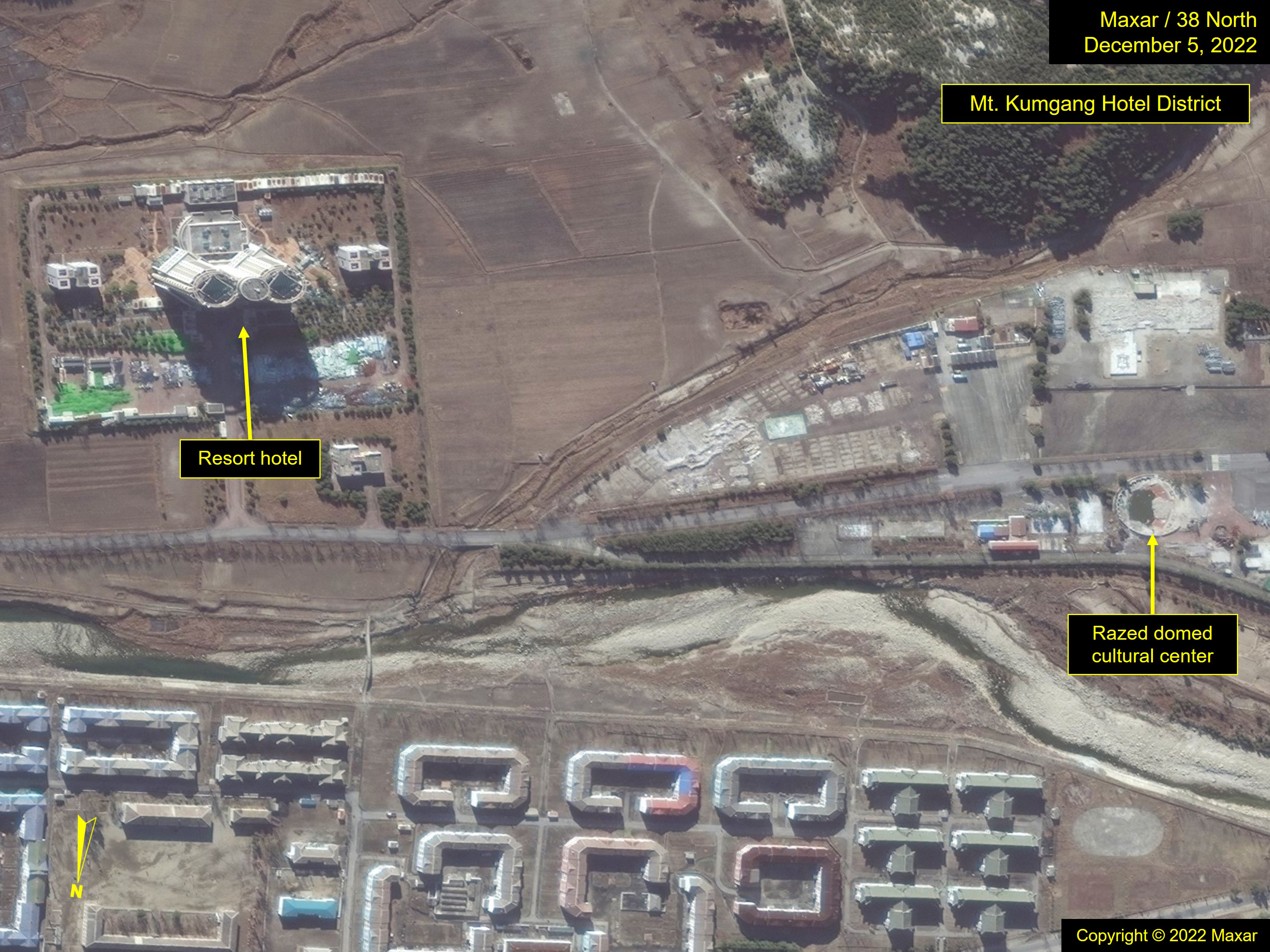
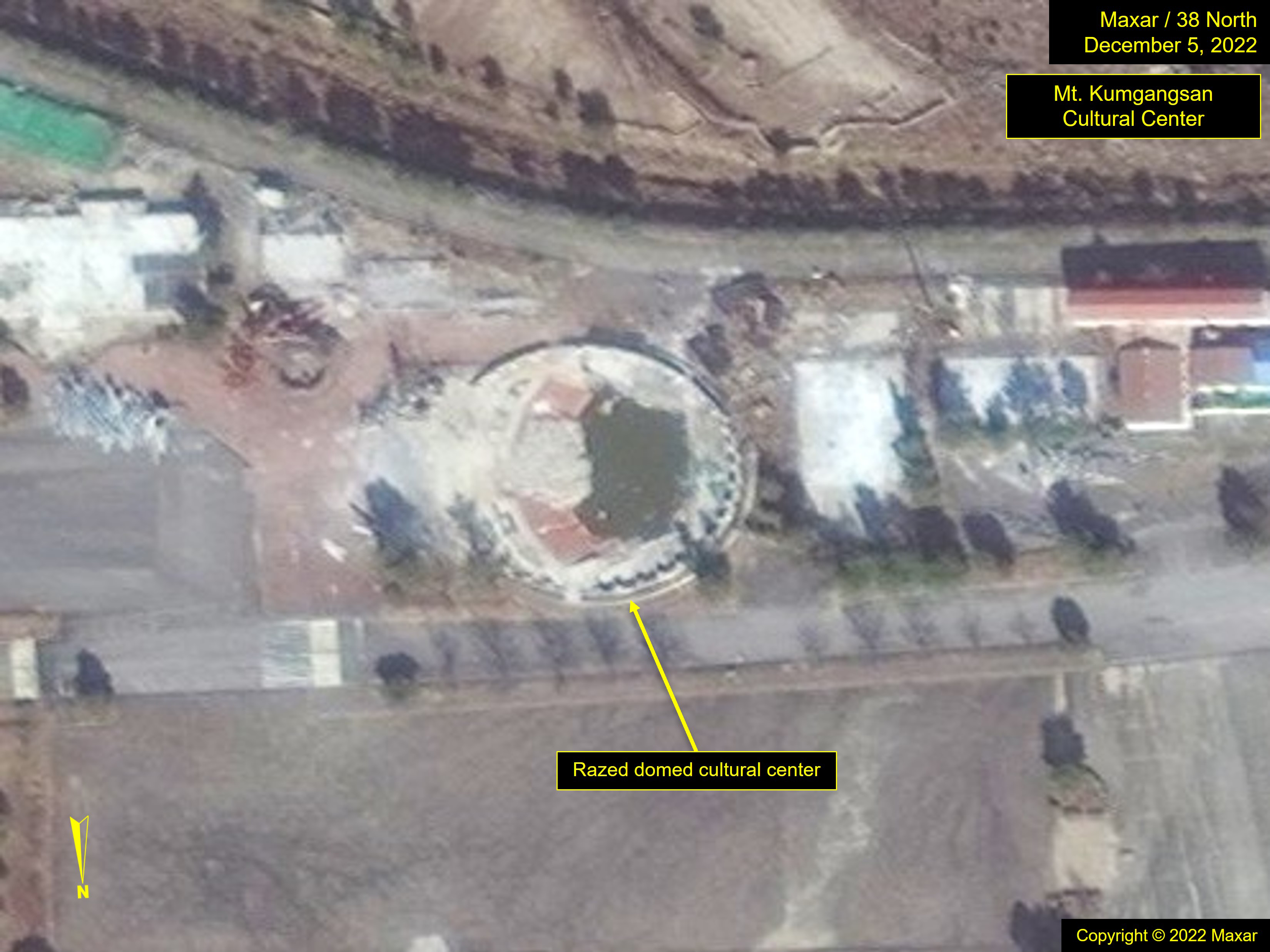
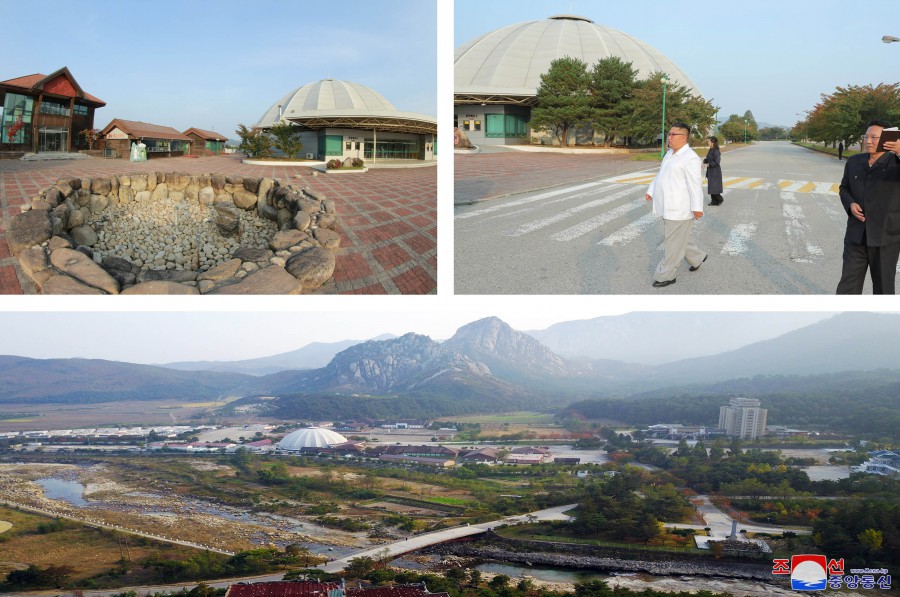
To date, however, no efforts toward the construction of new buildings in the area have been observed.
Conclusion
North Korea’s reopening has been slow and controlled and is unlikely to change drastically anytime soon given the ongoing challenges of COVID-19 around the world, especially in neighboring China. When foreign visitors may be allowed to enter again is especially unclear.
The previous emphasis on developing and expanding tourist sites and the hospitality industry as a whole largely fell off when the pandemic hit and prospects for foreign visitors were indefinitely halted. Economic priorities in recent years have promoted projects meant to improve the standards of living for domestic constituencies—such as housing and local area revitalization projects—rather than for income-generating tourist ventures
Dec 22, 2022
Haegumgang floating hotel removed from quay at Mt. Kumgang
Nov 18, 2022
Construction continues around Masikryong Ski Resort
Foundations for new apartment buildings to the east of the Masikryong Ski Resort main lodge area are visible on imagery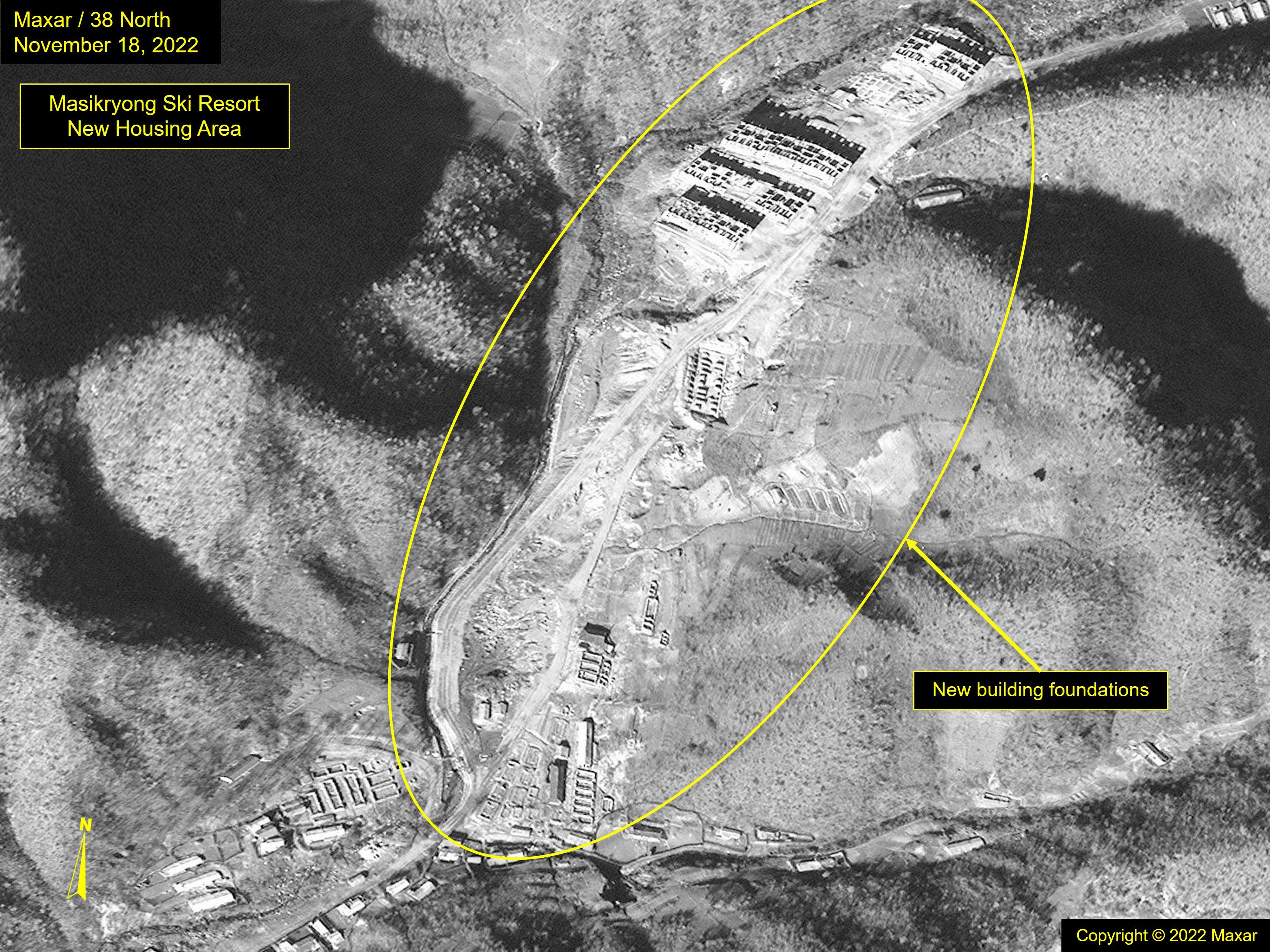
Sep 01, 2022
Domed cultural center at Mt. Kumgang razed
Jul 04, 2022
Wonsan-Kalma Beach Resort still under construction
Though many large buildings and sites at the Wonsan-Kalma Beach Resort are appear completed, some projects remain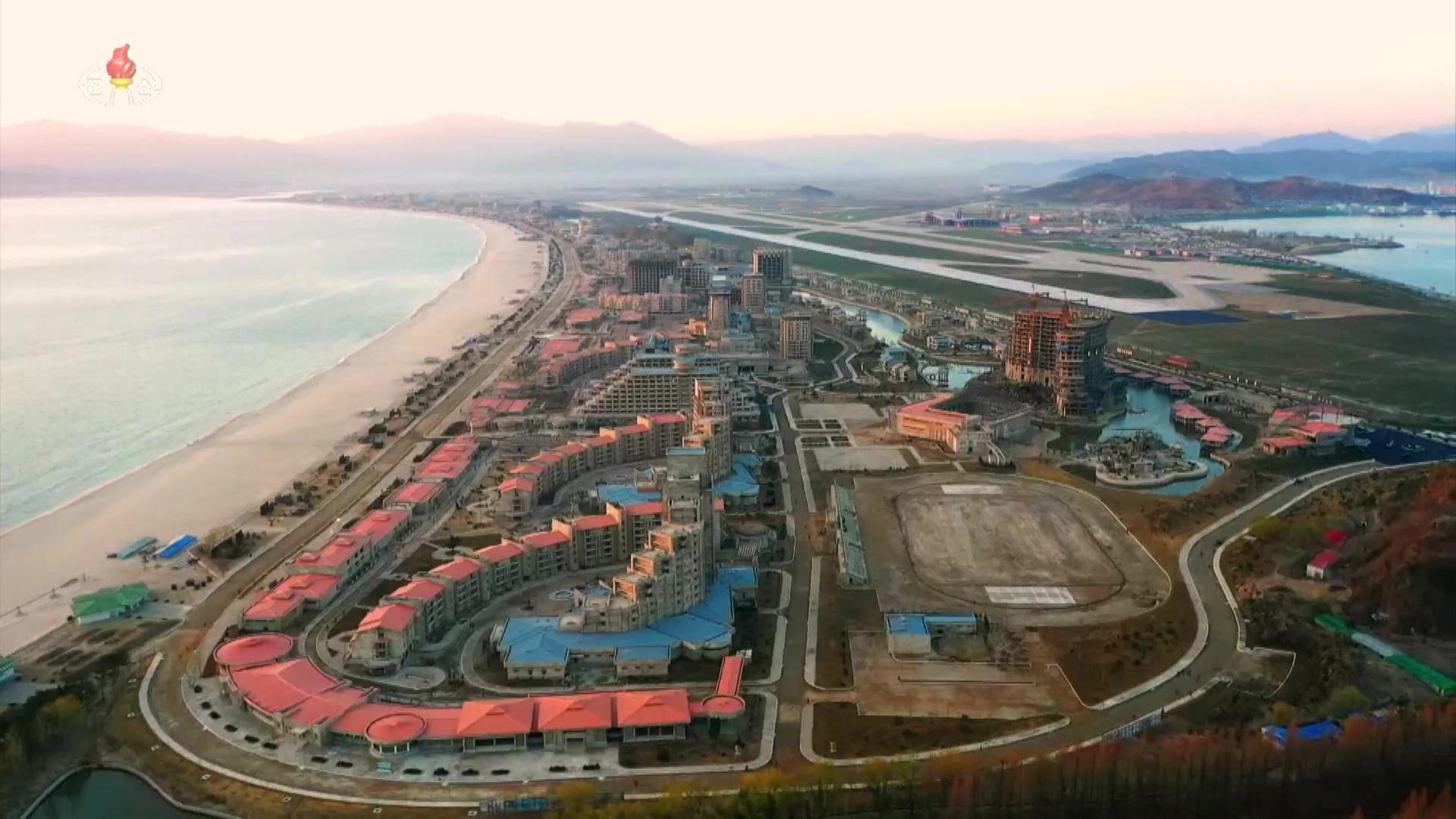
Apr 15, 2022
Expansion of Samjiyon Ski Resort continues
An additional resort complex on top of the main ski trail begins mid-spring 2022.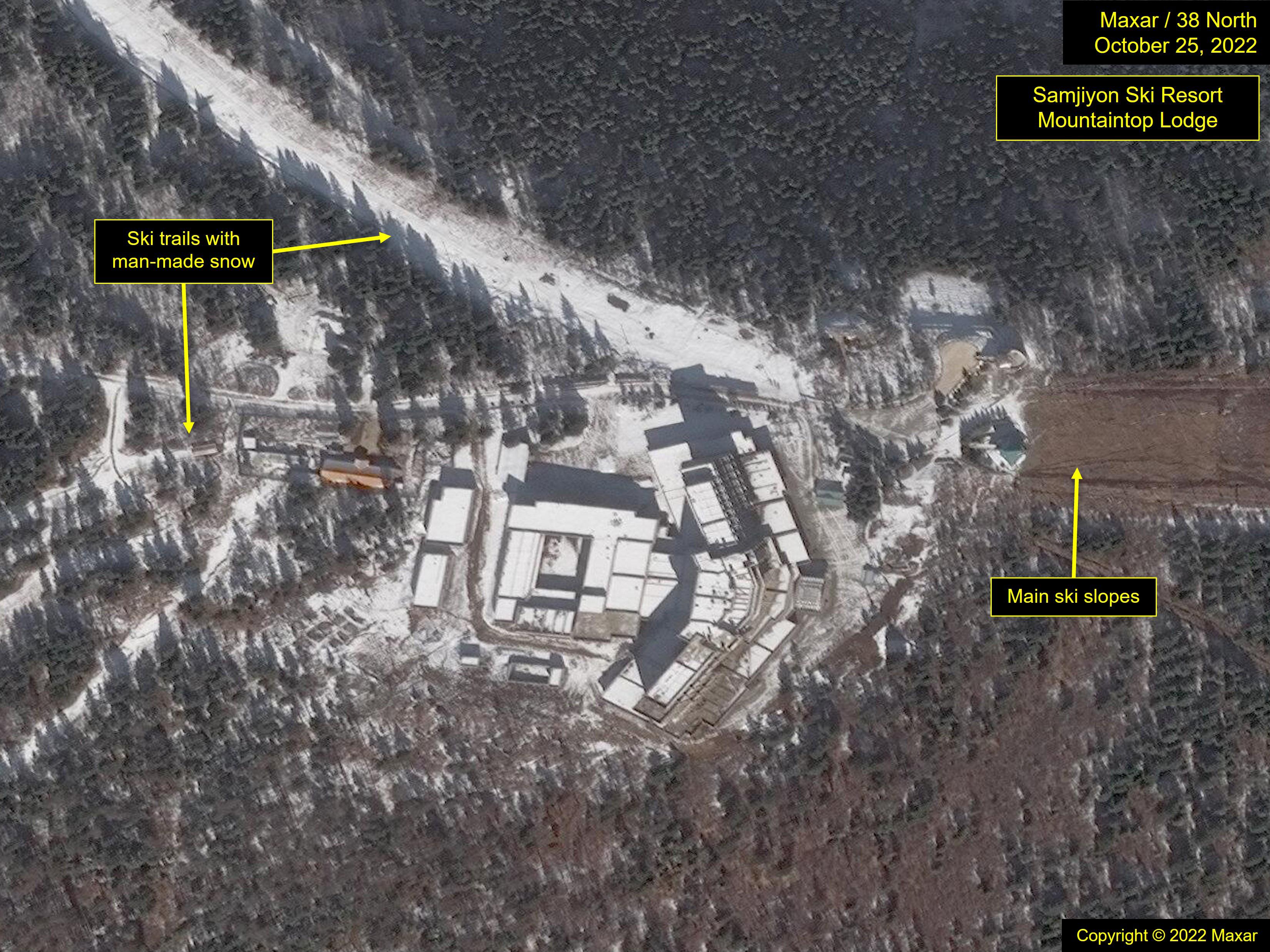
Mar 06, 2022
North Korea begins dismantlement of famous Haegumgang floating hotel
Dec 20, 2020
Kim Tok Hun states plan for Mt. Kumgang
Kim Tok Hun, Member of the Political Bureau of the Workers' Party of Korea, called for the development of the Mt.Aug 01, 2020
Initial opening date of Wonsan-Kalma Beach Resort passes
With an initial projected opening of April 2020, Wonsan-Kalma Beach Resort remains under construction.May 04, 2020
Samjiyon Ski Resort construction begins
Construction begins on two hotels at the base of the main ski slope, and progresses at a relatively slow pace, perhaps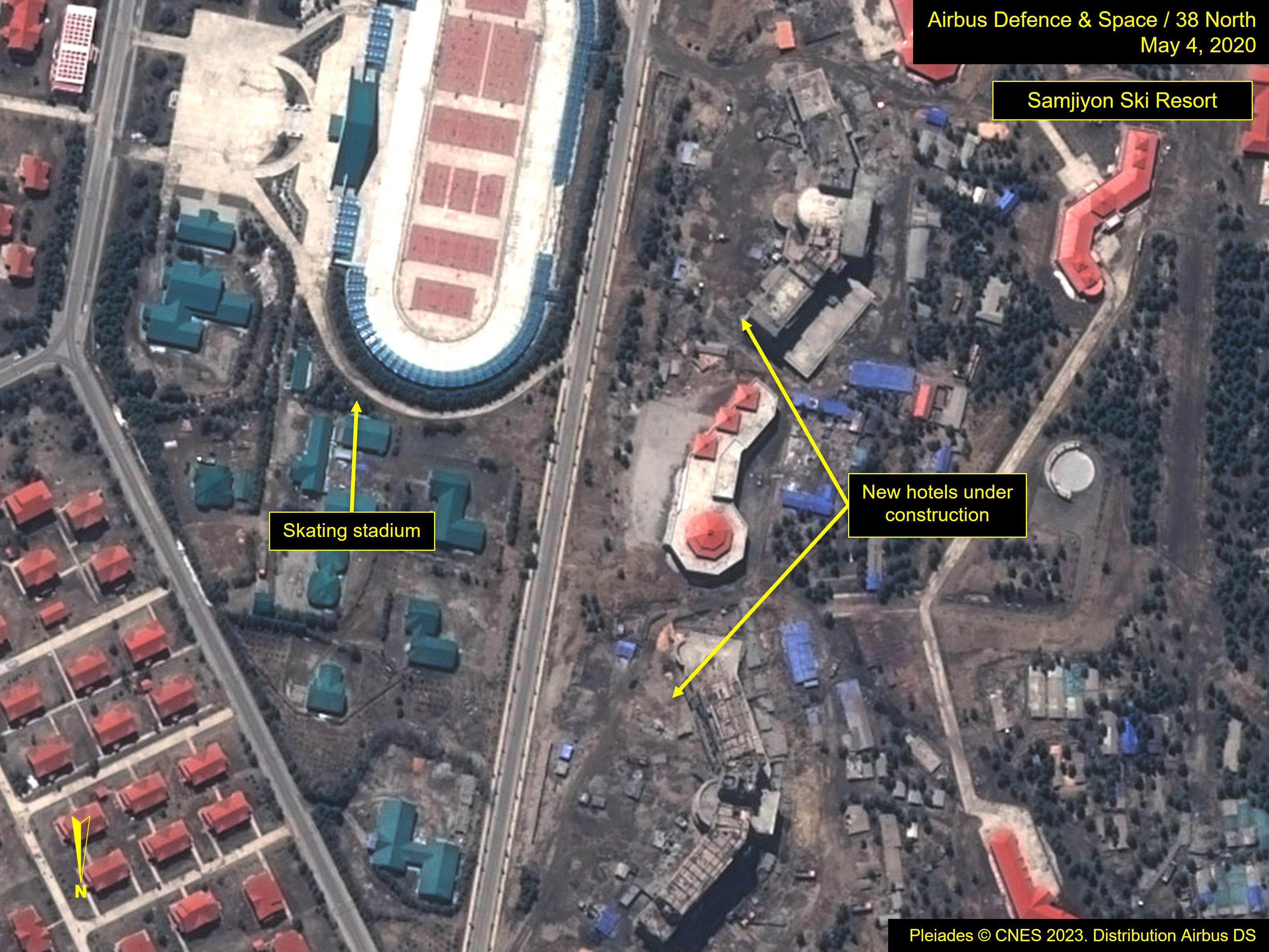
Jan 22, 2020
North Korea closes its borders due to the COVID-19 pandemic
Dec 03, 2019
Samjiyon resort town officially opens
Touted by Kim Jong Un as a "socialist utopia" complete with housing and commercial establishments. Samjiyon ski resort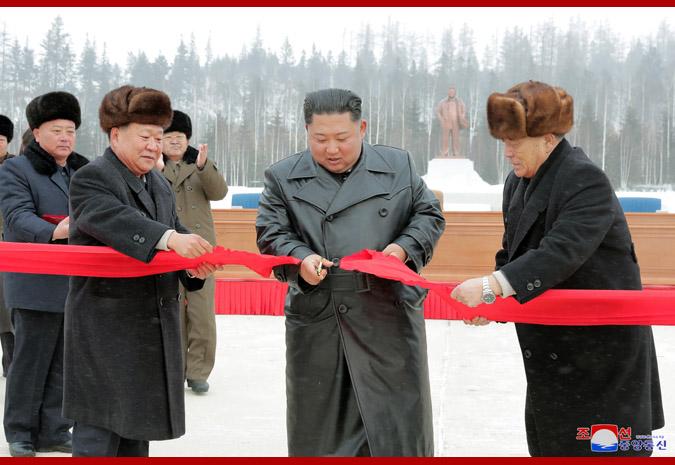
Oct 23, 2019
Kim Jong Un declares South Korean-constructed buildings at Mt. Kumgang "hotchpotch"
Kim Jong Un visits Mt. Kumgang tourist area and announces that buildings built by South Korea are "not only very backward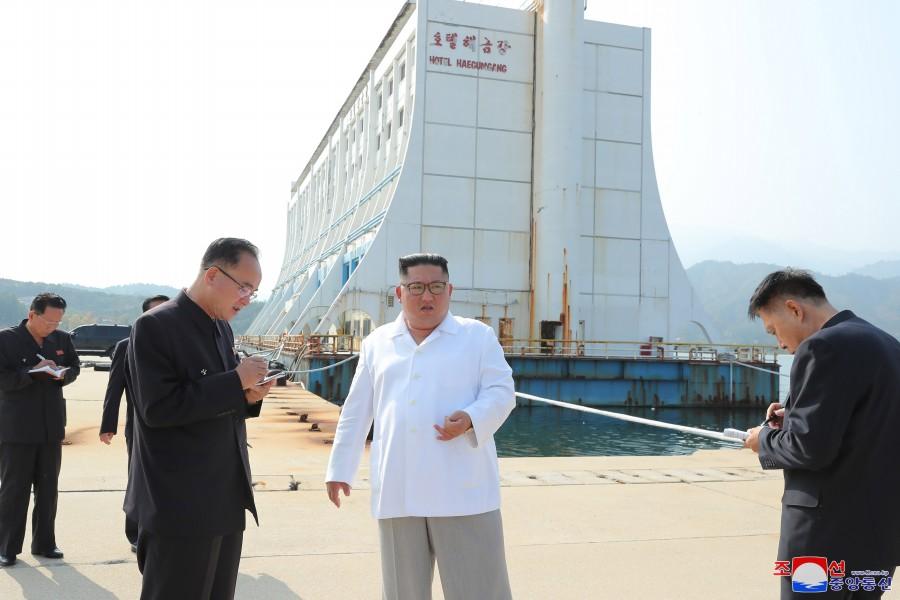
Apr 06, 2019
Kim Jong Un visits Wonsan-Kalma Beach Resort
Kim visited Wonsan-Kalma coastal tourist area to inspect construction projects. This was Kim's last reported visit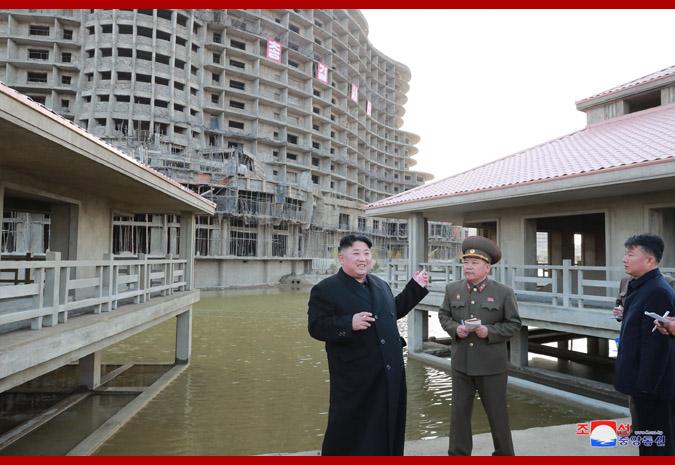
Jun 11, 2014
Official announcement of Wonsan-Mt. Kumgang International Tourist Zone
This large-scale tourist zone was set to span over 400 square kilometers on North Korea's southeastern coast, includingDec 31, 2013
Masikryong Ski Resort opens
Masikryong Ski Resort opens at the end of 2013, designed to be a potential location for international events like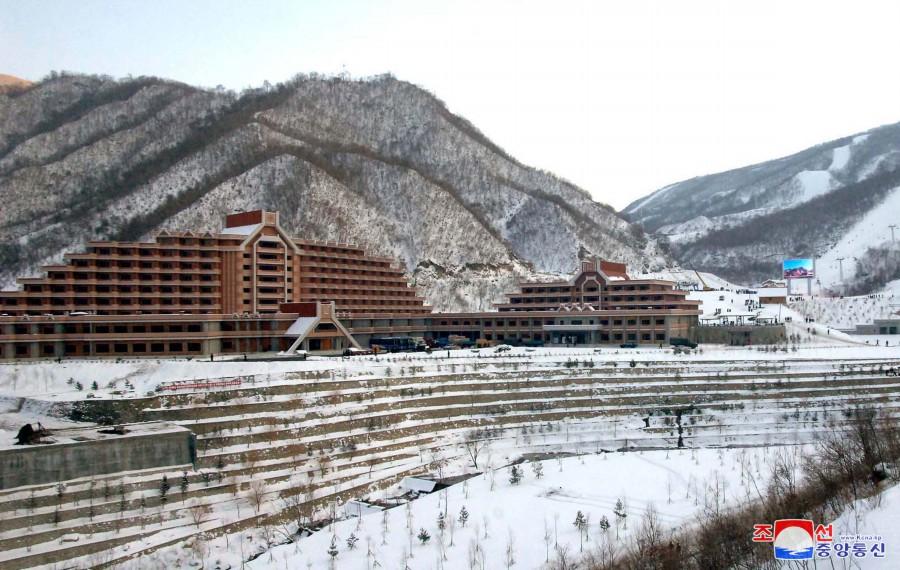
Jul 10, 2008
Mt. Kumgang resort closed
South Korean government bans citizens from visiting the resort when a South Korean tourist is shot by a North KoreanJan 01, 1998
Mt. Kumgang Tourist Area first allows South Korean visitors
Between 1998 and its closing in 2008, almost two million South Korean tourists visited Mt. Kumgang.Source: North Korean Economy Watch
Look Ahead
Whether activity will pick up at these tourism facilities in the coming months is unclear. However, if it does, it would provide at least one indicator of rising expectations that the country was opening back up to foreign visitors.
Things to Watch
- When will construction and/or expansion efforts that these sites pick back up and how quickly do those efforts move forward once they get underway?
- Will language about tourism and tourist projects be revived in state rhetoric about economic plans and priorities?
- Will interior photos of the Wonsan-Kalma Beach Resort be featured in North Korean state media?
- When will construction of new facilities, rather than just the demolition of old buildings, begin at the Mt. Kumgang Tourist Resort?
About The Authors

Nonresident Fellow, Stimson Center

Senior Fellow, Stimson Center & Director, 38 North

Research Associate, Stimson Center and Producer, 38 North
Research Associate, Stimson Center, 38 North

Methodologies Reviewed by NGA
Publication of this article does not constitute an endorsement of the contents, conclusions, or opinions of the author(s). The published article’s contents, conclusions, and opinions are solely that of the author(s) and are in no way attributable or an endorsement by the National Geospatial-Intelligence Agency, the Department of Defense, the United States Intelligence Community, or the United States Government. For additional information, please see the Tearline Comprehensive Disclaimer at https://www.tearline.mil/disclaimers.