Overview
Zhangjiang High-Tech Industrial Park predates the 2015 inauguration of Made in China 2025 (MIC25). However, development in the park reaffirms MIC25 goals. Activity in the park reflects the policy priorities of MIC25: talent recruitment, foreign investment, and green development.
Imagery analysis suggests significant development has taken place in the park since the launch of MIC25 with a focus on education, research & development, and biotech & pharmaceuticals.
Activity
This Tearline article is part of a three-part series analyzing China's Made in China 2025 (MIC25) policy's interactions with Chinese industrial parks. This report examines the Zhangjiang High-Tech Industrial Park utilizing radar imagery, electro-optical imagery, GIS data, and text-based data. In addition to the MIC25-connection thesis, this report serves as a baseline on the history, composition, and expansion of the park.
Introduction: Made in China 2025
Published in 2015, China's Made in China 2025 (MIC25) policy seeks to transform China's manufacturing sector by decreasing China's reliance on foreign technology imports, creating a more self-sufficient state. The influence and implementation of MIC25 is reflected in the expansion of high-tech industrial parks on the mainland.
In this series, we explore MIC25's policy influence on Chinese high-tech industrial parks, including Beijing, Shenzhen, and in this case study: Shanghai's Zhangjiang High-Tech Industrial Park. This study aims to evaluate the extent to which MIC25 policies influence industrial development in the park. We will refer to this tech park as the Zhangjiang Park throughout the rest of the study.
In line with MIC25's goals and policies, prevalent industries in Zhangjiang Park focus on developing human talent, advancing research and development, and expanding infrastructure for science and technology. However, this development began prior to the release of MIC25, suggesting that the goal of turning Zhangjiang Park into a premier research and development hub predated this national policy yet aligns with the goals.
Methodology
Our team, based out of the geoLab at William & Mary, utilized Chinese policy information, online company profiles of businesses in the zone, open mapping services, and press reporting to identify physical construction and foundational changes and the policy and reporting information connected to these changes. Some of this information was evaluated utilizing geographic information systems (GIS), integrating both electro-optical commercial imagery and open synthetic aperture radar (SAR) data to evaluate activity in the park. Imagery analysis is used to confirm or refute Chinese claims in open reporting or business literature that can be fragmented, opaque, or exaggerated.
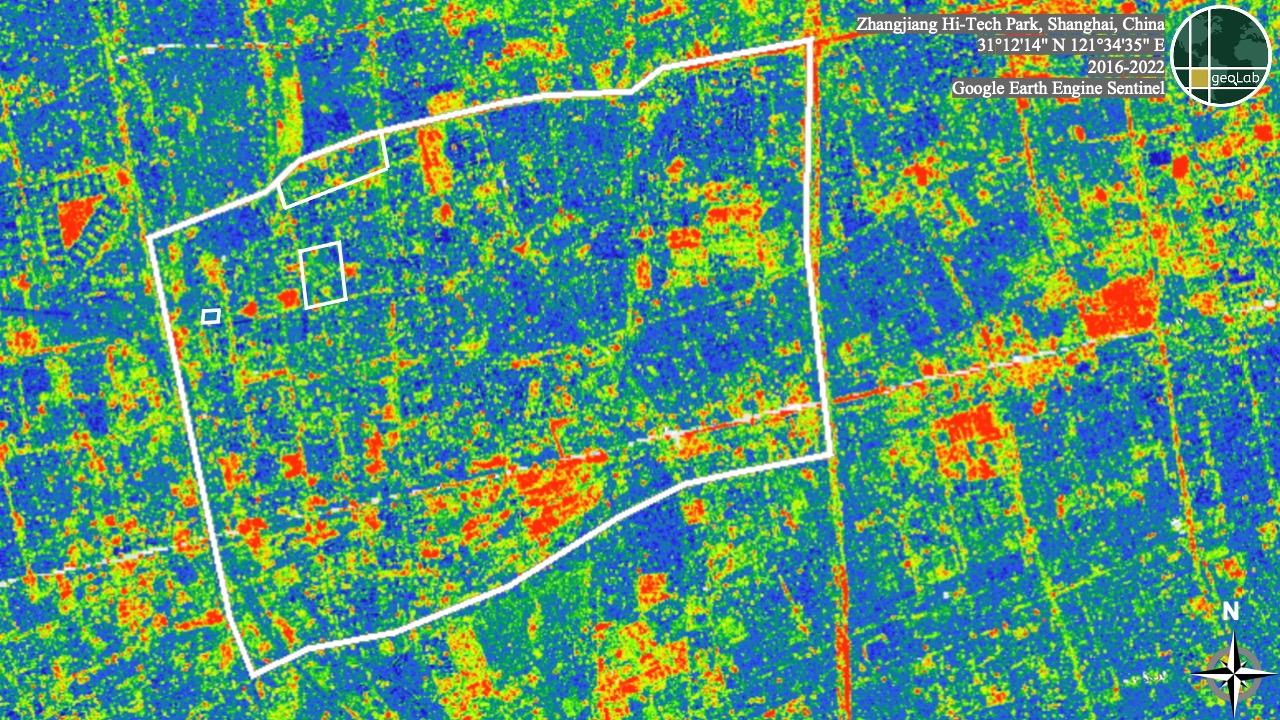
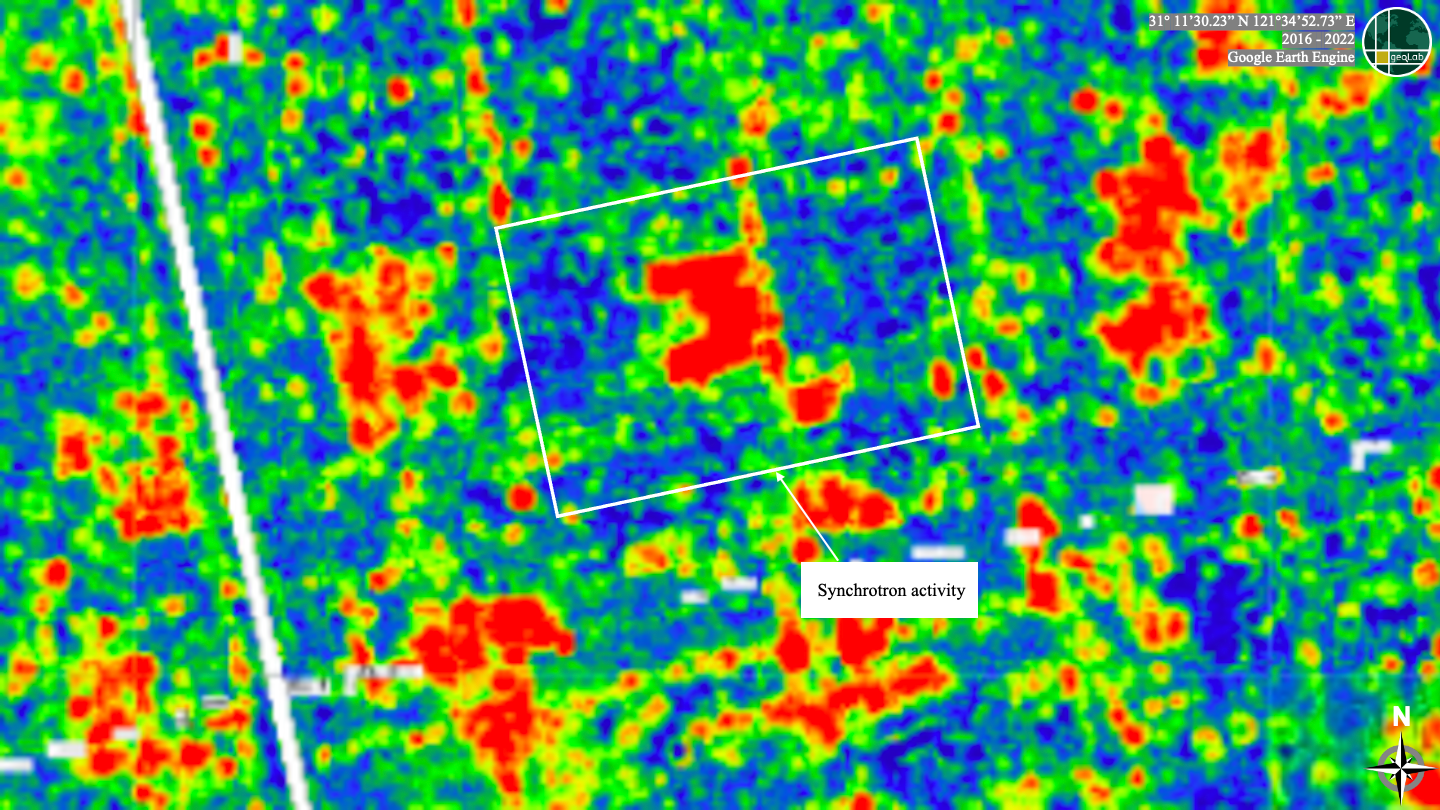
We created an activity and change alerting and detection service within Google Earth Engine, using open synthetic aperture radar (SAR) data collected by Sentinel-1, collected from a satellite operated by the European Space Agency. This SAR activity/change service works by detecting changes in radar backscatter over time caused by moving vehicles, construction activity, or natural phenomena. The change in backscatter over time was analyzed to identify areas of increased economic activity (for more details, you can read an earlier Tearline article that leveraged similar SAR techniques).
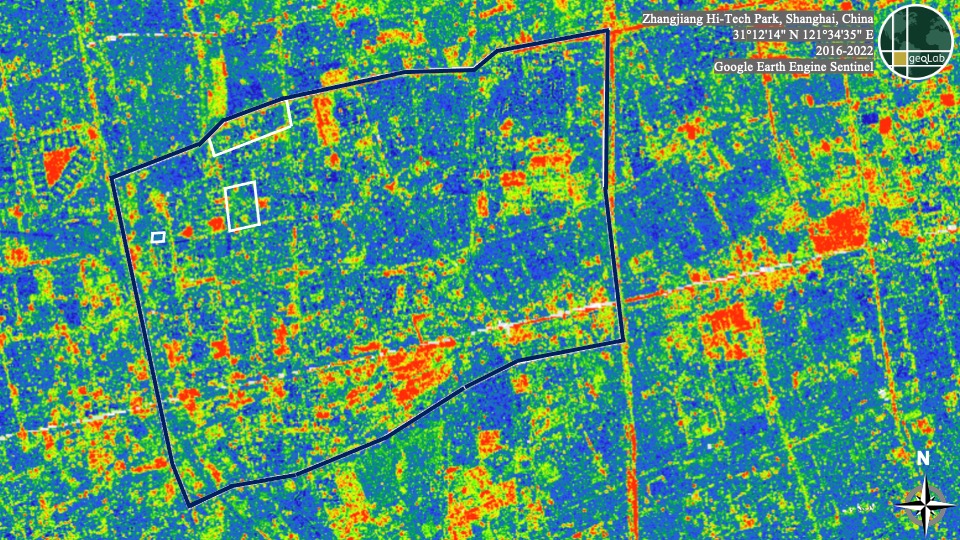
In the radar images, the areas in shades of bright red signify the highest amount of activity that occurred over the seven-year time frame from 2016 to 2022. Figure 1 depicts Sentinel-1 data of the park. Three clusters within the park boundaries are outlined in white. Each of the three clusters is named Zhangjiang High-Tech Park; however, we refer to them based on the main road they border.
Overview: Zhangjiang High-Tech Industrial Park
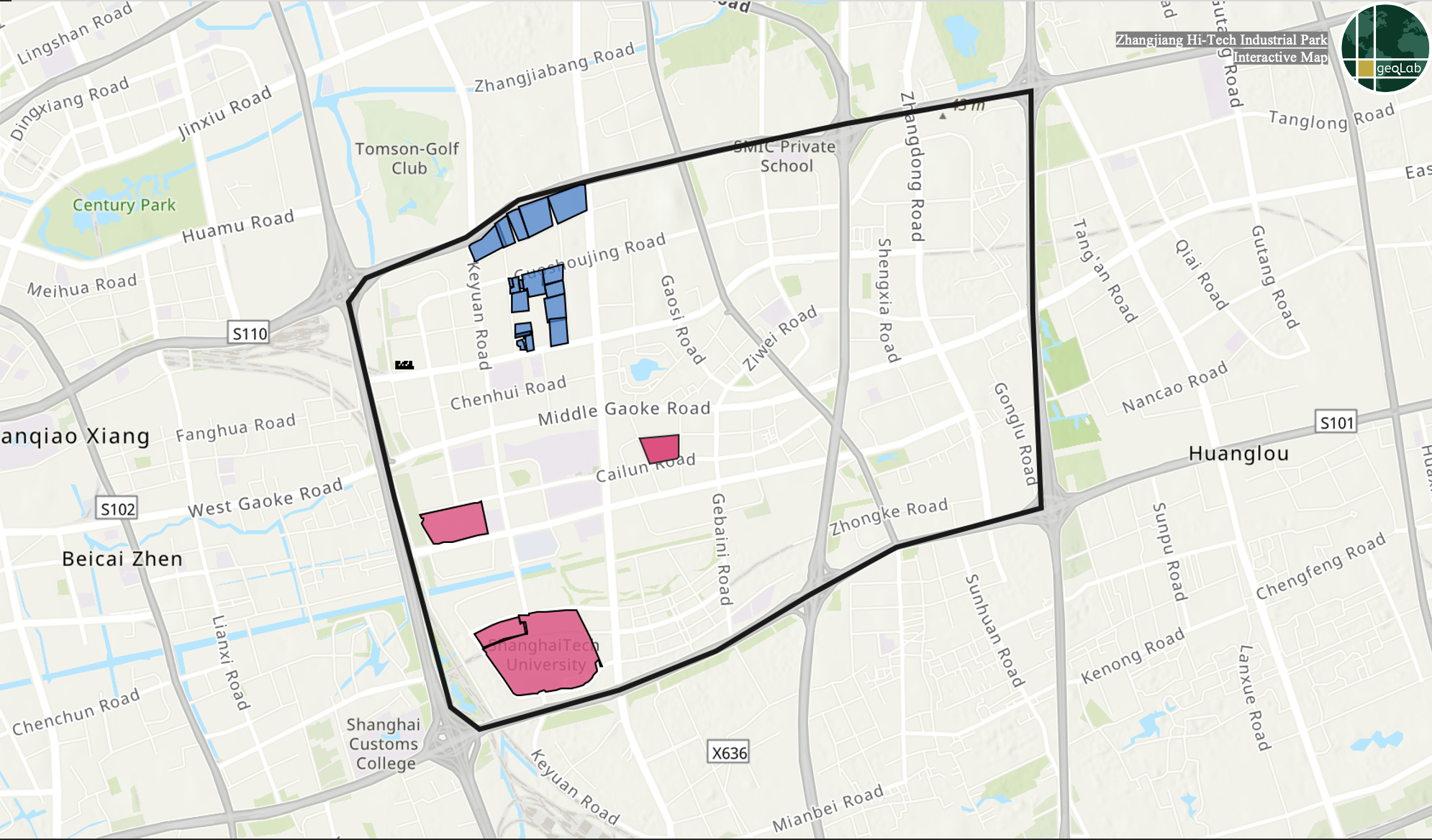
Zhangjiang Park was founded in 1992. However, the Shanghai Municipal Party Committee and Municipal Government did not make the park a priority until 1999, when the State Council and Pudong government enacted a number of national policies to further develop Zhangjiang Park. These policies included the “Focus on Zhangjiang” policy, which promoted the expansion of the park and encouraged both foreign and domestic investment. Much of the park's growth and success can be attributed to widespread governmental support, as seen in the introduction of new policies like “Focus on Zhangjiang” backed by Shanghai's mayor during the early phases of the park. Between 1992 and 1999, Zhangjiang Park extended its land area from 2.33 km2 to 2.8 km2. Following the introduction of new policies in 1999, the planned area of Zhangjiang Park increased from the original size of 5 km2 to 25 km2. Open data on the industries and buildings within these clusters were geocoded. These are displayed in the interactive map in Figure 2. Please download our structured data sheet detailing more park information.
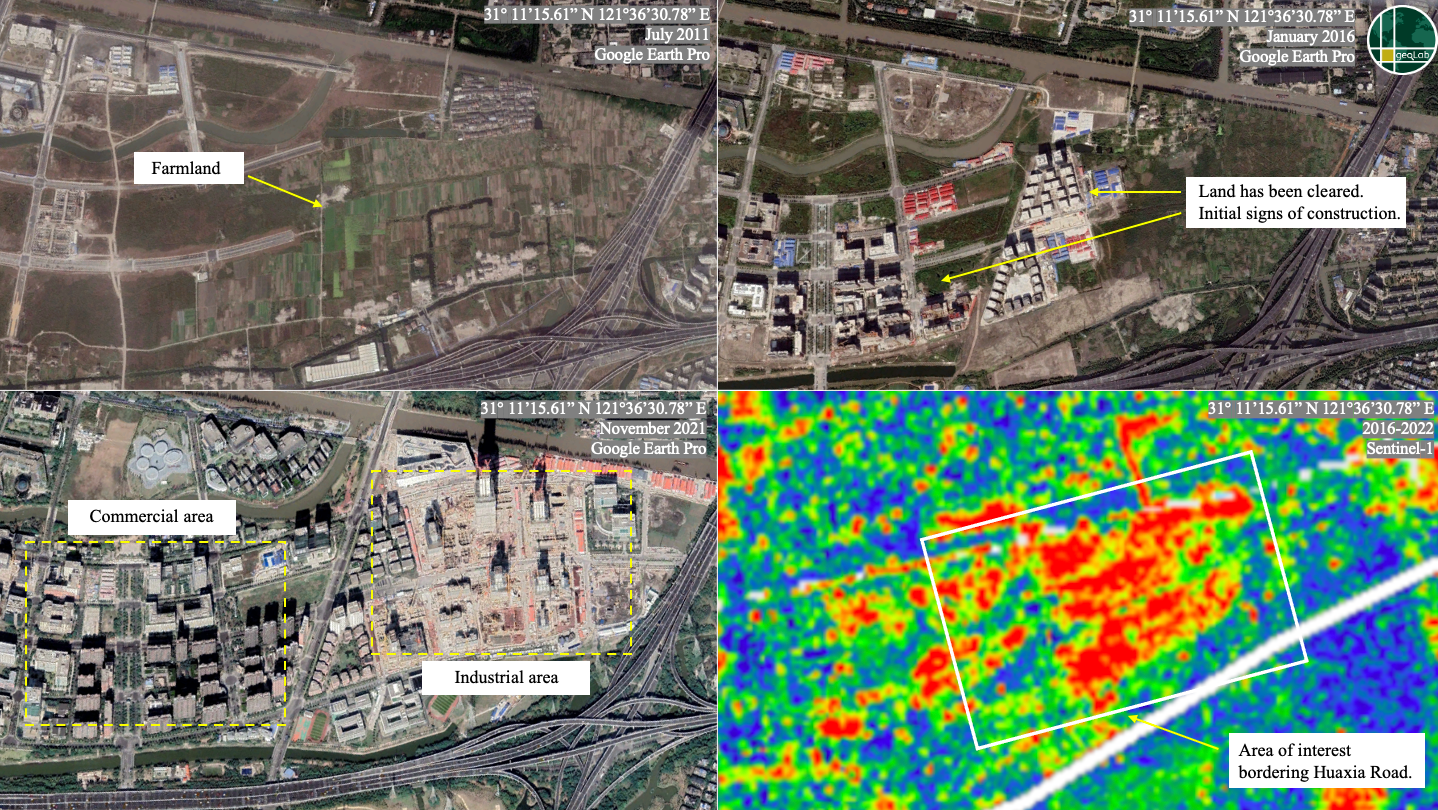
The neighboring town of Zhangjiang was predominantly farmland with a few scattered buildings in 2011, as pictured in Figure 3. During the early years following the establishment of the Zhangjiang Park, the town of Zhangjiang could not provide sufficient infrastructure, such as transportation, to support the new development. Since 1999, development has spiked within the park as a whole.
According to the Chinese government, Zhangjiang has over 18,000 enterprises. Although a comprehensive list of these enterprises is not readily available, disparate reporting suggests the park includes 685 high-tech enterprises, 403 Research & Development institutions, and nearly 20 universities and research institutes as of 2020. According to the Shanghai Pilot Free Trade Zone, a regional free trade zone that encompasses Zhangjiang Park, the park's leading industries are information technology, bio-medicine, cultural creativity, and low-carbon and environmental protection. The park also contains the regional R&D headquarters of seven of the top ten global pharmaceutical companies, reported by Sina Corporation, a Chinese technology company. This focus helped China's pharmaceutical market become the world's third-largest market. Geospatial and text-based analysis of the pharmaceutical industry in Zhangjiang Park is addressed later in this study.
Zhangjiang Park has a broader mission of developing and fostering talent including attracting and incentivizing the return of Chinese students who study abroad.
Industrial Focuses of Zhangjiang High-Tech Park: Science & Technology
Zhangjiang Park is described as “China's Silicon Valley" by domestic Chinese sources and park promoters, namely Qianzhan Industry Research Institute, an "industrial research foundation," and the Global Times, a Chinese tabloid newspaper. In the information technology field, Zhangjiang is home to the “most complete integrated circuit industrial chain” in China, according to China Daily, an English-language newspaper run by the Publicity Department of the Chinese Communist Party. Further, China Daily reports that six of the top 10 global chip design companies have prioritized relocating their regional headquarters and research and development centers to Zhangjiang. Emerging science and technology buildings present in satellite imagery below confirm these Chinese source declarations.
Medical Research and Biopharmaceuticals
Sina Corporation reports that seven of the top ten global pharmaceutical companies have regional R&D headquarters in Zhangjiang Park, which emphasizes the relevance of the park in this global industry.
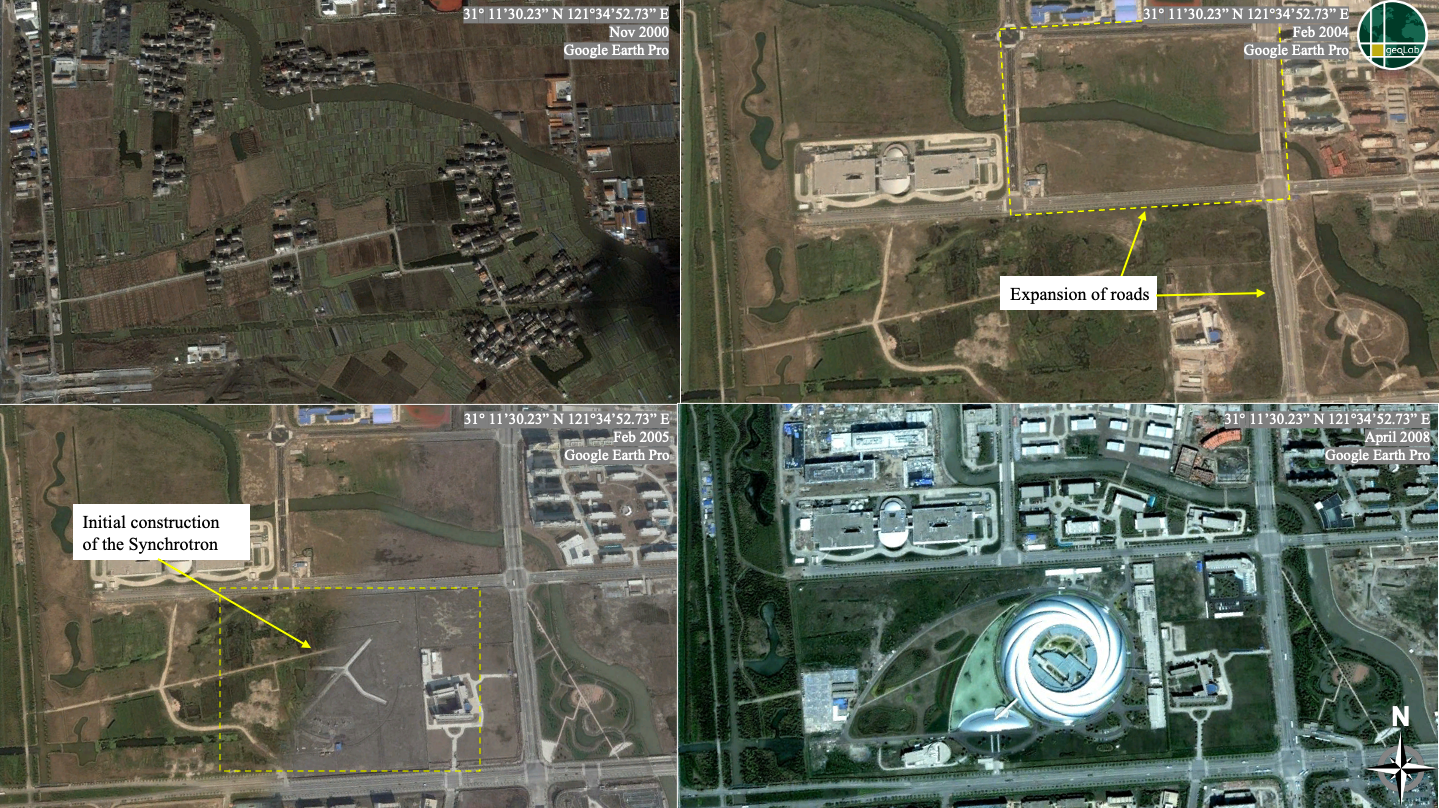
The Shanghai Synchrotron Radiation Facility, pictured in Figure 4, is one prominent medical research facility in the park that advances science and technology innovation. A synchrotron facility generates light that is typically used in medical and technological research by accelerating electrons almost to the speed of light. According to Diamond Light Source, the UK's national synchrotron, this facility is one of only 70 — in various stages of development — globally.
The facility began operation in 2009 and has since, according to the Chinese Academy of Sciences, “provided bright x-ray beams to over 10,000 users from both Chinese and international universities, institutes, hospitals and high-tech companies.” Figure 4 confirms the significant changes over time between November 2000 and April 2008. In November 2000, the area was agricultural land. Construction is not visible on imagery until February 2004. One year later, in February 2005, the foundation of the Synchrotron facility is visible. In April 2008, the facility is completed. Between 2016 and 2022, Sentinel-1 imagery in Figure 4.1 shows high levels of activity in the area.
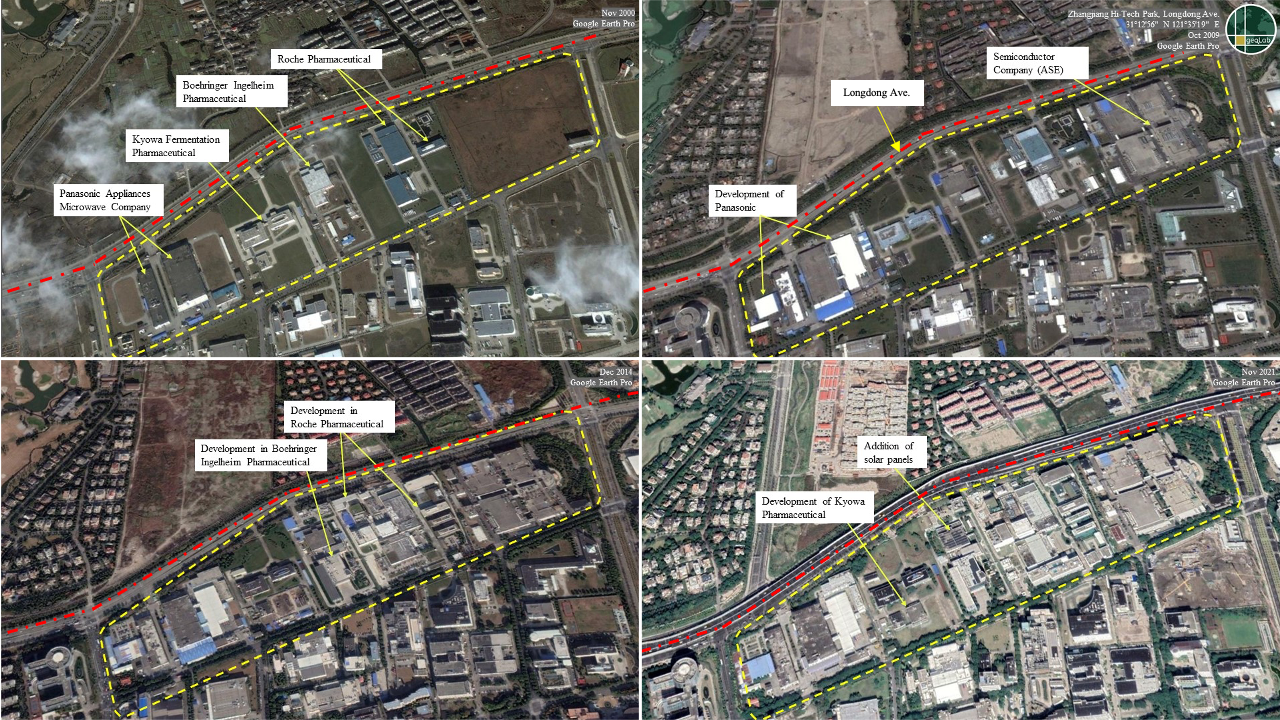
Pharmaceutical facilities are located throughout the park and are generally clustered in groups. In the northwestern corner of the park, a cluster of buildings bordering Longdong Avenue and Keyuan Road focuses specifically on pharmaceuticals and pharmaceutical technologies. Figure 5 confirms significant activity in and around this area between 2000 and 2021. Industries in this cluster include Panasonic Yingyong Jiqi Limited Company (Electronic Technologies), Boehringer Ingelheim (Pharmaceutical Company), ASE Japan Co., Ltd. (Semiconductor Manufacturer), and more.
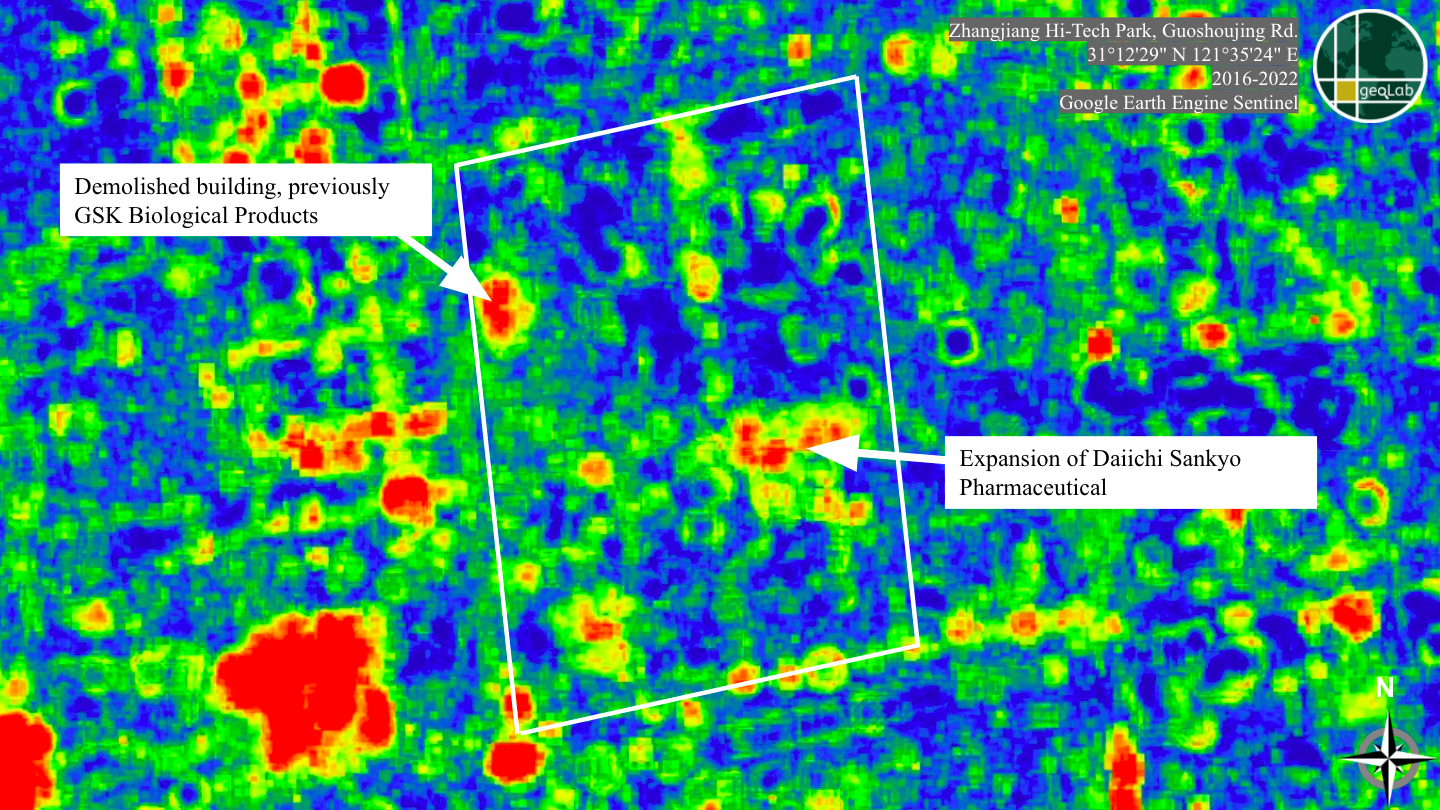
Another smaller industrial park, named Zhangjiang High-Tech Park, that borders Guoshoujing Road primarily houses medical and pharmaceutical companies. This includes Daiichi Sankyo Pharmaceutical, Shanghai Daosheng Medical Technology Ltd., Shanghai Tsumura Pharmaceutical Co Ltd., GlaxoSmithKline (a multinational pharmaceutical company also referred to as GSK), and more. As confirmed in Figure 6 and Figure 6.1, this area has seen tremendous development between 2000 and 2021.
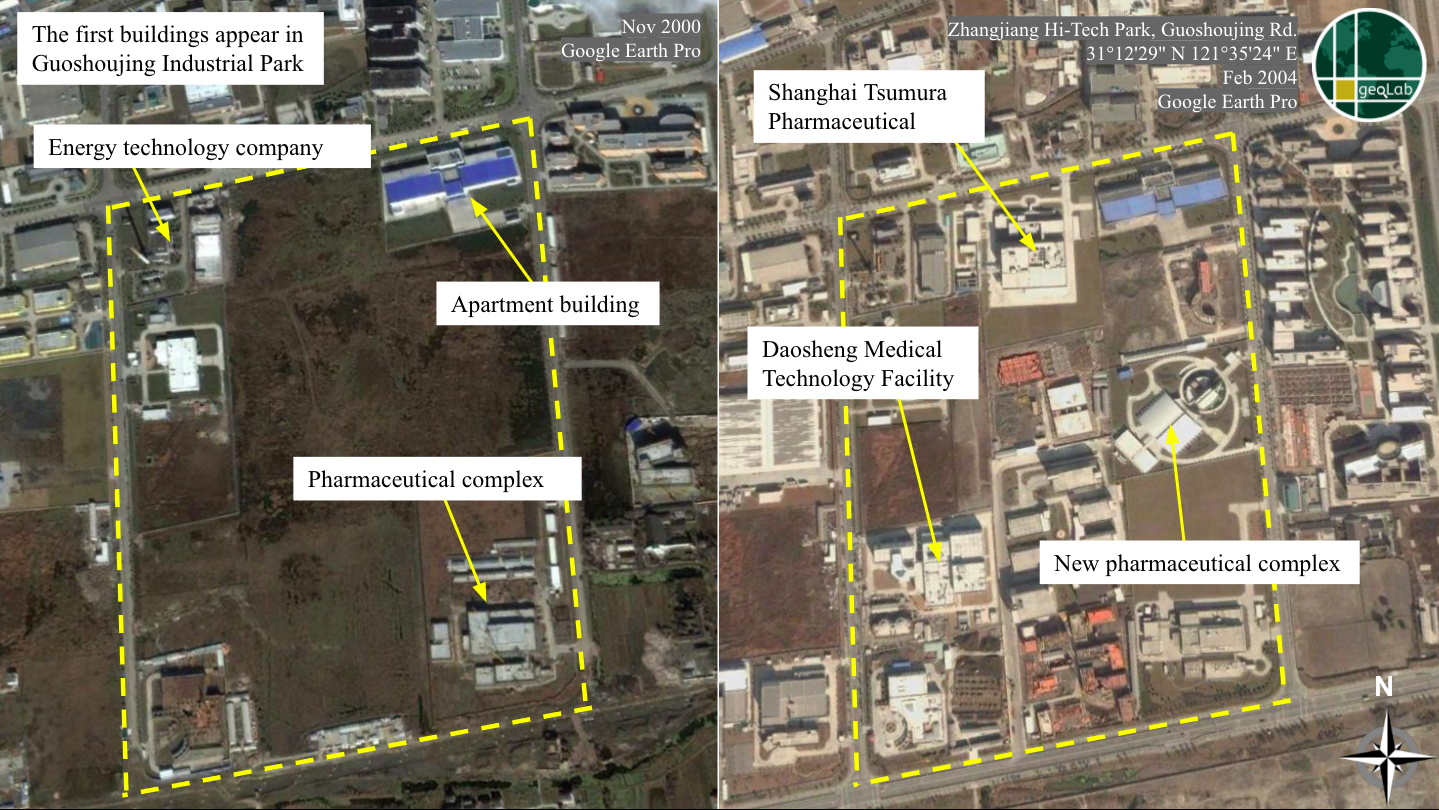
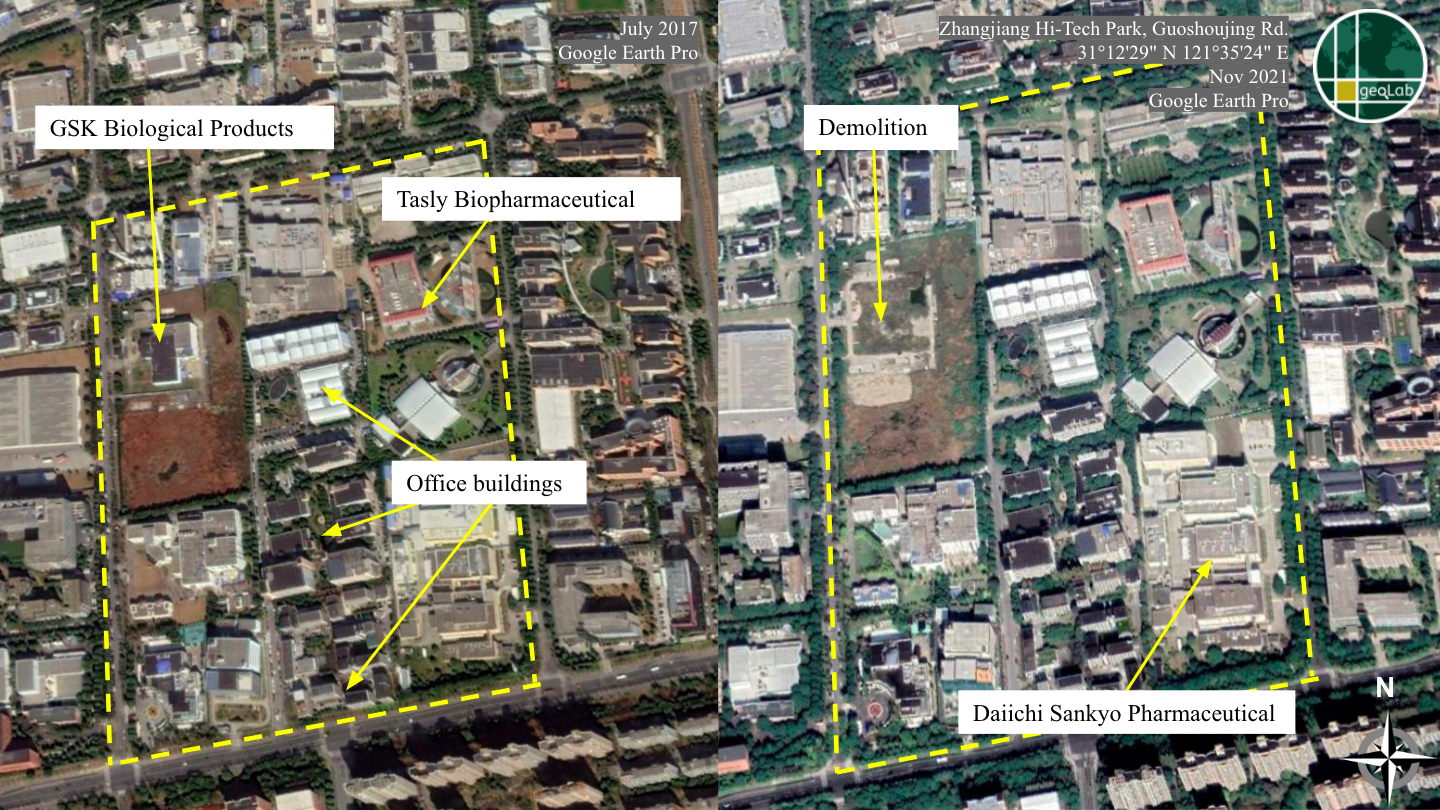
Figure 7 highlights the areas in this same smaller park where the most change occurred, namely the destruction of GSK Biological Products building and Daiichi Sankyo Pharmaceutical expansion. The Huaqiang Science and Technology Mansion replaced GSK Biological Products. This so-called "mansion" rents affordable spaces to enterprises, encouraging companies — particularly software, pharmaceutical, and high-tech enterprises — to establish themselves in Zhangjiang.
The Shanghai Biopharmaceutical Industrial Base, pictured in Figure 8, is a pharmaceutical facility that focuses on foreign investment and education. The base is located in the center of Zhangjiang Park and was established shortly after Zhangjiang Park in 1996. This area is dubbed by the Pudong government as Zhangjiang's Pharma Valley. According to Asia Pacific Biotech News, which is owned by World Scientific and headquartered in Singapore, the base is broken up into four sections with varying objectives, which are as follows:
- To “attract other local and foreign enterprises with its high-tech facilities and skilled labor.”
- To “attract product development companies, pilot plants and major corporations.”
- A focus on “education complete with medical schools, research and training institutes.”
- The inclusion of “an ‘Incubator' zone is reserved for small-to-medium enterprises set up by overseas graduates and local technicians.”
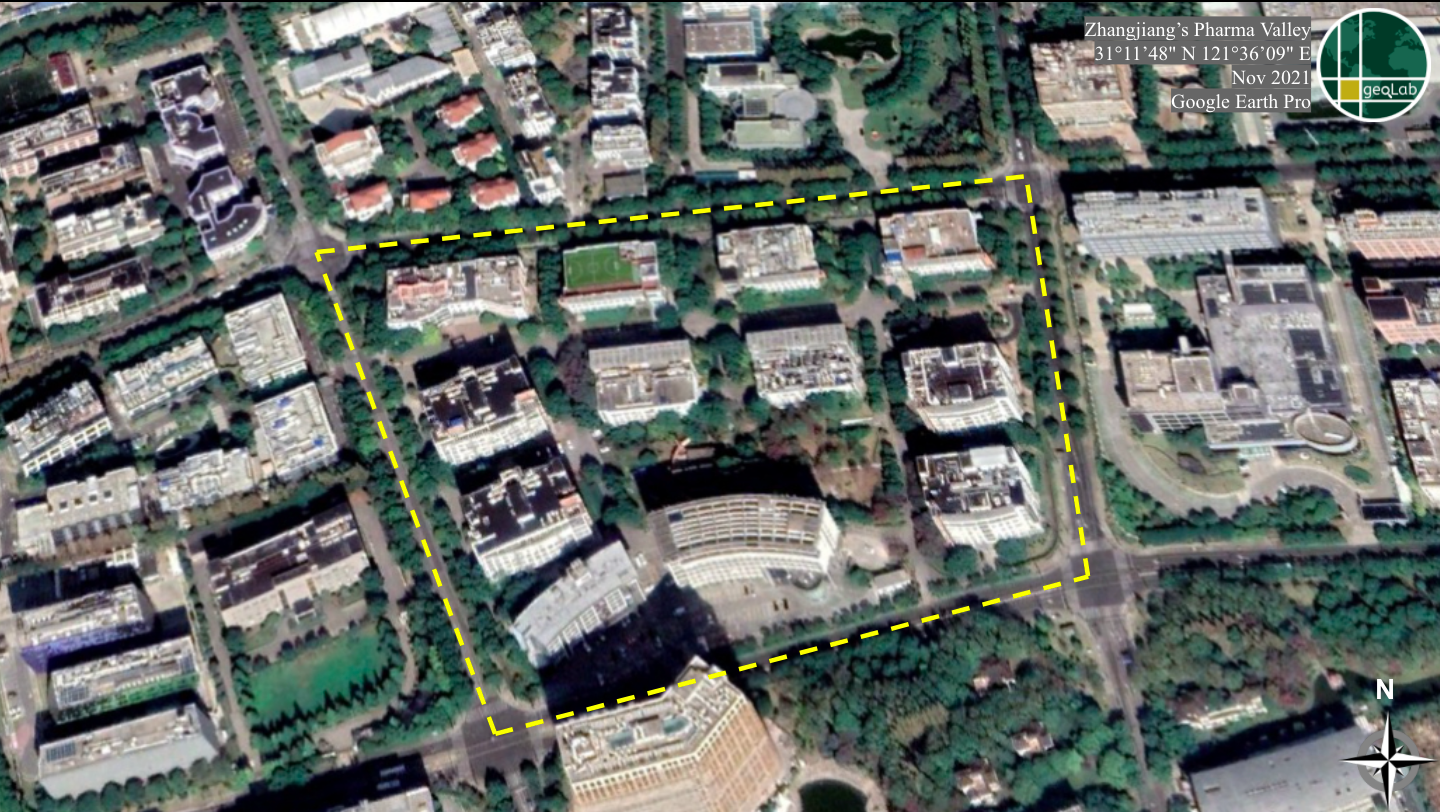
Over 1,000 companies focused on innovative biotechnology and biopharmaceutical products are located in this valley, as stated by Clover Pharmaceuticals, one of the Chinese firms with facilities in Zhangjiang Park. Although this part of the park was designed prior to the release of MIC25, each corner of the base fits into the policy's major technological and pharmaceutical objectives.
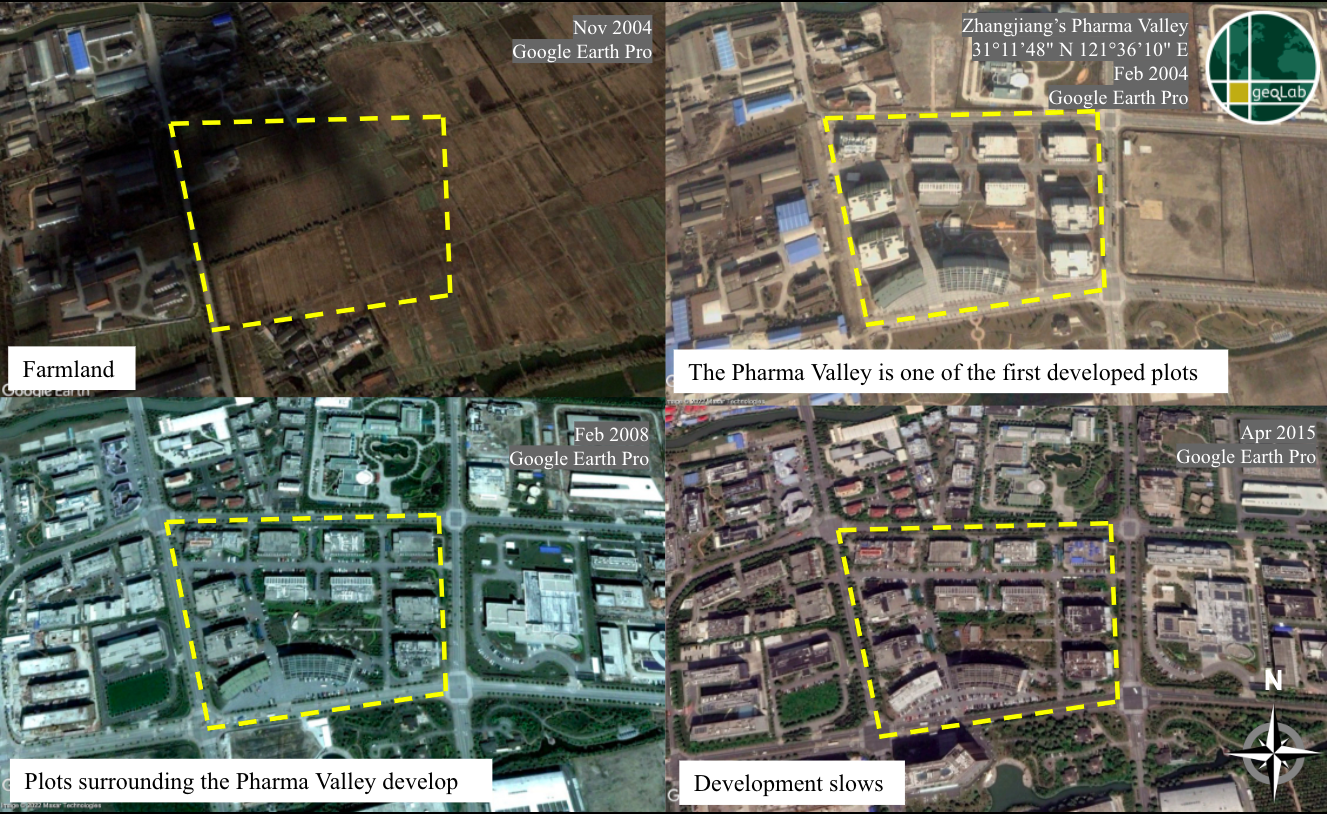
Soon after the inception of the park, transnational pharmaceutical companies began establishing offices in Zhangjiang. In 1994, Roche Pharmaceuticals Co., Ltd. established an overseas office in the park, becoming the first multinational pharmaceutical corporation to do so. Imagery in Figure 9 depicts the industrialization and construction of the area for pharmaceutical-oriented facilities over the course of ten years. The key target market identified by Shanghai Roche Pharmaceuticals Co., Ltd. is China, which supports MIC25 policy by attracting foreign talent and investment to further China's innovation and domestic development goals.
Education, Talent Recruitment, and Foreign Investment in Zhangjiang High-Tech Park
Three associated MIC25 pillars illustrated by policies and development in Zhangjiang Park are higher education, talent recruitment, and foreign investment. Commercial and Sentinel-1 imagery, as shown below, confirm significant development in areas of the park focused on higher education.
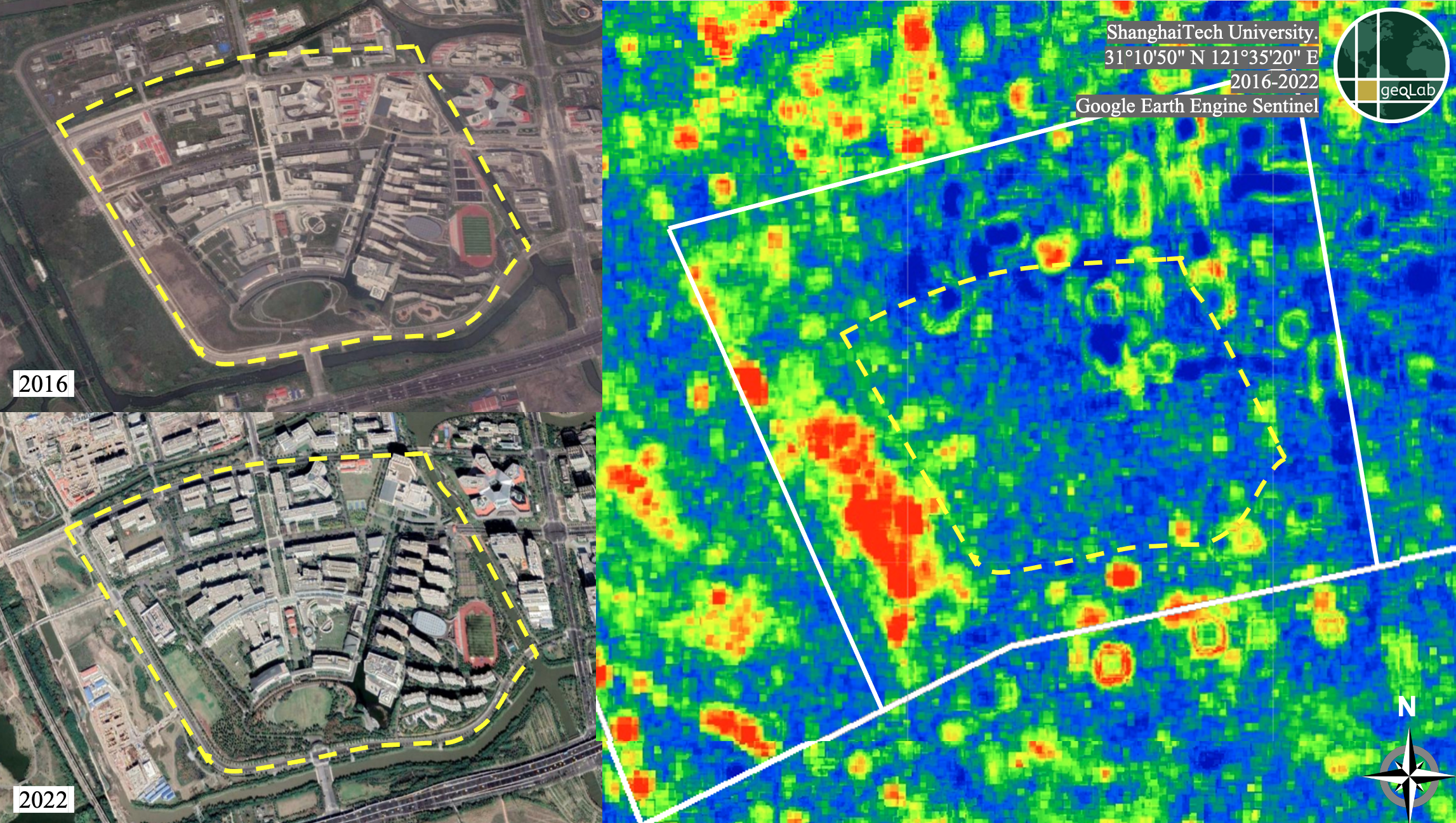
Some of the most prominent changes with connections to MIC25 took place at Shanghai Tech University (ShanghaiTech) at Zhangjiang Park, which is housed in the southwestern corner of the park. ShanghaiTech was founded in 2013 through collaboration between the Shanghai Municipal Government and the Chinese Academy of Sciences — China's premier nationalized research institution. Commercial imagery confirms significant construction at ShanghaiTech since 2015. As demonstrated in Figures 10 and 10.1, much of the area that now makes up the ShanghaiTech campus was undeveloped in the early 2000s.
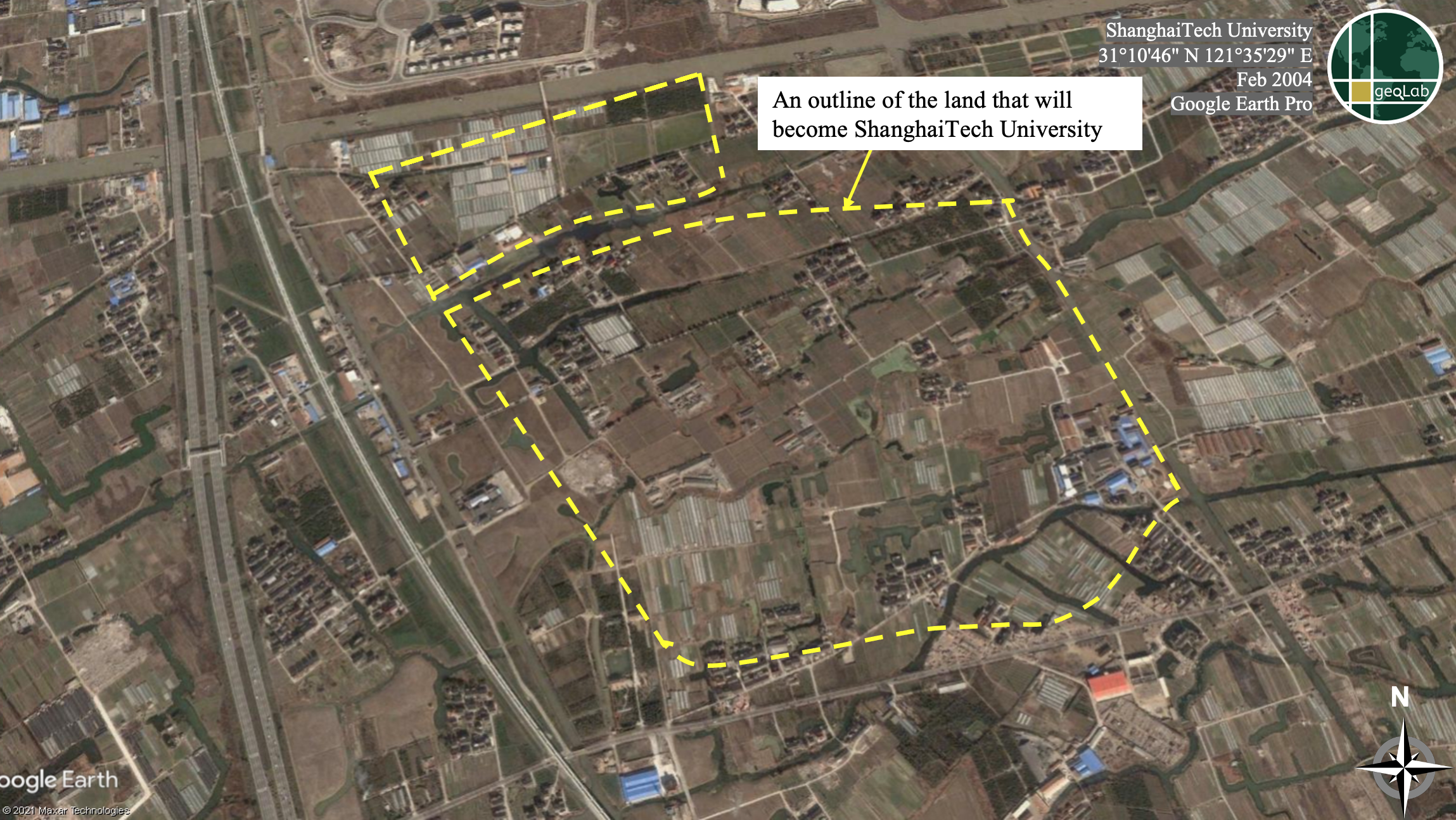
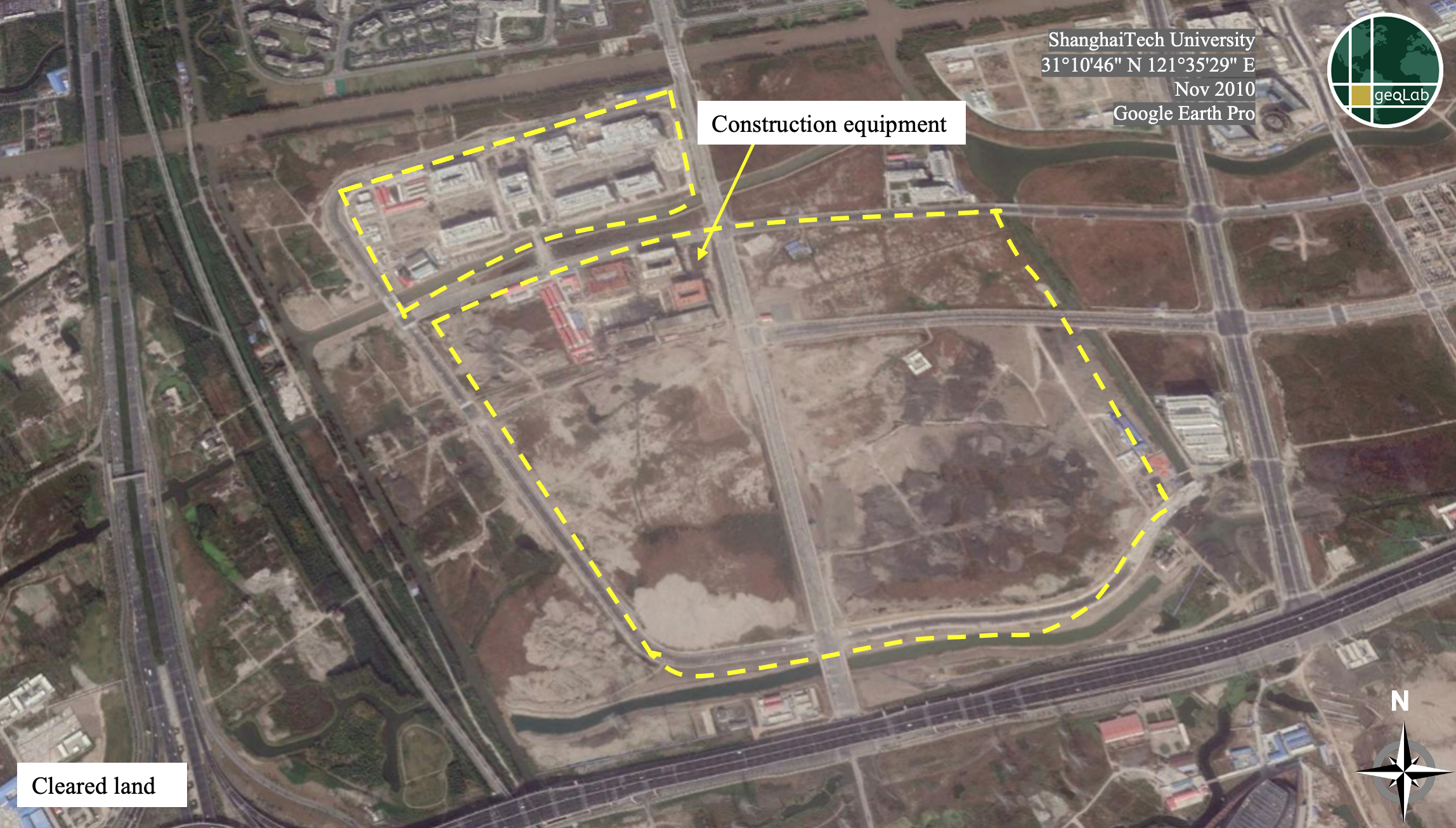
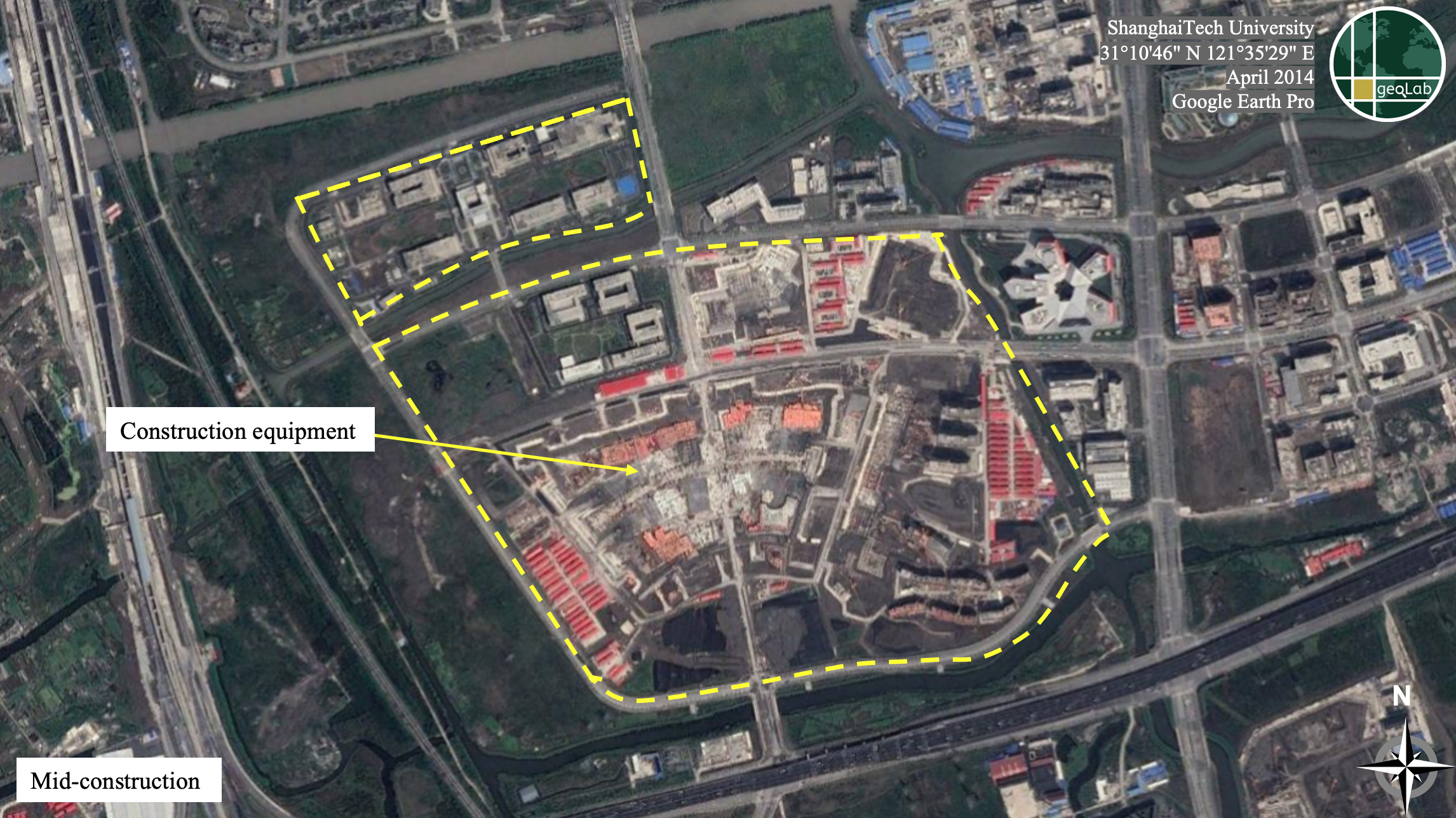
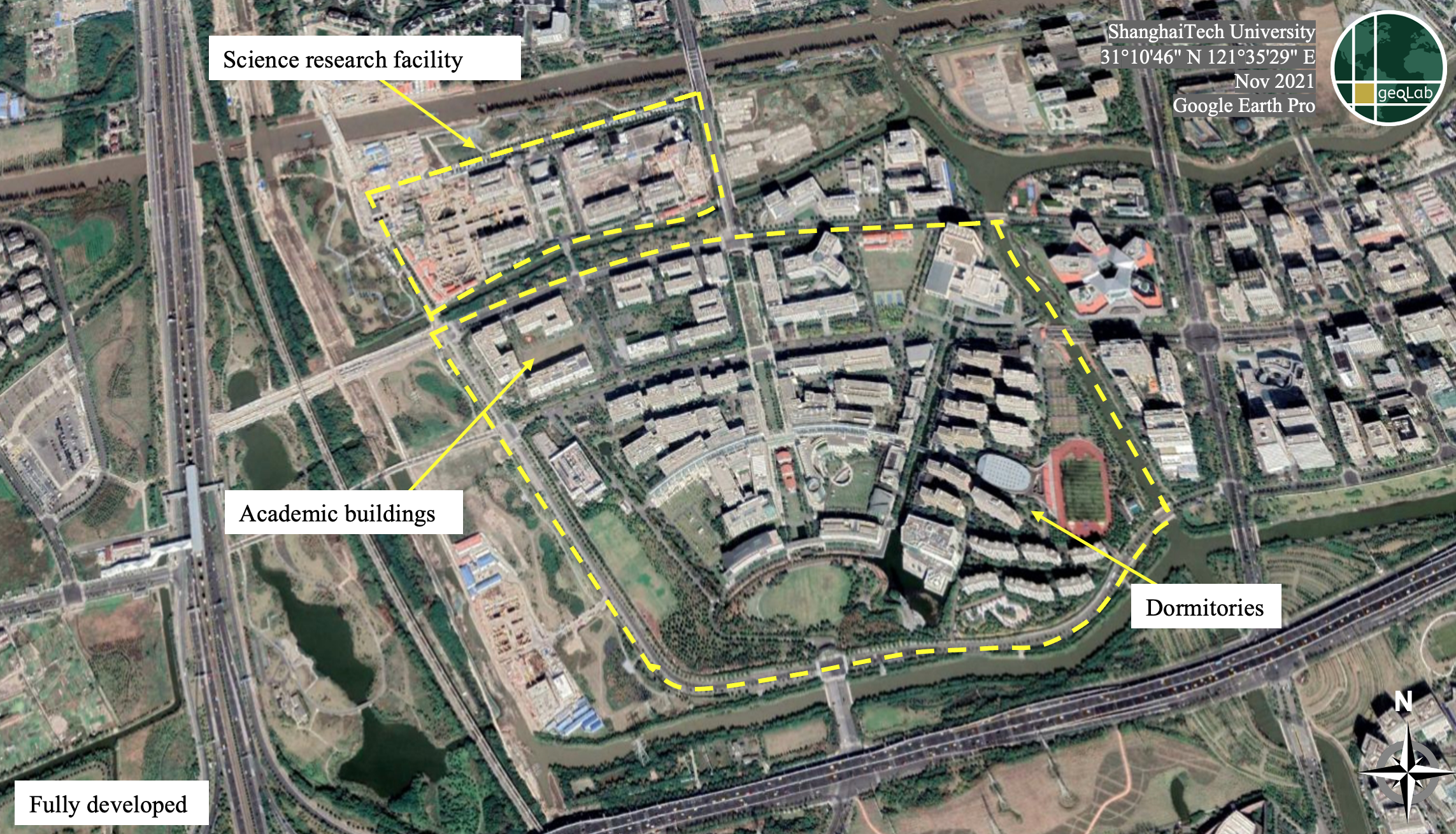
Between 2004 and 2010, much of the farmed area was cleared for preparatory construction, as pictured in Figures 10 and 10.1. Early structures and construction equipment were visible in imagery starting in 2014 in Figure 10.2 which confirms consistent, rapid development leading to a fully developed, grass-covered campus visible in 2021 in Figure 10.3.
Sentinel-1 data paints a similar picture of development in the area since the data became available in 2016, as shown in Figure 11. Much of the activity, pictured in red, occurred in the southwest corner of campus highlighting the clearing of land and the construction of roads and buildings.
ShanghaiTech has reported significant personnel growth that aligns with the construction evident in satellite imagery. Faculty numbers at the university grew considerably, with an 87.5% increase in the number of tenured/tenure-track professors and a 27.2% increase in distinguished professors-in-residence during 2015 alone. Enrollment numbers are reported to have grown accordingly since the launch of MIC25. In 2019, ShanghaiTech admitted 402 undergraduates, a 33% increase from 2015 undergraduate admissions.
ShanghaiTech, along with similar universities located in Zhangjiang Park, strives to advance higher education in China and invest in science and technology research. The inclusion of institutions of higher education in the park aligns with MIC25's goal of strengthening the country's education system. Second, STEM research and high-tech fields of study support the industries that MIC25 seeks to vitalize. Its mission statement outlines the University's commitment to “tackling the challenges that China and the world are facing in the fields of energy, materials, environment, human health, biological medical engineering, data science, AI and electrical engineering.” Additionally, in ShanghaiTech's 2015 Annual Report, the university stated that its students “are encouraged to align their personal career path with the national strategy.”
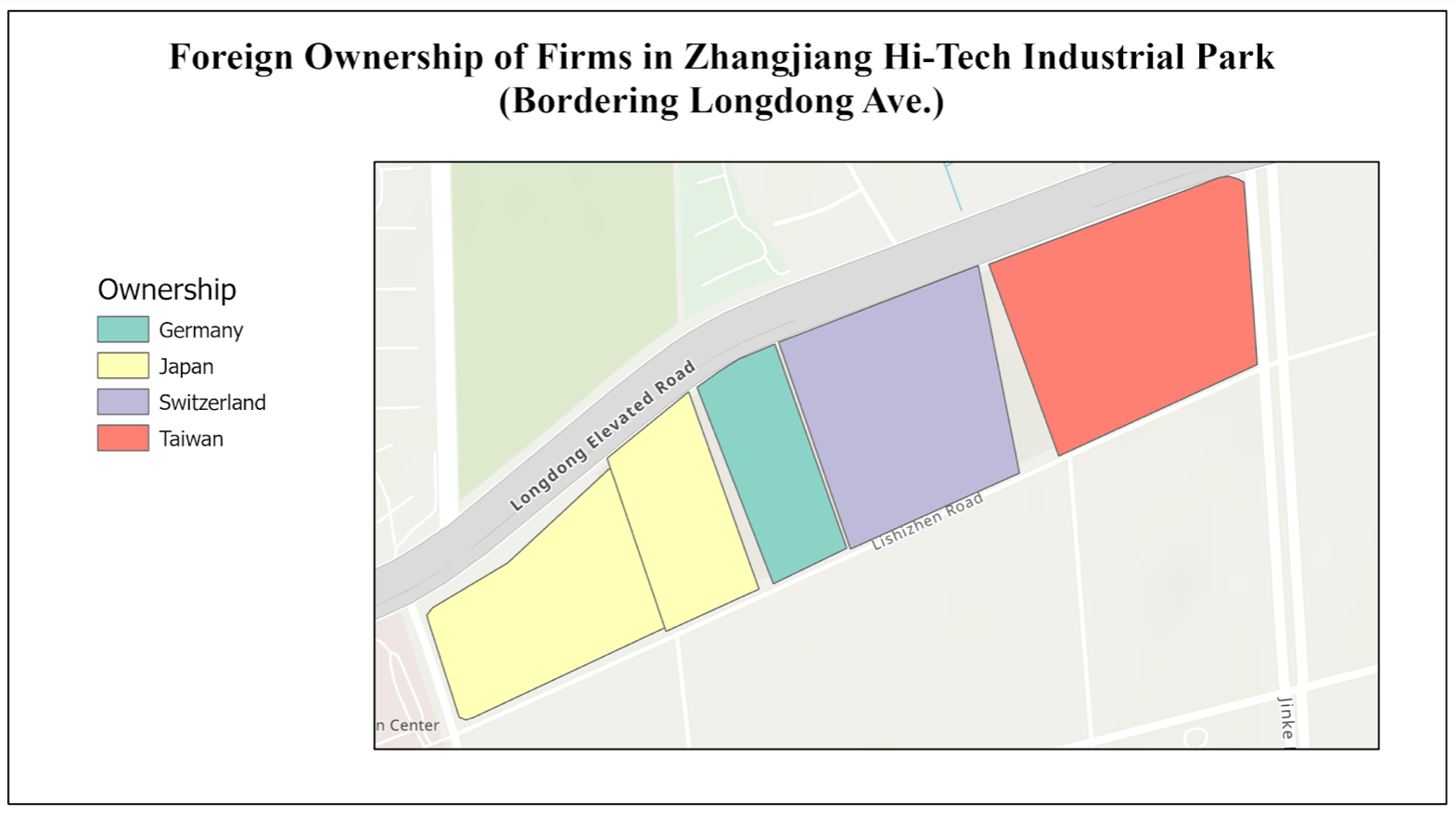
Foreign and domestic talent recruitment is emphasized in the park. Figure 12 depicts firms in Zhangjiang Park (bordering Longdong Ave.) by ownership, and demonstrates the diversity of foreign investment present in the park. Such foreign investment comes amid the backdrop of policies pursued by the Shanghai Municipal Government, as evidenced in its annual “White Paper on Environment for Foreign Investment in Shanghai.” The white paper describes attracting overseas talent and entrepreneurship as priorities. For example, strategies within the document include allowing foreign high-level talented professionals in Zhangjiang Park to apply for Chinese permanent residence and encouraging multinational companies in Zhangjiang Park to employ graduates from prestigious foreign colleges and universities to work in Shanghai. Further, the white papers detail the Shanghai Municipal Government's adherence to national priorities, with the stated goal of becoming a “global city of excellence… with international appeal.”
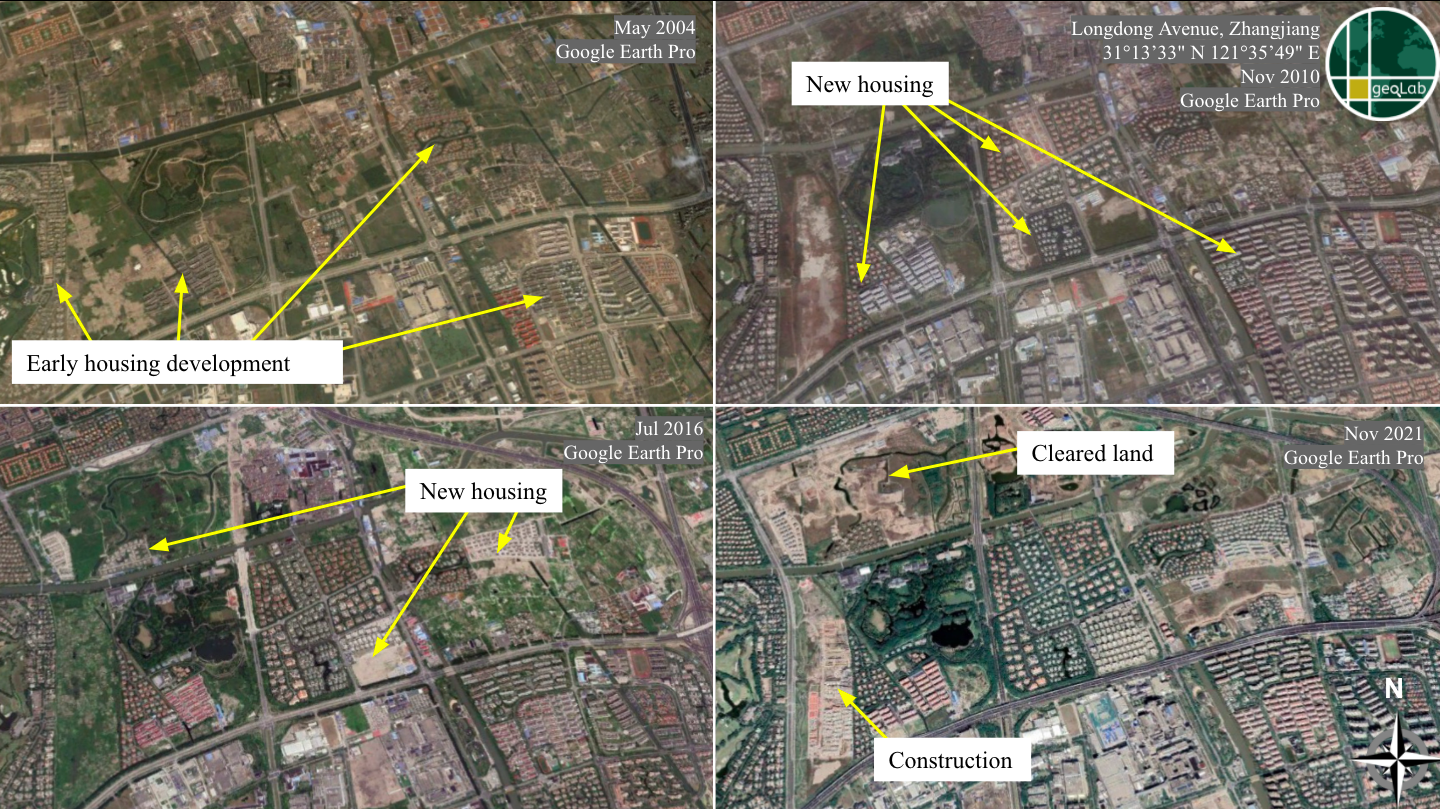
The Shanghai Municipal Government has initiated policies as a part of the city's 14th Five Year Plan – which spans from 2021-2025 –to increase affordable housing and facilitate both talent recruitment and foreign investment in the park, yet commercial imagery analysis presents no evidence of the construction of housing units in or immediately around Zhangjiang Park since 2018. Most housing development predates MIC25's launch and takes place immediately outside Zhangjiang's Park boundaries, with significant periods of construction dating back to 2004. Figure 13 depicts such housing development located right outside the border of Zhangjiang Park. The city reports more recent housing development in Shanghai more generally and announced that the construction of over 470,000 affordable rental homes would take place between 2021 and 2025. The Business Times – a Singaporean financial news agency – reports that, between 2021 and 2022, 240,000 housing units are set to be on the market in Shanghai. An increased housing supply in Shanghai serves the greater goal of promoting Zhangjiang Park as an ideal location for talent and firms.
Transportation Infrastructure
In order to increase the prominence of China's high-tech industry, construction of transportation infrastructure is necessary to connect new development to international and domestic markets and supply chains. According to a scholar at the University of Pennsylvania, the construction of transportation infrastructure in Zhangjiang Park has focused on capitalizing on Zhangjiang Park as a central artery for the movement of goods and people. The first major highway constructed in Zhangjiang Park was Longdong Avenue, which opened to traffic in 1993. Longdong Avenue serves as a connection between the center of the park and Pudong International Airport.
Road construction and expansion was substantial within and around the park prior to the initiation of MIC25. Major road construction began in 2004 in order to increase the connections between different industrial zones in the park. VoxEU, a platform focused on research-based policy analysis, reports that the growth of transportation infrastructure increases mobility between areas, “facilitates technology spillovers between prefectures," allowing for "a greater diffusion of technology along the infrastructure network," and lowers the costs of transporting goods. Commercial areas are connected to residential areas through large avenues, which can handle high levels of vehicle traffic and thus make it easier for workers to commute. These avenues are also connected to Central Ring Road, Outer Ring Road, and Luoshan Road, which serve as arteries for transportation throughout greater Shanghai.
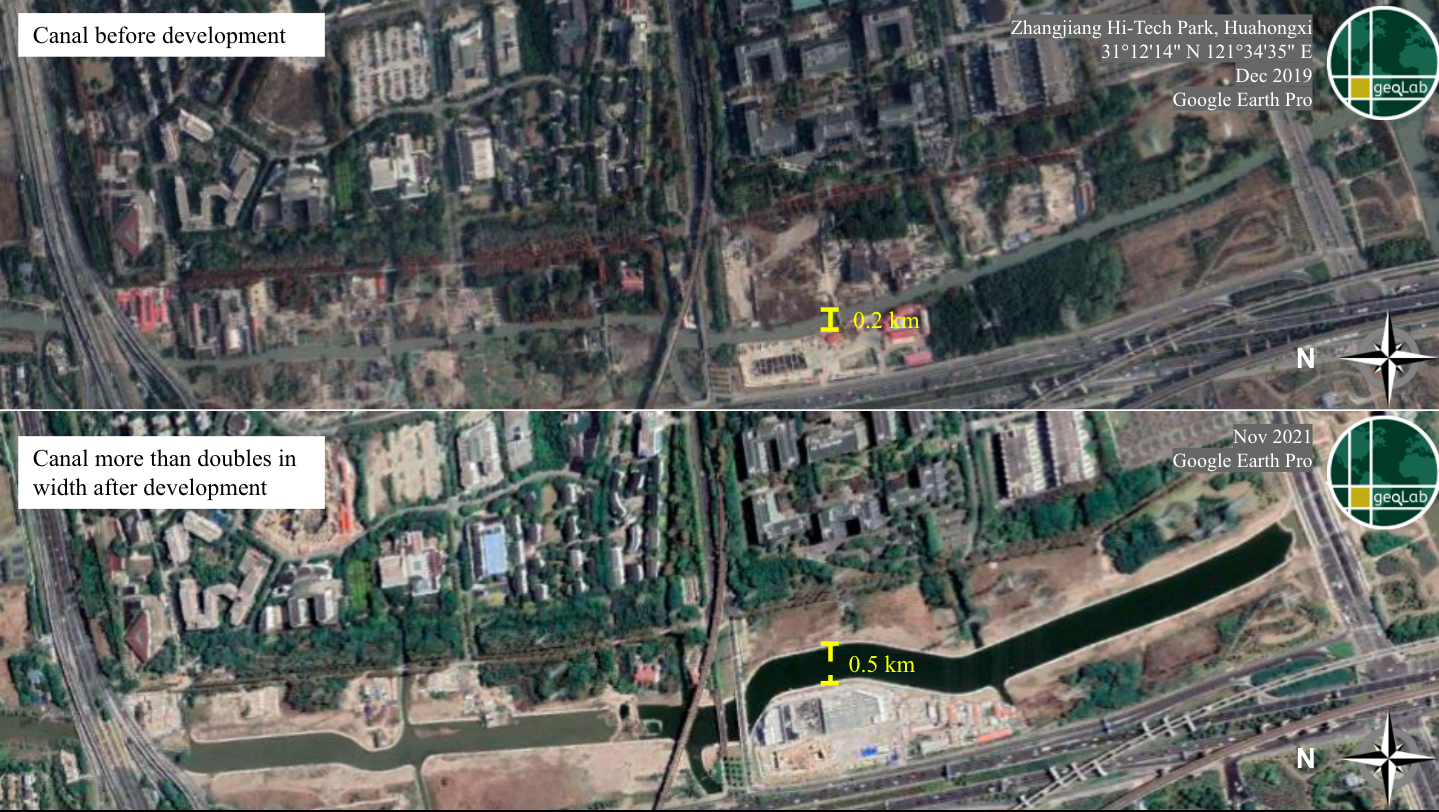
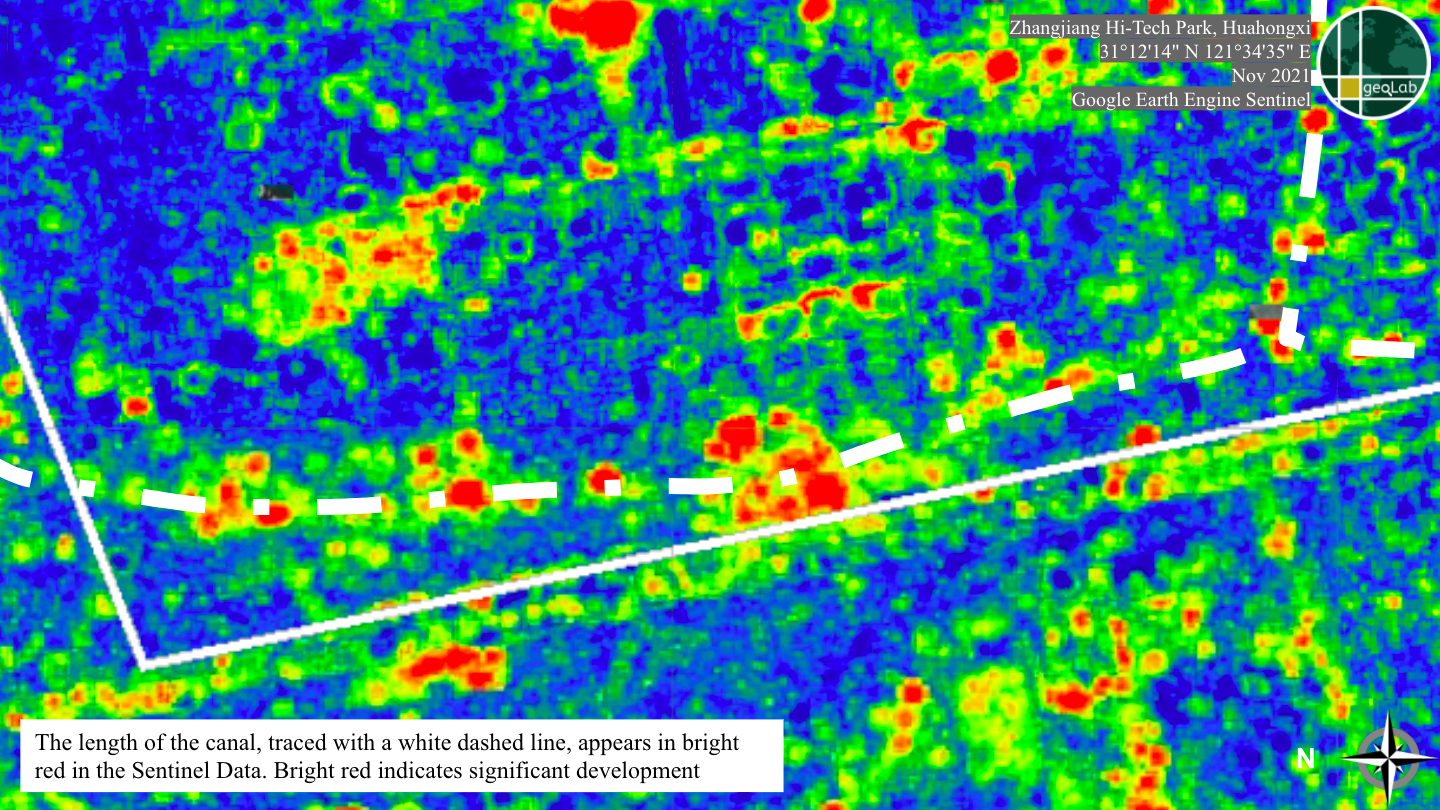
Canals have long been central to diversifying Chinese transportation routes. Shipping along water arteries has allowed Zhangjiang Park to grow in connection to markets outside of China. Satellite imagery analysis confirms significant expansion of major canals throughout Zhangjiang Park within the past 5 years (see Figure 14 and 14.1). This canal system was designed to run alongside the major roads as a supplement. Canals support the transportation of raw materials into the park, as well as trade throughout the Yangtze River Delta, which connects Shanghai to the rest of China and the world.
"Green" Tech
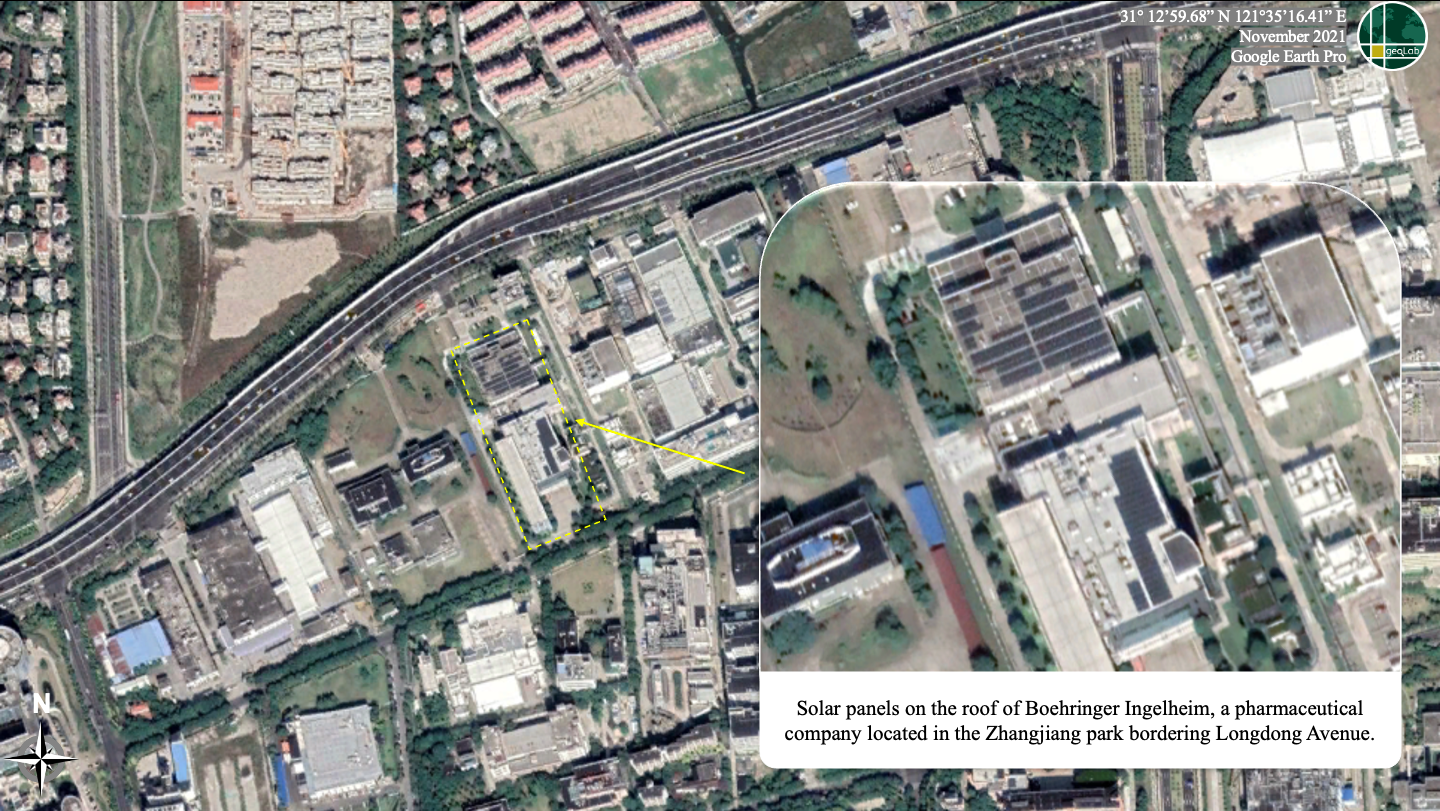
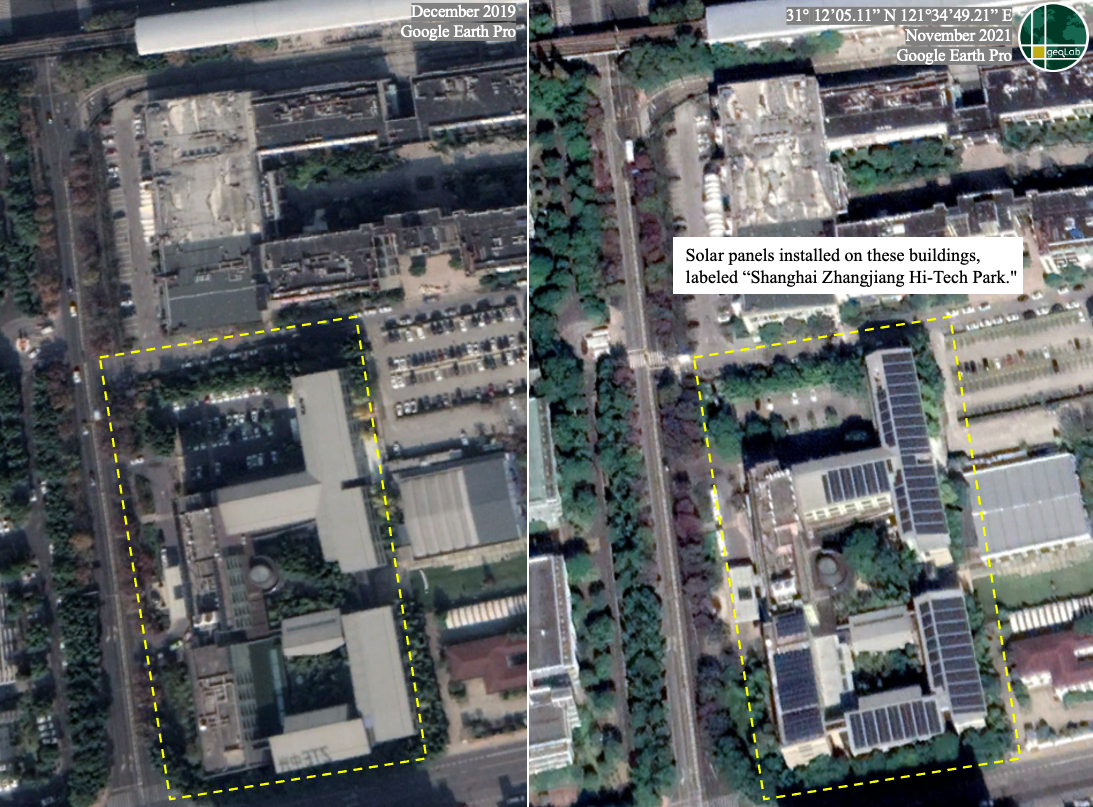
Zhangjiang mirrors MIC25's “green” manufacturing focus on promoting energy equipment and energy-saving technologies. More specifically, MIC25 has sought to prioritize green development and environmental consciousness as China continues to industrialize. This objective is apparent in imagery, seen below in Figures 15 and 16. One target sector is electricity, which is an attempt to pay greater attention to rising greenhouse gas emissions related to industrialization and to advance clean energy technologies.
Industries within Zhangjiang Park are increasingly investing in solar power energy. Pictured in Figure 15, solar panels were installed on the roof of Boehringer Ingelheim Pharmaceuticals by November 2021. Other buildings, pictured in Figure 16, also added solar panels. These changes are in line with China's national goal to reach carbon neutrality by 2060.
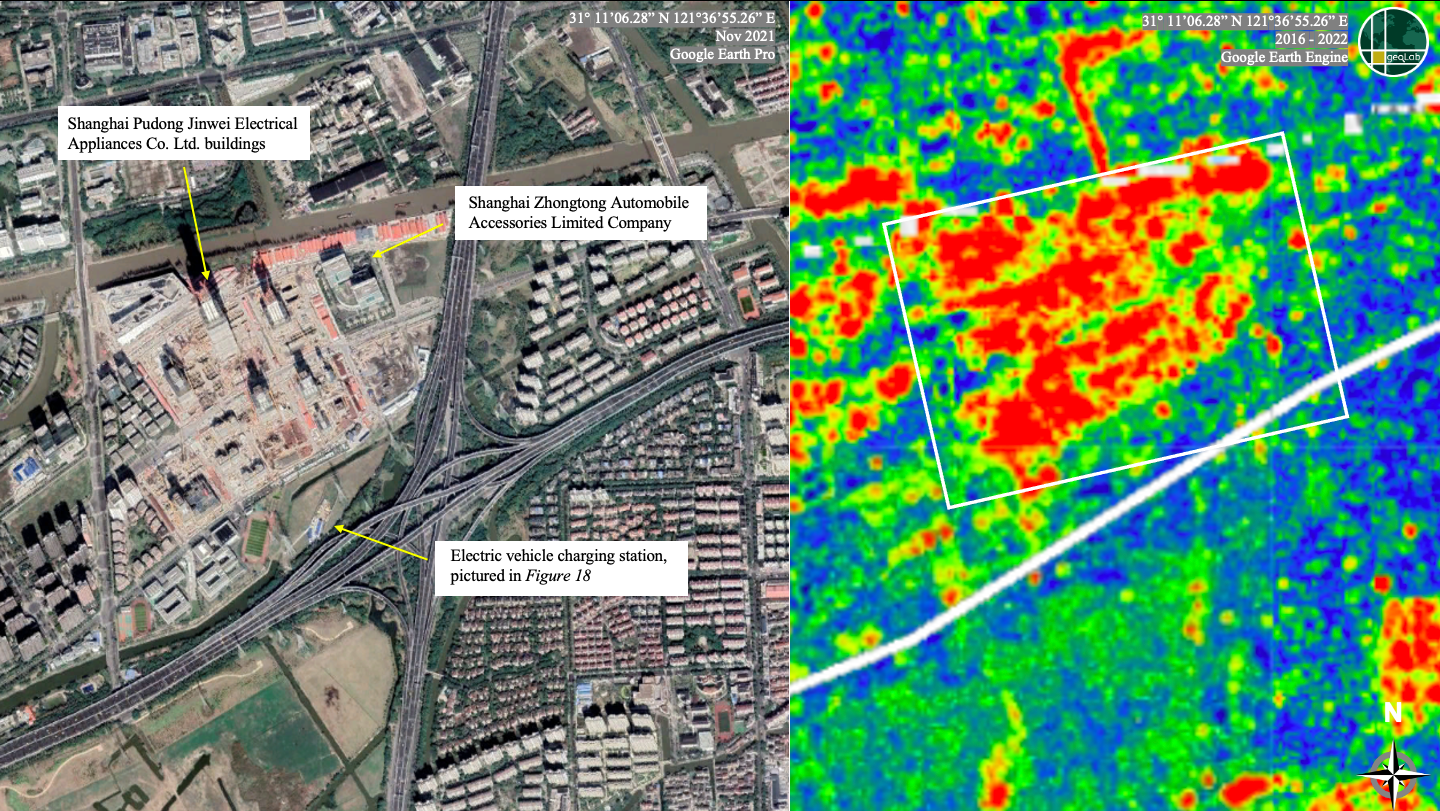
Electric vehicle (EV) appliance manufacturing facilities are newer entrants to the park. Figure 17 shows several facilities focused on producing electrical appliances. Adjacent to Shenjiang Road are Shanghai Pudong Jinwei Electrical Appliances Co., Ltd., an industrial and commercial electric apparatus and equipment manufacturer, and Shanghai Zhongtong Automobile Accessories Limited Company, a company focused on manufacturing motor vehicle parts and accessories. According to Jinwei Electrical Appliances, their company was rated "Shanghai's New and High-Tech Enterprise" and received the "Green Supplier" award by their clients. Increasing domestic sales of "new energy," EVs — and building the infrastructure needed to uphold this growth — is a goal put forth by MIC25. Unlike other developments analyzed in this study, the construction of this facility began in 2016, after the launch of MIC25, and was completed in 2018.
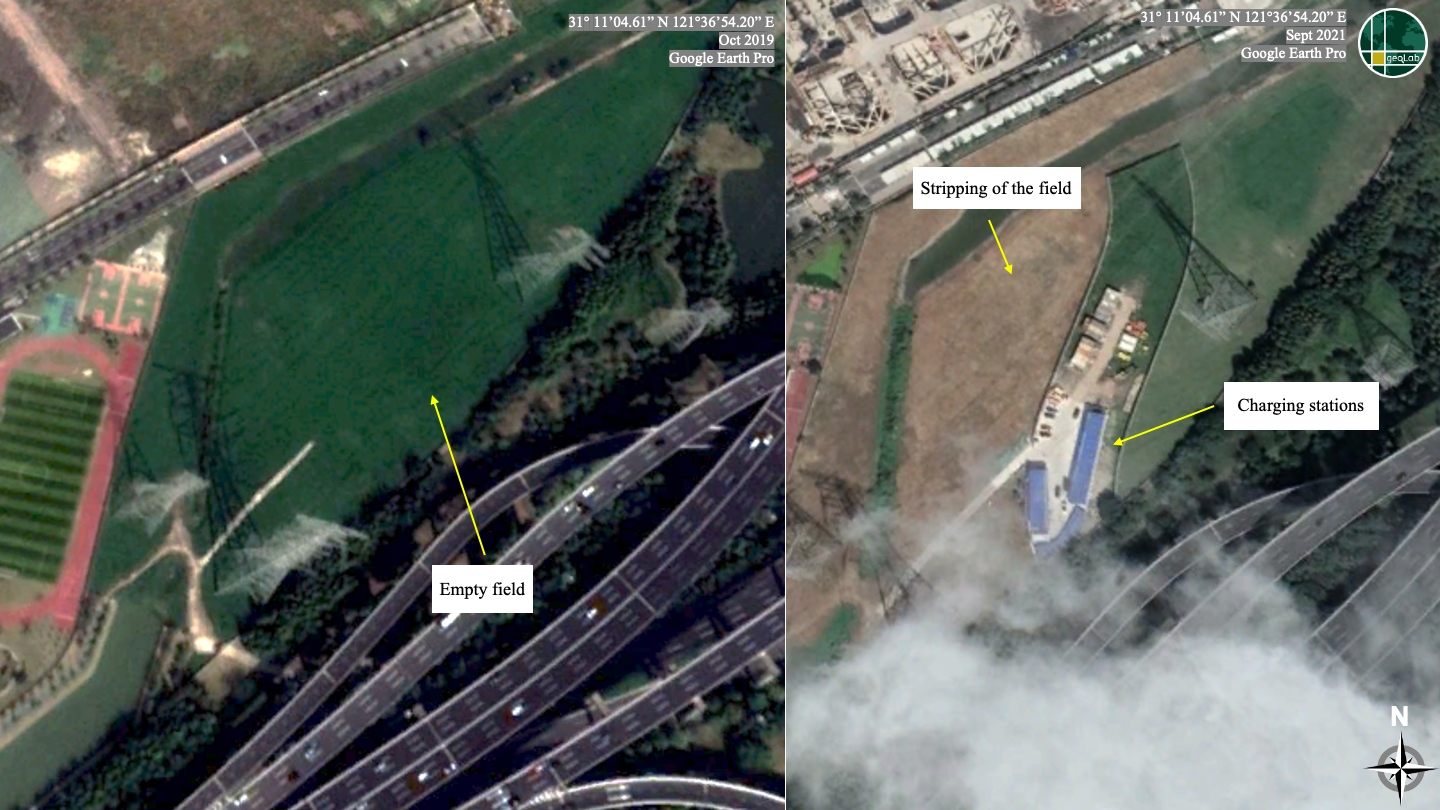
Infrastructure to support EVs such as charging stations is new to the park. Pictured in Figure 18 is the Zhangjiang D2 Charging Station - EV charging station, which was built in less than two years, from October 2019 to September 2021. In January 2022, the National Development and Reform Commission published a plan aiming to build enough EV charging stations for 20 million vehicles by 2025. This is in line with MIC25's goal of EVs accounting for 40% of the country's automobile sales by 2025.
Beyond MIC25 Alignment: Electric Vehicle Manufacturing
Zhangjiang Park – and development within – aligns with MIC25 mostly through the expansion of pre-existing industrial bases. However, the recent additions in the park of EV manufacturing, electric appliance manufacturing, and EV charging stations demonstrate more direct and timely connections to MIC25 policy and priorities.
Timeline
Jan 01, 2022
Million-dollar Financing to the Park
Two bio-pharmaceutical companies received $70 million in financing. To Chinese sources, the investment in the Zhangjiang Park signifies the “popularity” of the region.Source(s): Chinese Government,
Jan 01, 2020
Expansion of the Science City
This Science City has expanded to include over 18,000 enterprises, 53 regional headquarters of multinational corporations, and 828 high-tech enterprises.Source(s): Chinese Government,
Jul 01, 2017
Renaming of the High-Tech Park to a Science City
Shanghai government moves forward with renaming the Zhangjiang High-Tech Industrial Park to the Zhangjiang Science City, the area of the space expanding to 95 km.Source(s): Chinese Government,
May 01, 2017
“Zhangjiang Science City Construction Plan”
“Zhangjiang Science City Construction Plan” announced. The city’s boundaries would extend downwards of the current park boundary.Source(s): Sohu,
Aug 01, 2015
Zhangjiang Science City ideation
Planning and design of the Zhangjiang Science City launched.Source(s): Sohu,
May 01, 2015
Made in China 2025 released
Made in China 2025 issued to “promote innovation-led economic growth” and elevate China’s manufacturing sector.Source(s): Sixth Tone,
Apr 01, 2015
Park approved to be part of the China Pilot Free Trade Zone
Nearly half of the parks’ area was approved by the State Council to be a part of the China Pilot Free Trade Zone, areas that promote unprecedented openness to foreign investments and international trade.Source(s): China's Industry Consulting Leader, Deloitte,
Jan 01, 2011
Rapid development of the Park
Zhangjiang High-Tech Park expands to 79.7 km with the addition of Zhangjiang High-Tech Park, the Kangqiao Industrial Zone, the International Medical Zone and the Zhoupu Fanrong Industrial Area, approved by the Shanghai government. In 2011, the park entered a “rapid stage of development.”Source(s): Chinese Government, Sohu,
Jan 01, 2009
Activity in the Park
110 research & development institutions, 3,600 companies, and 100,000 workers in Zhangjiang Industrial Park.Source(s): LiquiSearch,
May 01, 2007
Zhangjiang High-Tech Industrial Park management committee
Management committee of Zhangjiang High-Tech Industrial Park is founded.Source(s): Chinese government,
Jan 01, 2006
The “Zhangjiang model” implemented elsewhere
The “Zhangjiang model” begins to be implemented elsewhere due to its industrial success.Source(s): Domeet Webmaster,
Jan 01, 2000
The “Nineteen Articles” regulations issued
The Shanghai Municipal Government issues the “Nineteen Articles,” regulations to promote development of the Park.Source(s): Sohu,
Jan 01, 1999
"Focus on Zhangjiang" strategic decision is made
Shanghai Municipal Party Committee and Municipal Government make the strategic decision to "focus on Zhangjiang," launching the park into a period of rapid growth and development. There would be a push towards expanding the semiconductor, software, and bio-medical industries.Source(s): Chinese government, LiquiSearch,
Aug 01, 1996
Zhangjiang Biotech and Pharmaceutical Industrial Base established
State Science and Technology Commission, the Ministry of Public Health, the National Pharmaceutical Administration and the Shanghai Municipal Government sign a joint agreement to establish the Zhangjiang Biotech and Pharmaceutical Industrial Base within Zhangjiang High-Tech Park.Source(s): Asia BioTech,
Mar 01, 1995
Three key industrial developments
Key industrial developments of Zhangjiang Park are reduced from ten to three, “namely the biomedical industry, the microelectronics information industry and the opto-mechatronics industry.”Source(s): Domeet Webmasteer,
Jan 01, 1994
Zhangjiang Pharma Valley founded
Zhangjiang Biotech and Pharmaceutical Industrial Base, also referred to as Zhangjiang Pharma Valley, is founded.Source(s): Pudong, China Government,
Jan 01, 1994
First company to sign a contract to establish office in Zhangjiang Park
Swiss Roche Pharmaceuticals is the first company to sign a contract with Zhangjiang High-Tech Park, welcoming other companies into the park.Source(s): Domeet Webmaster,
Jan 01, 1993
Longdong Avenue opened
First highway, Longdong Avenue is opened, now a highly trafficked road that acts as the Northern boundary of the park.Source(s): University of Pennsylvania,
Jan 01, 1992
Zhangjiang High-Tech Industrial Park established
Zhangjiang High-Tech Industrial Park established, spanning 17 km.Jan 01, 1991
State Council approves Zhangjiang High-Tech Industrial Park
Zhangjiang High-Tech Industrial Park approved by the State Council.Source(s): Chinese Government,
Graphs
Zhangjiang Park: Sample Industry Makeup
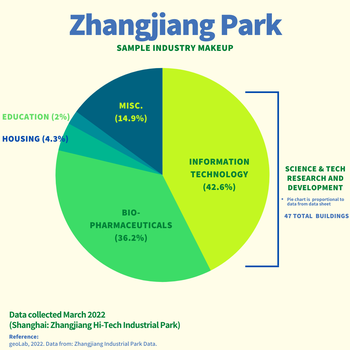
Figure Caption: Data was collected by our geoParsing team. Descriptors were given to each building in smaller clusters within the park. The chart in the graph is based on the companies identified and geocoded in this park — this is a sample of the park’s industries.
Look Ahead
Please download the structured data in the Data Sources section. Data sources include a CSV file about the identified industrial clusters, mappable KMZ of the industrial clusters, and Shapefiles of all the map data displayed in the interactive map. For more of our analysis about industrial parks in China, keep a lookout for future articles released on the Tearline platform.
Things to Watch
- Will the trends present in the Zhangjiang High-Tech Industrial Park be visible in other Chinese industrial parks?
- How will the transition to greener energy impact the industrial focuses of and manufacturing developments within Zhangjiang Park?
- Within China, Zhangjiang Park is considered the “Chinese Silicon Valley.” Will this perception extend internationally?
- Will policies enacted to attract domestic and foreign talent and foreign investment to Zhangjiang Park be successful in achieving their respective intended purposes?
- Will development in Zhangjiang Park continue to align with MIC25 priorities?


